


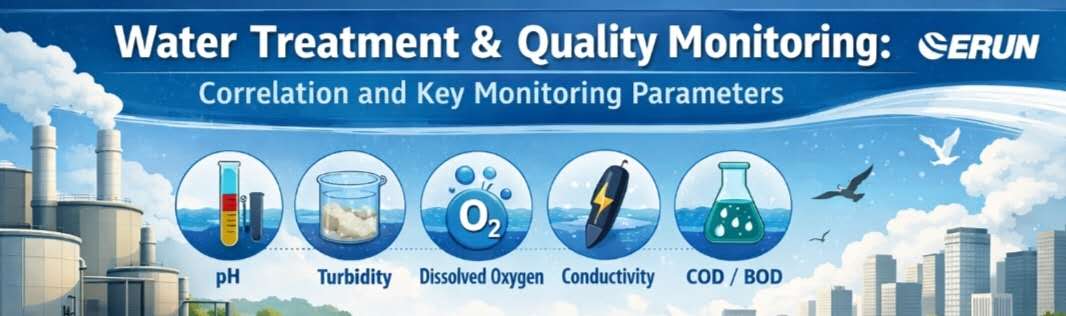
Water treatment is pivotal for sustainable water resource utilization and ecological balance, with water quality monitoring acting as its "sensory nerve". The two form a tightly coupled "treatment-monitoring-feedback-optimization" closed loop, where the accuracy of monitoring data directly dictates the regulation efficiency and compliance stability of water treatment processes.
Water treatment includes pretreatment, biochemical treatment, advanced treatment and disinfection, each relying on precise water quality data for regulation. Biochemical treatment hinges on dissolved oxygen (DO) and pH; lagged or distorted data causes aeration and dosing imbalances, even system collapse. Pretreatment monitors turbidity and suspended solids to guide coagulant dosage, while advanced treatment tracks COD, ammonia nitrogen and total phosphorus to verify process effects and ensure effluent compliance.
The shift to refined and intelligent water treatment demands synchronous iteration of monitoring technology. Traditional manual monitoring lags behind dynamic regulation needs, while online monitoring and multi-parameter detection enable real-time data collection, transmission and analysis. Industrial wastewater treatment requires added monitoring of total nitrogen and heavy metals, and drinking water treatment needs enhanced detection of microorganisms and disinfection by-products, pushing monitoring equipment toward multi-parameter integration, high sensitivity and low maintenance.
Monitoring is a legal requirement for water treatment operation, with regulators using data to verify effluent compliance with standards like GB 8978-1996 and GB 5749-2006. Accurate data also optimizes process parameters, cutting chemical and energy consumption: DO-based aeration control reduces sewage treatment blower energy use by 20%-30%, and real-time COD/ammonia nitrogen monitoring avoids excessive dosing, realizing efficient resource utilization.
Core parameters fall into physical, chemical and biological categories, with targeted monitoring based on treatment processes and water quality goals.
Turbidity (NTU) reflects suspended particulates; sedimentation tank effluent is controlled at 5-10 NTU and filter tank effluent ≤1 NTU. Temperature (20-35℃ optimal for biochemical treatment) impacts microbial metabolism and chemical reactions. Conductivity indicates total dissolved solids, alerting to high-salt wastewater mixing in industrial treatment or pipeline pollution in drinking water treatment.
pH (6.5-8.5 for biochemical treatment) affects microbial activity and equipment corrosion; disinfection stage pH is 6.5-7.5 for effective residual chlorine. DO (2-4 mg/L in biochemical tanks) is critical for aerobic microbial activity, with ORP monitoring for anaerobic treatment. COD measures organic pollution, with municipal sewage effluent ≤50 mg/L. Ammonia nitrogen (≤0.5 mg/L in drinking water) is removed via nitrification/denitrification, with real-time monitoring to optimize dosing. Total phosphorus (TP) and total nitrogen (TN) are key for eutrophication control, reduced via advanced treatment. Residual chlorine (0.3-0.5 mg/L) ensures disinfection effect without excessive odor or health risks.
Coliform group, a fecal pollution indicator, must be undetectable in 100mL drinking water. Microbial activity indicators (e.g., MLSS 2000-4000 mg/L) reflect biochemical system operation; biological phase observation optimizes process parameters by judging microbial community health.
ERUN detectors cover laboratory, portable and online series, featuring high precision, stability and intelligence for full-scenario water treatment monitoring.
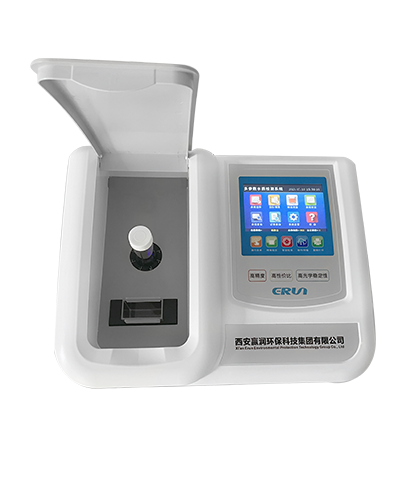
• Laboratory: ERUN-ST7 benchtop analyzer detects over 80 parameters, with a touch screen, bilingual interface and 100,000-data storage, suitable for water quality review and process optimization research.
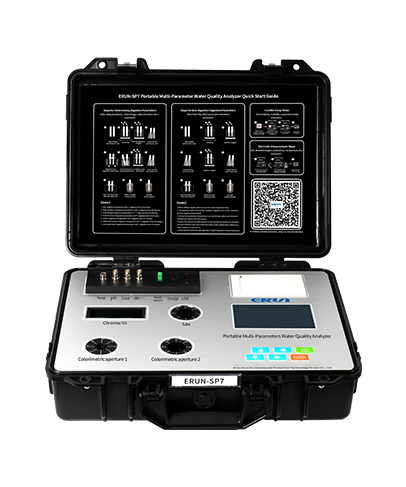
• On-site: ERUN-SP portable detectors (IP67, long battery life) detect 5 core parameters in 30 seconds (deviation <2%), transmitting data via Bluetooth for emergency pollution monitoring and water source protection.
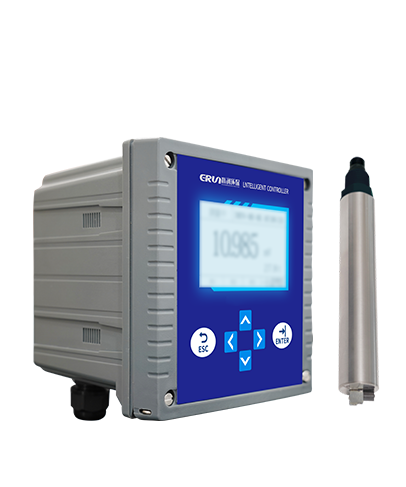
• Online: ERUN-SZ series enables 24/7 continuous monitoring, uploading data to central control and supervision platforms. ERUN-SZ3-A5 detects trace DO (0-100 μg/L), and online COD/ammonia nitrogen detectors adopt national standard methods, linking with process systems to form a "monitoring-feedback-optimization" loop.
Water treatment and monitoring are interdependent: monitoring provides data support, and treatment optimization drives monitoring progress, with core parameter detection being key to efficient and compliant treatment. ERUN detectors are widely used in municipal, industrial and drinking water treatment, offering reliable technical solutions.
Future water quality monitoring will evolve toward intelligence, efficiency and integration with IoT, AI and big data. It will strengthen multi-parameter real-time analysis for predictive regulation, expand monitoring of emerging pollutants (microplastics, antibiotics) and improve the monitoring system. ERUN will continue iterating product technology, enhancing equipment sensitivity and adaptability to support the refined, intelligent and green transformation of the water treatment industry, safeguarding water resource protection and sustainable utilization.