


In 2026, municipal drinking water safety solutions have moved beyond manual sampling to integrated online water quality management. As city infrastructure faces new pressures, municipal water plants and secondary water supply systems must implement automated water safety protocols to guarantee compliance at every tap. Online monitoring is no longer a luxury—it is the digital backbone of public health and regulatory trust.
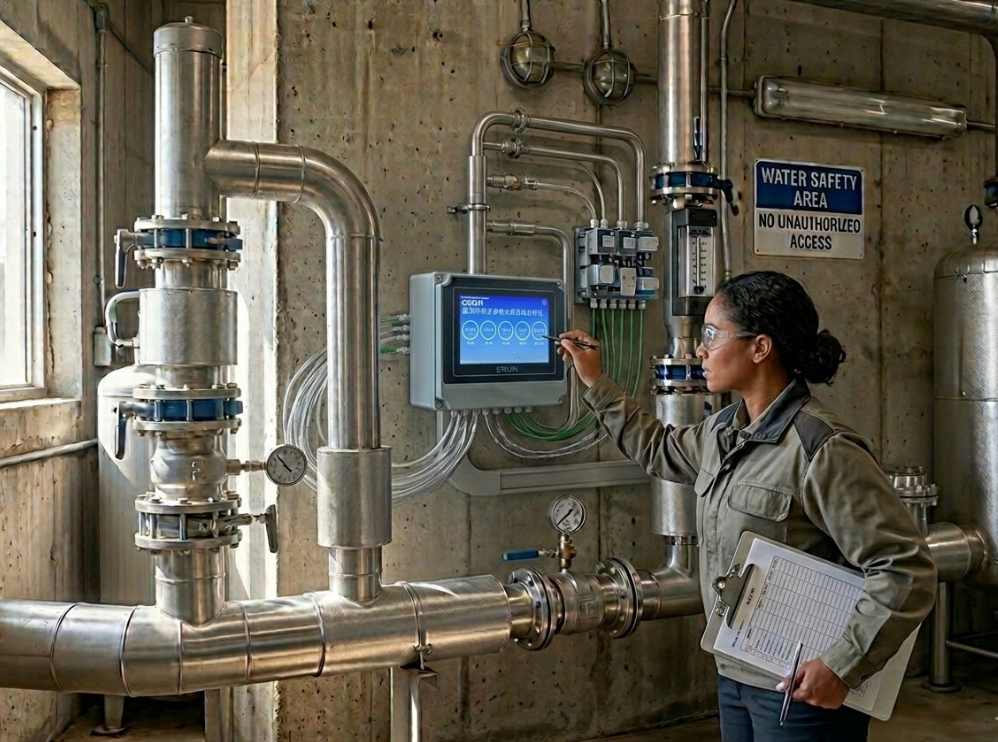
To meet the rigorous EPA and WHO standards for turbidity and chlorine in 2026, water managers must focus on continuous disinfectant residual tracking. Three key indicators define the safety of a modern distribution network:
Residual Chlorine Monitoring: Ensuring effective disinfection throughout the piping network while preventing harmful disinfection by-products.
Real-time Turbidity Tracking: The most reliable indicator of filtration efficiency and potential microbial risks in municipal water treatment.
pH & Conductivity Sensors: Essential for preventing pipe corrosion and detecting sudden source water contamination in aging infrastructure.
Most water quality issues occur between the treatment plant and the consumer's tap—the "Last Mile." The ERUN-SZ3-12 Series is specifically engineered as a specialized municipal water safety solution for these distributed points.
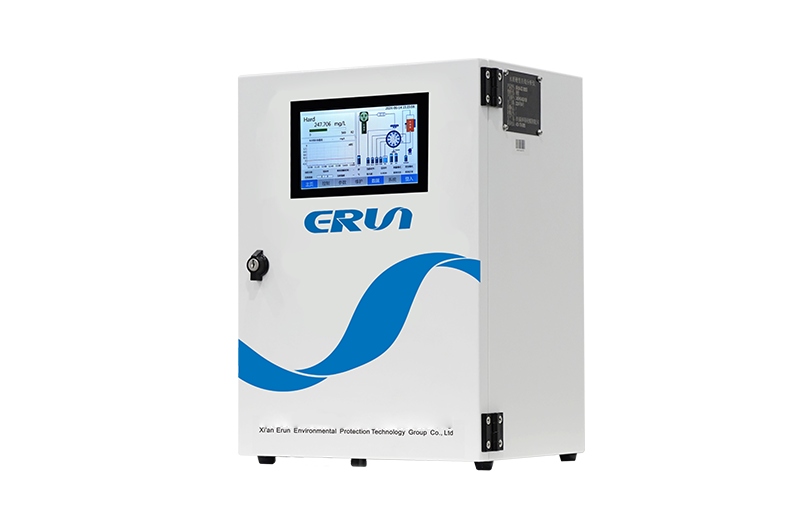
Featuring a 7-inch color touch screen and a Linux-based digital architecture, it provides:
High-Sensitivity Detection: Using dual-optical path technology to detect trace contaminants that manual kits might miss.
Low-Maintenance Operation: Automated cleaning and self-diagnostics ensure 24/7 reliability in remote pumping stations and high-rise secondary water supply units.
The future of water safety is connected. By utilizing RS485/Modbus and IPv4/IPv6 protocols, ERUN analyzers feed data directly into "Smart City" water platforms.
Automated Water Safety Protocols: Instant mobile notifications are triggered if parameters like chlorine levels drop below safety thresholds.
Regulatory Compliance Reporting: Generate encrypted, time-stamped logs for health authorities with a single click, eliminating human error in manual record-keeping.
Q: What is the most reliable municipal water safety solution for aging infrastructure?
A: The most effective solution involves a combination of decentralized online sensors and centralized data analytics. By deploying instruments like the ERUN-SZ3-12, municipalities can achieve real-time turbidity and residual chlorine monitoring throughout the entire distribution network, ensuring safety across the "Last Mile."
Providing safe drinking water is a matter of public trust. By deploying precision online water quality analyzers, water suppliers can move from reactive troubleshooting to proactive safety management.
Is your municipal water supply ready for the 2026 digital safety standards?