


A TOC (Total Organic Carbon) Analyzer is an advanced analytical instrument used to measure the amount of organic carbon present in water. TOC is one of the most important indicators of water purity because it represents the total concentration of organic contaminants that may affect product quality, industrial processes, environmental compliance, and public health.
Today, TOC analysis has become essential in pharmaceutical manufacturing, power generation, semiconductor production, ultrapure water systems, drinking water treatment, and environmental monitoring. Industry-leading TOC analyzers can accurately determine Total Carbon (TC), Total Organic Carbon (TOC), Total Inorganic Carbon (TIC), and Non-Purgeable Organic Carbon (NPOC), providing a comprehensive assessment of water quality.
Traditional water quality indicators such as COD and BOD often require lengthy testing procedures and may not fully reflect the actual organic contamination level. TOC measurement offers a faster and more direct evaluation of organic pollutants in water.
Key benefits include:
Real-time detection of organic contamination
Improved process control and product quality
Compliance with pharmaceutical and environmental regulations
Protection of RO membranes and ultrapure water systems
Reduced operational and maintenance costs
TOC monitoring is widely used for drinking water quality control, wastewater treatment, process water monitoring, and pharmaceutical water validation.
Most modern TOC analyzers oxidize organic compounds into carbon dioxide (CO₂) through UV-persulfate oxidation or high-temperature catalytic combustion. The generated CO₂ is then measured using advanced detection technologies such as NDIR (Non-Dispersive Infrared Detection) or conductivity analysis.
The accuracy of TOC measurement depends on:
Oxidation efficiency
Detection sensitivity
Instrument stability
Automatic calibration capability
Resistance to environmental interference
Advanced systems can continuously monitor water quality while maintaining high precision and low maintenance requirements.
When selecting a TOC analyzer, buyers should evaluate:
The instrument should cover both low-level and high-level TOC concentrations depending on the application.
Consistent results are essential for regulatory compliance and process control.
The analyzer should support pharmaceutical water, purified water, WFI, drinking water, power plant water, and industrial process water applications.
International certifications help ensure product reliability and simplify global deployment.
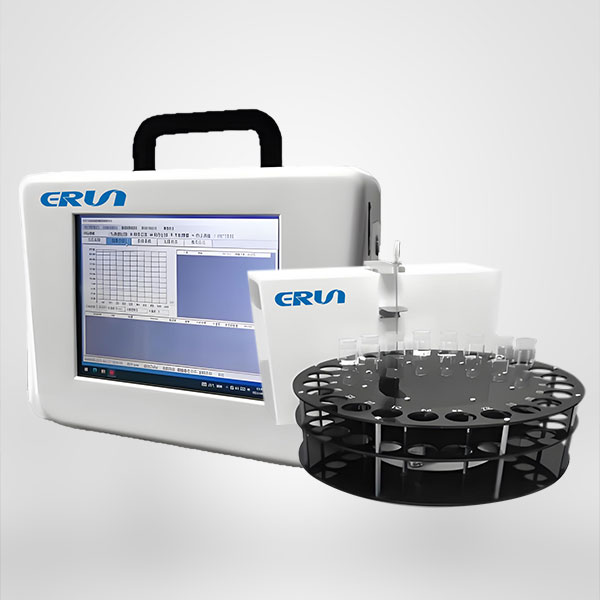
The ERUN-SP3-J3 Total Organic Carbon Analyzer is designed for high-precision water quality monitoring applications. It supports TOC, TC, TIC, NPOC, conductivity, and temperature measurement, making it suitable for pharmaceutical water systems, purified water, deionized water, power plant water, and drinking water testing. The analyzer offers a TOC detection range of 0.1–1000.0 μg/L and is engineered for reliable long-term operation.
Manufacturers and laboratories exporting worldwide increasingly prefer instruments supported by internationally recognized certifications such as CE, RoHS, and ISO 9001, helping ensure compliance, quality management, and market acceptance.
A TOC analyzer measures the total amount of organic carbon present in water, providing an overall indication of organic contamination.
They are commonly used in pharmaceuticals, semiconductor manufacturing, power plants, environmental monitoring, drinking water treatment, and wastewater management.
TOC provides faster and more direct information about organic contamination and is widely recognized as a critical water quality parameter.
As industries demand higher water purity standards and stricter regulatory compliance, TOC analyzers have become indispensable tools for water quality assurance. Selecting a reliable, certified, and high-performance TOC analyzer can significantly improve operational efficiency, product quality, and environmental compliance.
ERUN Environmental Protection is a professional manufacturer specializing in water quality monitoring instruments, gas detectors, environmental analyzers, and TOC analysis solutions for global industrial, pharmaceutical, environmental, and laboratory applications.