

In power generation, chemical processing, and water treatment facilities, sodium contamination is one of the most insidious threats to equipment integrity and operational efficiency.Sodium is the root cause of many types of boiler corrosion, and its presence in high-purity water systems can lead to catastrophic equipment failure, costing plants over $1,000,000 per day in unplanned downtime. As the global sodium concentration analyzer market continues to expand—projected to grow from USD 744.1 million in 2024 to USD 1.2 billion by 2035 at a compound annual growth rate (CAGR) of 4.4%—industrial operators worldwide are increasingly turning to continuous online sodium monitoring solutions to protect their assets and ensure regulatory compliance.
Modern sodium sensors utilize ion-selective electrode (ISE) technology, which operates on a straightforward yet highly effective electrochemical principle. The sensor employs a selective membrane that exclusively allows sodium ions to pass through via ion exchange and diffusion. When sodium ions interact with the electrode membrane, they generate a potential difference proportional to the sodium concentration in the solution. This voltage measurement is then converted into a precise sodium concentration reading.
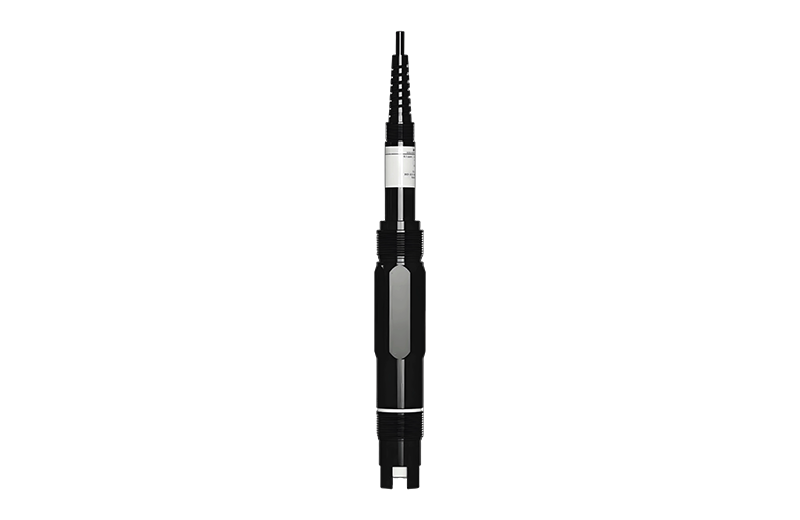
The ERUN-M6C Industrial Stainless Steel Sodium Ion Sensor , developed by Xi‘an Erun Environmental Protection Technology Group, represents the latest advancement in this field. With an impressive measurement range spanning from 0.1 to 23,000 ppm and an ultra-fine resolution of 0.001 ppm, this sensor delivers ppb-level detection sensitivity essential for critical applications such as boiler feedwater monitoring, condensate leak detection, and high-purity water quality control.
Sodium ion sensors play a vital role across multiple industrial sectors. Understanding where and how these instruments are deployed helps buyers identify the right solution for their specific needs.
Application Area | Primary Use Case | Why Sodium Monitoring Matters |
|---|---|---|
Power Plants (Thermal & Nuclear) | Boiler feedwater, steam condensate, make-up water | Early detection of condenser leaks; prevents turbine corrosion and deposits |
Chemical & Petrochemical | Process water quality control, ion exchanger monitoring | Monitors sodium breakthrough in demineralization beds; detects resin bed exhaustion |
Environmental Monitoring | Municipal wastewater, drinking water treatment | Ensures regulatory compliance for effluent discharge and drinking water standards |
Food & Beverage Processing | Quality assurance, ingredient control | Precise sodium content measurement for product consistency and labeling compliance |
Pharmaceutical | High-purity water systems, IV fluid production | Maintains ultra-low sodium levels required for drug formulation |
Aquaculture & Biomedicine | Continuous real-time monitoring | Protects aquatic life from sodium fluctuations; ensures biomedical process integrity |
In power generation applications, sodium measurement is particularly critical. Sodium monitoring can detect condenser leakages at their earliest stages, providing an early warning system that prevents costly turbine damage. As turbine corrosion repairs can cost up to $30 billion annually across the industry, the return on investment for sodium monitoring equipment is substantial.
When evaluating sodium sensors for industrial deployment, buyers should consider several key technical parameters that determine performance and reliability.
The ERUN-M6C Sodium Ion Sensor offers the following specifications, making it suitable for the most demanding environments:
Measuring Range: 0.1 – 23,000 ppm (Na⁺)
Resolution: 0.001 ppm
Accuracy: ±5% FS
Repeatability: ±4%
Temperature Measurement Range: 0 – 50.0°C
Sensor Type: Solid-state membrane
Housing Material: POM + Stainless Steel (corrosion-resistant)
IP Rating: IP68 (submersible, fully protected against continuous immersion)
Output: 4–20 mA three-wire system
Data Communication: RS485 (Modbus-compatible for industrial automation)
Power Supply: DC 9–30V
Cable Length: Standard 5 meters
Process Connection: G1, G3/4
Installation Method: Immersion type
The wide measurement range—from ultra-low ppb detection up to 23,000 ppm—ensures that a single sensor can serve multiple applications within a facility, from high-purity water monitoring to process stream quality control.
For water quality instruments intended for global export, regulatory certifications are not optional—they are essential for market access and customer trust. The ERUN-M6C is manufactured by Xi‘an Erun Environmental Protection Technology Group, a National High-Tech Enterprise with a registered capital of 51.8 million RMB, established in 2014. The company has achieved the following international certifications that validate its product quality and safety:
CE Certification: Demonstrates compliance with EU health, safety, and environmental protection standards, confirming that the product meets the essential requirements of relevant European directives.
RoHS Certification: Ensures restriction of hazardous substances (lead, mercury, cadmium, hexavalent chromium, PBB, and PBDE) in electrical and electronic equipment, making the product compliant with EU Directive 2011/65/EU.
ISO 9001: Confirms that the company operates under an internationally recognized quality management system, ensuring consistent product quality and continuous improvement.
As an increasing number of global procurement policies now require RoHS and CE compliance for industrial monitoring equipment, these certifications directly facilitate market entry into Europe, North America, and other regulated regions.
For industrial buyers seeking a reliable, cost-effective sodium monitoring solution, the ERUN-M6C delivers laboratory-grade accuracy in a rugged, field-deployable package. This online water quality sensor is designed for continuous real-time monitoring of sodium ions in demanding industrial environments, featuring:
Automatic temperature compensation for accurate readings across fluctuating thermal conditions
IP68 waterproof rating ensuring reliable operation even in fully submerged installations
RS485 digital communication enabling seamless integration into existing SCADA systems and industrial automation networks
Stainless steel and POM housing providing excellent corrosion resistance and long service life in harsh chemical environments
The sensor is widely deployed in:
Boiler feedwater systems for power plants
Drinking water and sewage treatment facilities
Aquaculture and biomedical monitoring applications
Industrial process control across multiple sectors
[View the full product specifications and request a quotation for the ERUN-M6C Sodium Ion Sensor →]
The global push for stricter water quality regulations is driving demand for accurate sodium monitoring equipment. In Europe, the Industrial Emissions Directive (IED) and the Urban Wastewater Treatment Directive require continuous monitoring of discharge quality. In North America, the EPA’s Clean Water Act enforces stringent limits on dissolved solids and specific ions in industrial effluents. In rapidly industrializing regions such as Southeast Asia and Africa, water safety has become a critical priority for municipal authorities and industrial operators alike.
Sodium analyzers help maximize water production and eliminate corrosion by providing the real-time data needed for optimal chemical treatment control. Sodium measurement is the preferred method for detecting condenser leakages because sodium ions are the first to “slip off” in ion exchange reactions, providing the earliest possible warning of system contamination.
Q1: What is the difference between a sodium meter and a sodium analyzer?
A: The terms are often used interchangeably. A sodium meter typically refers to portable or benchtop instruments for discrete sample measurement, while a sodium analyzer usually denotes online continuous monitoring systems. The ERUN-M6C is an online continuous sensor suitable for both applications.
Q2: How often does a sodium ion electrode need to be replaced?
A: Electrode lifespan varies by application and maintenance quality, but under normal conditions, solid-state membrane electrodes can last 6–12 months with proper care. The ERUN-M6C features replaceable sensor components to extend operational life.
Q3: Can sodium monitoring replace conductivity measurement for water purity?
A: No, but it complements it. While conductivity provides a general indication of total dissolved solids, it lacks the sensitivity needed for accurate sodium measurement at very low levels. Sodium-specific monitoring is essential for detecting trace contamination in high-purity water systems.
Q4: What pH conditions are required for accurate sodium measurement?
A: For optimal accuracy, the sample pH should be ≥ 9. The ERUN-M6C has a pH measurement range of >9pH, ensuring reliable operation in alkaline conditions typical of boiler water treatment.
Q5: Is the ERUN-M6C compatible with existing SCADA systems?
A: Yes. The sensor features RS485 communication and a 4–20 mA three-wire output, enabling direct integration with most industrial control and automation platforms.
Xi’an Erun Environmental Protection Technology Group Co., Ltd. — Your trusted partner in industrial water quality analysis solutions for power generation, environmental monitoring, and process control worldwide.