


Total organic carbon (TOC) is the sum of all organic carbon compounds in a water sample. It is a non-specific but extremely efficient indicator of overall water purity. Instead of identifying individual contaminants, a total organic carbon analyzer oxidizes all organic carbon to CO₂ and measures that CO₂, giving a single concentration value that captures everything from natural humic substances to synthetic pollutants and pharmaceutical residues. This makes TOC analysis the go‑to parameter for pharmaceutical water systems, drinking water treatment plants, semiconductor ultrapure water, and industrial wastewater compliance.
Every TOC analyzer follows the same basic workflow: acidify the sample to remove inorganic carbon, oxidize the remaining organic carbon to CO₂, then detect and quantify that CO₂. The biggest difference between instruments is how they perform the oxidation step.
Uses ultraviolet light and a persulfate reagent to generate highly reactive sulfate radicals. This wet‑chemical method is ideal for clean water matrices—purified water, water for injection (WFI), deionized water—because it delivers extremely low background and high precision at sub‑ppb levels. It is the preferred technology for pharmaceutical and semiconductor water monitoring.
Heats samples to 680–1200°C in oxygen. It handles difficult‑to‑oxidize compounds, high salt matrices, and samples with suspended solids. Combustion is typically chosen for industrial wastewater and environmental monitoring where robustness is more important than ultra‑trace sensitivity.
After oxidation, the CO₂ is measured by two core technologies:
NDIR (non‑dispersive infrared) detection: A direct, interference‑free gas‑phase measurement, widely preferred for multi‑matrix laboratories.
Conductivity detection: Simpler and less expensive but can be affected by ionic interferences.
The pharmaceutical industry must comply with USP Chapter <643>, which sets a TOC limit of 0.50 mg/L for bulk Purified Water and WFI and requires system suitability testing using sucrose and 1,4‑benzoquinone standards. TOC analysis is also essential for cleaning validation.
In municipal treatment, TOC serves as a precursor parameter for disinfection byproducts (DBPs) like THMs and HAAs. By monitoring TOC in real time, operators can optimize coagulation and minimize DBP formation, protecting public health.
Semiconductor manufacturing requires TOC levels below 1 ppb. Any organic contamination can destroy chip yields, demanding analyzers with exceptional baseline stability and sub‑ppb detection limits.
EPA Method 9060A provides the framework for TOC measurement in groundwater, surface water, saline water, and industrial effluents at concentrations ≥1 mg/L, making TOC a standard compliance parameter worldwide.
Match the instrument to your sample matrixDefine your TOC range, sample type, and offline/online monitoring needs first. A pharmaceutical‑grade analyzer cannot handle high-concentration wastewater, and combustion tools lack ultrapure water sensitivity.
Consider total cost of ownershipLook beyond purchase price: reagents, acid, carrier gases, catalysts, and maintenance add long-term costs. Reagent‑free, acid‑free UV catalytic oxidation systems minimize ongoing expenses for clean‑water use cases.
Prioritize regulatory compliancePharma applications require USP <643> compliance and FDA 21 CFR Part 11 (password protection, audit trails, electronic signatures). Drinking water labs need EPA method conformity. Ensure built‑in system suitability testing and IQ/OQ/PQ documentation.
Evaluate ease of use and maintenanceModular design, optional autosamplers, intuitive touchscreens, and high‑capacity data storage reduce downtime and boost productivity.
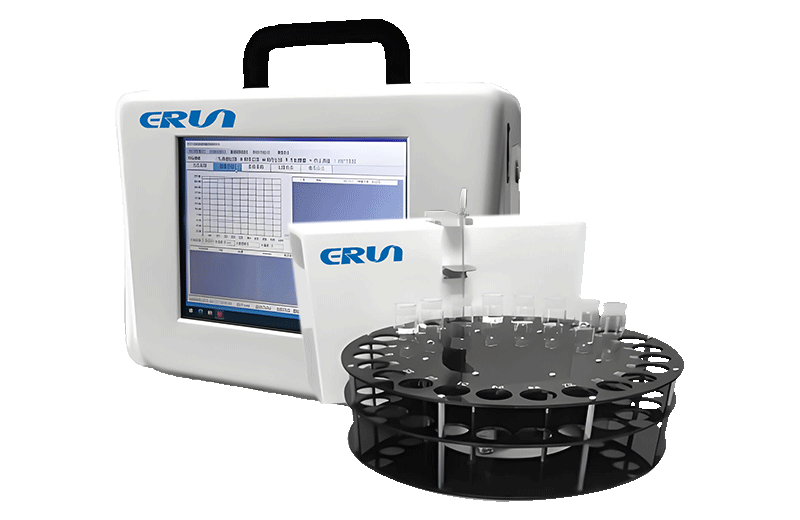
For laboratories and facilities that need accurate TOC results without hidden consumable costs, the Total Organic Carbon Analyzer ERUN-SP3-J3 (https://www.erunwas.com/products-detail/id-298.html) is a high-performance solution.
It uses advanced UV catalytic oxidation—no persulfate reagent, no acid, no compressed gas, no combustion catalyst—bringing routine consumable costs to nearly zero.
Measurement range: 0.1–1000.0 μg/L (ppb)
Detection limit: 1 ppb
Accuracy: ≤±5%; Repeatability: ≤3%
Analysis cycle: ≤3 minutes
Compliances: USP <643>, CP2010, FDA 21 CFR Part 11
8‑inch Windows touch screen for intuitive operation
Optional autosampler for unattended multi-sample testing
Optional online monitoring module for real-time continuous measurement
32 GB massive memory for unlimited data storage
USB data export and direct printer connectivity
Password protection and configurable over-limit alarm
Modular design for easy assembly, maintenance and repair
Ideal for pharmaceutical water, drinking water, power plant water, deionized water, and source water monitoring, the ERUN-SP3-J3 delivers pharmaceutical-grade precision with the lowest total cost of ownership in its class.
Whether you are specifying a TOC analyzer for a new pharmaceutical water loop, upgrading a drinking water plant’s organic monitoring, or sourcing a reliable instrument for ultrapure water verification, success starts with matching the technology to the task. UV catalytic oxidation brings pharmaceutical sensitivity, regulatory compliance, and dramatically lower operating costs—a combination that is hard to beat for clean‑water applications. The right TOC analyzer is not just a purchase; it is a long‑term investment in water quality confidence.
Contact for technical specifications and pricing.