

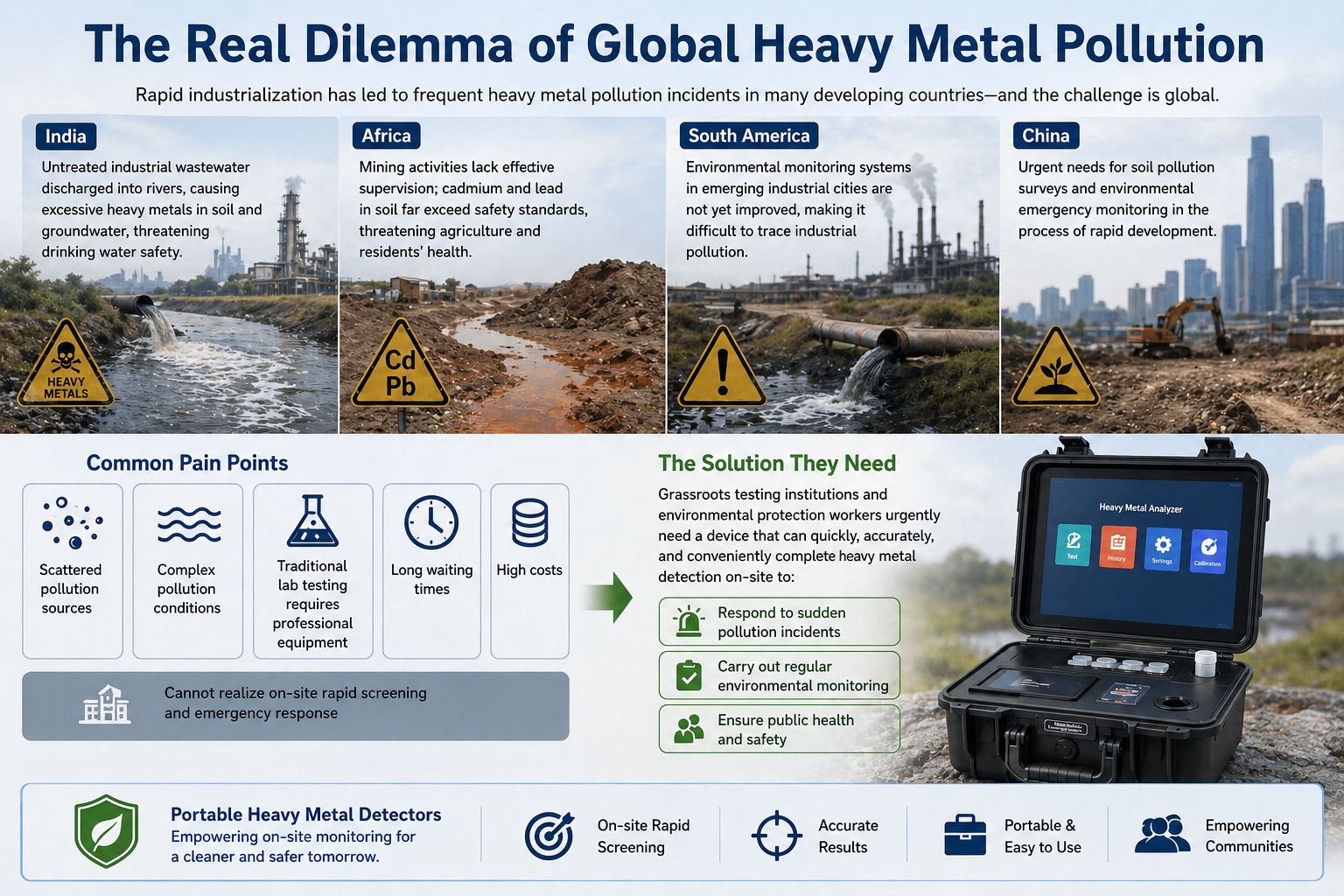
Frequent heavy metal pollution incidents caused by rapid industrialization have become a common problem facing many developing countries. In India, untreated industrial wastewater is directly discharged into rivers, leading to excessive heavy metal levels in the soil and groundwater along the banks, which seriously endangers residents’ drinking water safety. In some parts of Africa, mining activities lack effective supervision, and the cadmium and lead contents in the soil far exceed safety standards, threatening local agricultural production and residents’ health. The environmental monitoring systems in emerging industrial cities in South America are not yet improved, making it extremely difficult to trace industrial pollution. Meanwhile, China is also facing urgent needs for soil pollution surveys and environmental emergency monitoring in the process of rapid development. The common pain points in these scenarios are: scattered pollution sources, complex pollution conditions, and traditional laboratory testing requiring professional equipment, long waiting times, and high costs, which cannot realize on-site rapid screening and emergency response.
Grassroots testing institutions and environmental protection workers are in urgent need of a device that can quickly, accurately, and conveniently complete heavy metal detection on-site to respond to sudden pollution incidents, carry out regular environmental monitoring, and ensure public health and safety.
Taking the ERUN-Sp5-E3 portable heavy metal detector as an example, it supports the rapid detection of various common heavy metals such as lead (Pb), cadmium (Cd), mercury (Hg), and arsenic (As), meeting the pollution monitoring needs of different regions. The device adopts advanced detection technology to ensure stable and reliable detection data even in complex on-site environments. Some export models have passed international certifications and meet the detection standards of different regions around the world, laying a foundation for their promotion and application in markets such as India, Africa, South America, and China.
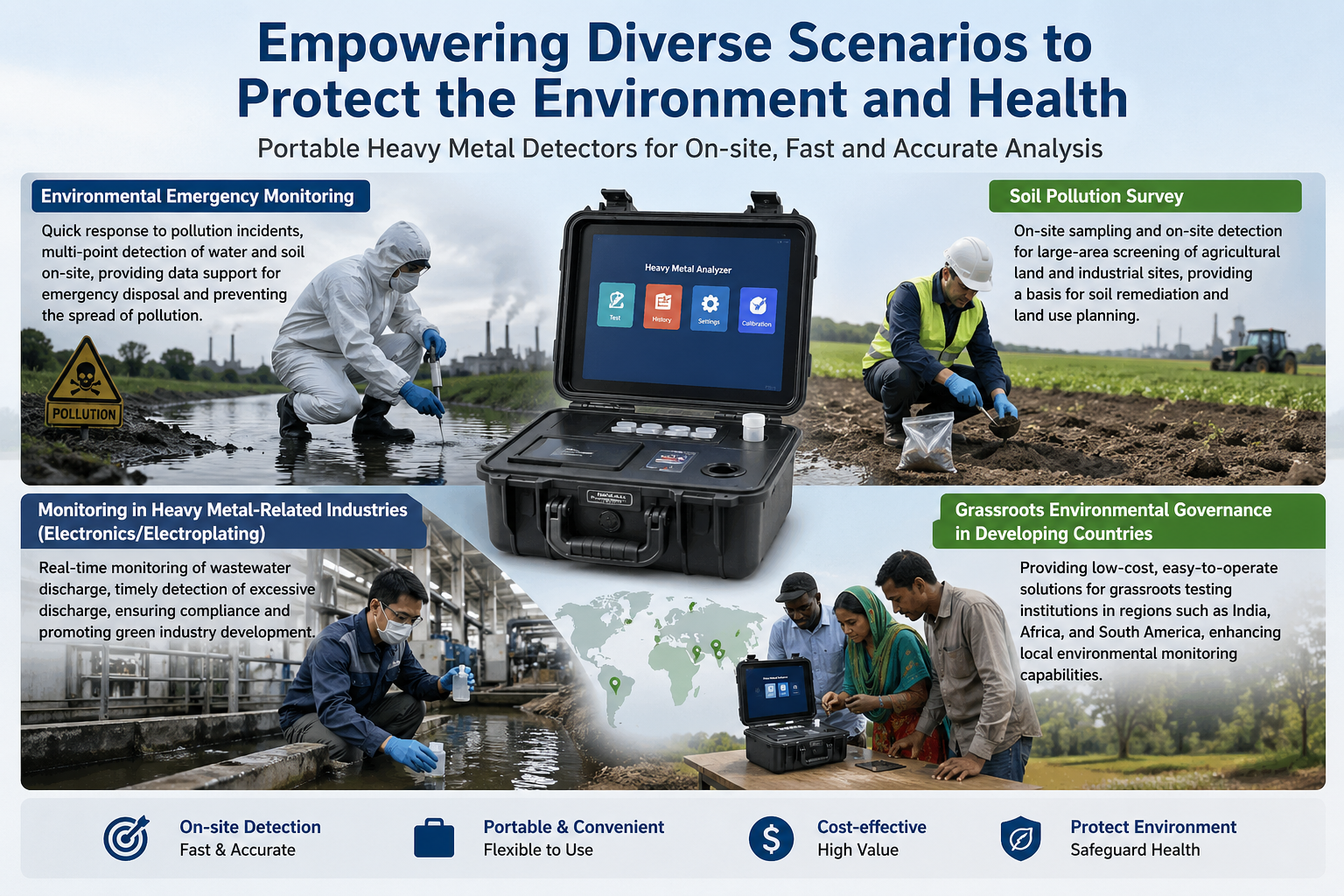
Environmental Emergency Monitoring: In the event of sudden heavy metal pollution incidents, it can quickly rush to the scene, conduct multi-point detection of polluted water bodies and soil, provide data support for emergency disposal, and avoid greater harm caused by pollution spread.
Soil Pollution Survey: In soil pollution surveys of agricultural land and industrial legacy sites, it realizes on-site sampling and on-site detection, efficiently completes large-area screening work, and provides a basis for soil remediation and land use planning.
Monitoring of Heavy Metal-Related Industries such as Electronics/Electroplating: For the monitoring of wastewater discharge in industries such as electronic manufacturing and electroplating, it helps enterprises and regulatory authorities timely detect excessive discharge behaviors and promote the green development of the industry.
Grassroots Environmental Governance in Developing Countries: It provides low-cost and easy-to-operate detection solutions for grassroots testing institutions in regions such as India, Africa, and South America, making up for the shortcomings of traditional laboratory testing and improving local environmental monitoring capabilities.