Introduction: Why Your Chlorine Monitoring Strategy Matters More Than Ever
When it comes to safeguarding public health through water disinfection, chlorine remains the world‘s most widely deployed solution. Yet maintaining the right chlorine residual is a delicate balancing act — too little chlorine risks inadequate pathogen inactivation; too much creates harmful disinfection by-products (DBPs) and objectionable taste and odor. The U.S. EPA sets a maximum residual disinfectant level (MRDL) of 4.0 mg/L for chlorine, while the World Health Organization (WHO) recommends a free chlorine residual of 0.2–5 mg/L at the point of consumption.
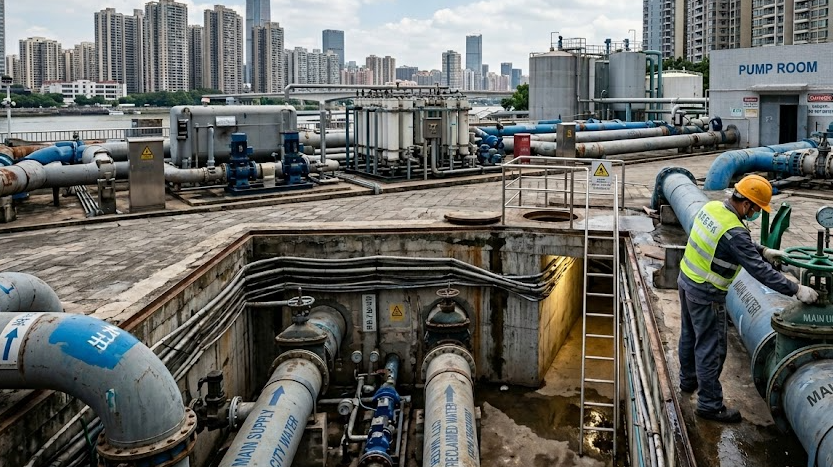
This is precisely where an online residual chlorine/total chlorine analyzer becomes indispensable. Rather than relying on periodic grab sampling, continuous online monitoring delivers real-time data that enables immediate process adjustments — preventing compliance violations and optimizing chemical dosing. With the global chlorine sensor market projected to grow from USD 1.12 billion to USD 2.45 billion by 2032 (CAGR: 10.21%), the shift toward automated online monitoring is accelerating.
But with competing measurement technologies on the market, how do you select the right instrument? This article breaks down the technology landscape, evaluates key selection criteria, and introduces a next-generation solution from ERUN Group.
Understanding the Two Dominant Measurement Technologies
Modern online chlorine analyzers fall into two primary categories: DPD colorimetric and amperometric electrode methods. Each serves distinct operational needs.
DPD Colorimetric Method
This approach relies on a chemical reaction between chlorine and DPD (N,N-diethyl-p-phenylenediamine) reagents, producing a magenta-colored compound whose intensity correlates with chlorine concentration. It measures both free and total chlorine and is recognized as the compliance standard under EPA Method 334.0 and Standard Methods 4500-Cl G. However, DPD systems require regular reagent replenishment, produce chemical waste, and typically offer longer cycle times between measurements. They are also susceptible to interferences from iron, manganese, and other oxidizing agents.
Amperometric Electrode Method
This electrochemical technique employs a selective membrane-covered electrode system. Hypochlorous acid (HOCl) molecules diffuse through the membrane and are reduced at the working electrode, generating a current proportional to chlorine concentration. Modern amperometric sensors — often featuring a three-electrode configuration with working, counter, and reference electrodes — deliver continuous, reagent-free measurement with T90 response times under 120 seconds. The technology requires periodic calibration but eliminates the consumable costs and chemical waste associated with DPD systems. A key advantage for total chlorine measurement: advanced amperometric sensors can reduce both free chlorine and chloramines directly at the working electrode, enabling total chlorine determination without additional reagents.
Key Selection Criteria: What to Evaluate Before You Buy
Based on procurement best practices and field experience, here are the critical factors to assess when selecting an online residual chlorine analyzer:
Measurement Range: For drinking water, 0–5 ppm is standard; for industrial effluent, ranges up to 20 ppm may be required.
Accuracy & Repeatability: Look for ±2% FS or better, especially when regulatory reporting is involved.
pH & Temperature Compensation: Automatic compensation is essential, as the HOCl/OCl⁻ equilibrium shifts significantly with pH changes.
Output & Integration: Ensure support for industry-standard protocols including 4–20mA analog output and RS485 (Modbus RTU) for SCADA/PLC integration.
Maintenance Burden: Reagent-free amperometric systems significantly reduce operational costs compared to DPD-based analyzers.
Ingress Protection: For field installations, IP65 or higher is recommended; IP68-rated sensors can withstand submerged conditions.
Total Cost of Ownership: Factor in not just the purchase price, but reagent costs, calibration frequency, electrode replacement intervals, and technician labor over the instrument‘s lifecycle.
Meet the ERUN-K6H: Purpose-Built for Demanding Water Monitoring Applications
For facilities seeking a high-performance online residual chlorine/total chlorine analyzer that balances accuracy, durability, and low maintenance, the ERUN-K6H Online Residual Chlorine Sensor (https://www.erunwas.com/products-detail/id-340.html) offers a compelling solution.
Independently developed by ERUN Group, the K6H is a flow-through type amperometric sensor designed for continuous real-time monitoring across drinking water, wastewater, boiler water, aquaculture, and biomedical applications. Key specifications include:
Measuring Range: 0.00–20.00 mg/L, covering both trace-level drinking water monitoring and high-concentration industrial applications
Accuracy: ±2% FS, providing reliable data for regulatory compliance
Temperature Range: 0.0–60.0℃ with automatic or manual compensation
Output Options: 4–20mA (load <500Ω) and RS485 data communication for seamless SCADA integration
IP Rating: IP68, ensuring reliable operation in the harshest field environments
Process Connection: M39×1.5 thread with M12 electrical interface, simplifying installation
Power Supply: Wide DC9–30V range for flexible deployment
What distinguishes the K6H from competitors is its three-electrode amperometric design, which provides superior measurement stability and extended electrode life compared to conventional two-electrode systems. The integrated temperature compensation automatically adjusts readings across varying water conditions, eliminating the need for manual recalibration when temperatures fluctuate.
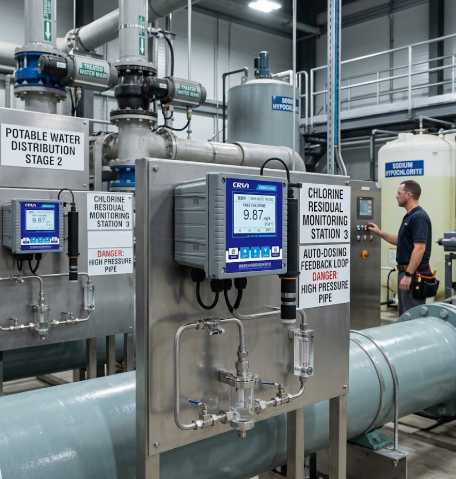
Where Regulatory Compliance Meets Operational Efficiency
The ERUN-K6H helps water treatment facilities meet international drinking water standards — including WHO guidelines, EPA regulations, and ISO requirements — by delivering continuous, accurate chlorine residual data. When combined with turbidity and pH monitoring, it forms a comprehensive water quality management system suitable for everything from municipal treatment plants to food and beverage processing lines.
Conclusion: Making the Right Investment
Selecting an online residual chlorine/total chlorine analyzer is a strategic decision that impacts regulatory compliance, operational costs, and ultimately public health protection. While DPD colorimetric analyzers offer well-established compliance pathways, reagent-free amperometric technologies like the ERUN-K6H deliver faster response, lower lifecycle costs, and seamless digital integration — making them the preferred choice for modern water treatment operations.
Ready to explore how the ERUN-K6H can enhance your water quality monitoring program? Visit the product page for detailed specifications or contact our engineering team for a personalized consultation.