The Growing Need for Real-Time Water Quality Data
Water quality degradation in rivers, lakes, and reservoirs has become a pressing global concern. Regulatory agencies worldwide are tightening discharge standards, while urban water managers, environmental consultancies, and research institutions face mounting pressure to collect continuous, reliable data. Traditional grab sampling methods—sending technicians to collect bottles and waiting days for laboratory results—can no longer keep pace with the speed at which pollution events occur. A single contamination spike from agricultural runoff or industrial discharge can dissipate before anyone notices, leaving critical gaps in the environmental record.
This is where autonomous monitoring platforms come in. By deploying equipment that stays on the water 24/7, operators gain access to real-time insights that manual sampling simply cannot provide. Among the various form factors available, buoy-based systems have emerged as the preferred choice for surface water applications—offering a balance of portability, durability, and expandability that fixed stations cannot match.

What Is a Buoy-Type Water Quality Automatic Monitoring System?
A buoy-type monitoring system integrates multi-parameter water quality sensors into a floating platform that anchors in place while transmitting data wirelessly to a cloud platform or control center. These systems continuously measure parameters such as dissolved oxygen, turbidity, pH, conductivity, ammonia nitrogen, chlorophyll, blue-green algae, and COD—providing a comprehensive picture of water health. Data is typically accessible via PC or mobile app, enabling stakeholders to receive alerts and make informed decisions without being physically present at the monitoring site.
Unlike shore-based monitoring stations that require permanent infrastructure, buoy systems can be deployed rapidly—often by a single person—and relocated as monitoring priorities shift. This flexibility makes them ideal for applications ranging from urban river surveillance to reservoir management and aquaculture protection. The global market for buoy water quality monitoring systems reflects this growing adoption, with sustained investment in both freshwater and marine monitoring applications.
Key Technical Advantages of Modern Buoy Monitoring Systems
Modern buoy-based water quality analyzers incorporate several design innovations that set them apart from earlier generations of monitoring equipment:
Compact and Lightweight Construction: Advanced PE (polyethylene) shell materials combined with EVA foam filling provide excellent buoyancy and impact resistance while keeping overall weight manageable. Systems with diameters under one meter and weights below 50 kg can be manually deployed without cranes or lifting equipment—a significant cost-saving factor for organizations monitoring multiple sites.
Multi-Parameter Sensor Integration: A single buoy platform can accommodate multiple sensor probes simultaneously, covering up to seven or more water quality indicators. Typical configurations include optical dissolved oxygen, four-electrode conductivity, fiber optic turbidity, chlorophyll, blue-green algae, pH, and ORP sensors—alongside optional UV254 COD and ammonia nitrogen electrodes for more comprehensive analysis.
Self-Cleaning Sensor Technology: One of the most significant maintenance challenges in long-term water monitoring is biofouling—the accumulation of algae, sediment, and microorganisms on sensor surfaces. Modern sensors equipped with automatic self-cleaning brushes eliminate the need for frequent manual maintenance, dramatically reducing operational costs and ensuring data accuracy over extended deployment periods.
Solar-Powered Autonomous Operation: Integrated solar panels and high-capacity battery banks enable continuous operation even in remote locations without grid power. Typical configurations include 45W solar panels paired with 12V 54AH batteries, providing sufficient autonomy for round-the-clock monitoring.
Flexible Wireless Data Transmission: Systems support multiple communication protocols including GPRS, 3G, 4G, and NB-IoT, allowing users to select the most appropriate option based on local network coverage and data bandwidth requirements.
Choosing the Right Buoy Monitoring System: What Buyers Should Consider
For B2B buyers evaluating buoy-based water quality monitoring solutions—whether you represent an environmental agency, an industrial facility, a research institution, or a systems integrator—several factors should guide your selection:
Sensor expandability: Can the system accommodate additional parameters as your monitoring requirements evolve? A platform that supports modular sensor expansion protects your initial investment.
Maintenance requirements: Self-cleaning sensors significantly reduce field service visits. Verify whether the system includes automated cleaning mechanisms for sensors deployed in biologically active waters.
Power autonomy: Assess the solar panel and battery specifications against your local climate conditions. Systems deployed in regions with extended cloudy periods require adequate battery reserves.
Data accessibility: Confirm that the communication protocol matches your network infrastructure. Systems supporting NB-IoT are particularly well-suited for urban deployments where cellular coverage is strong, while GPRS/4G options offer broader geographic reach.
Deployment logistics: Lightweight, compact buoy designs eliminate the need for specialized equipment during installation and retrieval—a critical consideration for organizations managing distributed monitoring networks.
Real-World Applications Driving Adoption
Buoy-based monitoring systems are proving their value across diverse operational scenarios. Environmental agencies deploy them for continuous surveillance of rivers and lakes, using real-time data to detect pollution events and issue early warnings for algal blooms. In the Philippines, smart buoys have been instrumental in protecting freshwater aquaculture operations—monitoring vital water quality parameters that allow fish cage operators to relocate stock before dissolved oxygen levels become dangerous. Research institutions use these platforms to study long-term ecological changes, while municipal water authorities integrate buoy data into drinking water source protection programs.
A Closer Look: The ERUN-SZ3-FB109S Small Buoy Water Quality Online Analyser
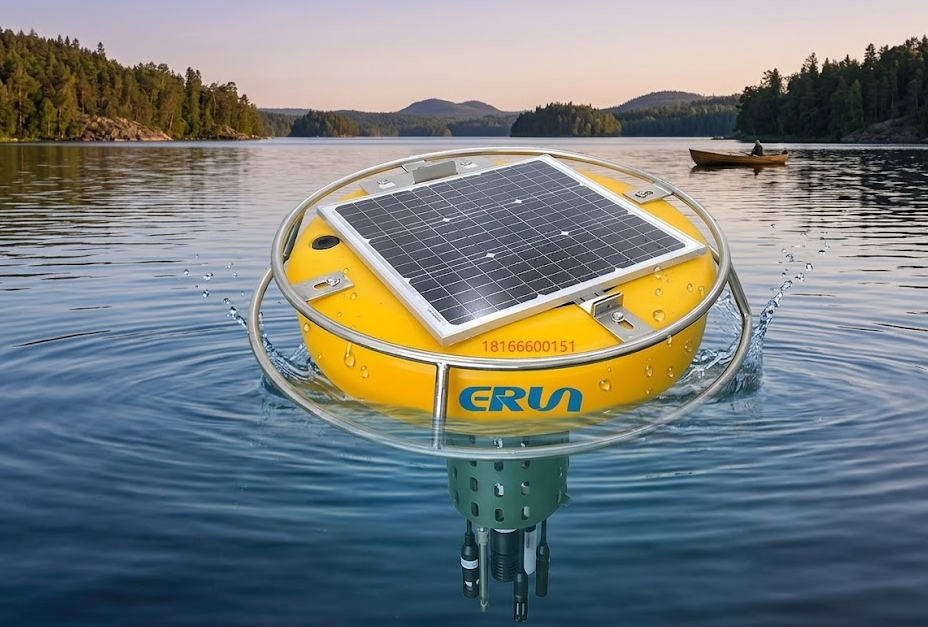
Among the solutions available on the market, the ERUN-SZ3-FB109S small buoy water quality online analyser (https://www.erunwas.com/products-detail/id-268.html) from Erun exemplifies the design philosophy that modern water monitoring demands. Developed specifically for surface water monitoring applications, this system combines compact dimensions—just 80 cm in diameter and 40 kg in weight—with robust multi-parameter sensing capabilities. The low center-of-gravity design and embedded screw fixation ensure stable operation even in moderately rough water conditions.
The system supports optional multi-parameter configurations with up to seven parameters across six sensor probes, including optical dissolved oxygen, four-electrode conductivity, turbidity, chlorophyll, blue-green algae, pH, and ORP. For applications requiring more advanced chemical analysis, UV254 COD and ammonia nitrogen sensors can be integrated. Each sensor features a self-cleaning brush mechanism that minimizes maintenance requirements during long-term online monitoring deployments.
Power is supplied by a 45W solar panel with a 12V 54AH battery, and data transmission options include GPRS, 3G, 4G, or NB-IoT—with full support for remote access via PC and mobile applications. The PE shell with EVA filling provides excellent durability and corrosion resistance, while the overall system weight allows for manual deployment without lifting equipment.
For more details, visit: https://www.erunwas.com/products-detail/id-268.html