Water quality is no longer a peripheral concern—it is a central pillar of public health, pharmaceutical safety, and industrial process integrity. Among the many parameters used to assess water purity, Total Organic Carbon (TOC) stands out as one of the most comprehensive and reliable indicators. Whether you are managing a pharmaceutical water system, operating a power plant, or overseeing municipal drinking water treatment, understanding and controlling TOC levels is essential. This article explores why TOC analysis matters, how it works, and what to look for when selecting the right instrument for your application.
What Is TOC and Why Does It Matter?
Total Organic Carbon (TOC) measures the amount of organic carbon present in a water sample. Unlike tests that target specific contaminants, TOC provides a broad-spectrum assessment of organic impurity levels. This makes it an invaluable tool for detecting contamination from natural organic matter, synthetic chemicals, microbial byproducts, and industrial pollutants—all of which can compromise water quality, damage equipment, or pose health risks.
The importance of TOC monitoring continues to grow. The global TOC analyzer market was valued at approximately USD 1.31 billion in 2024 and is projected to expand at a compound annual growth rate (CAGR) of 6.69% through 2035, driven by tightening environmental regulations and increasing demand for real-time water quality data. In parallel, the broader water quality monitoring market is being shaped by the adoption of IoT-enabled devices, cloud-based monitoring systems, and the integration of artificial intelligence for real-time data analysis.
Regulatory Drivers: Why Compliance Depends on TOC
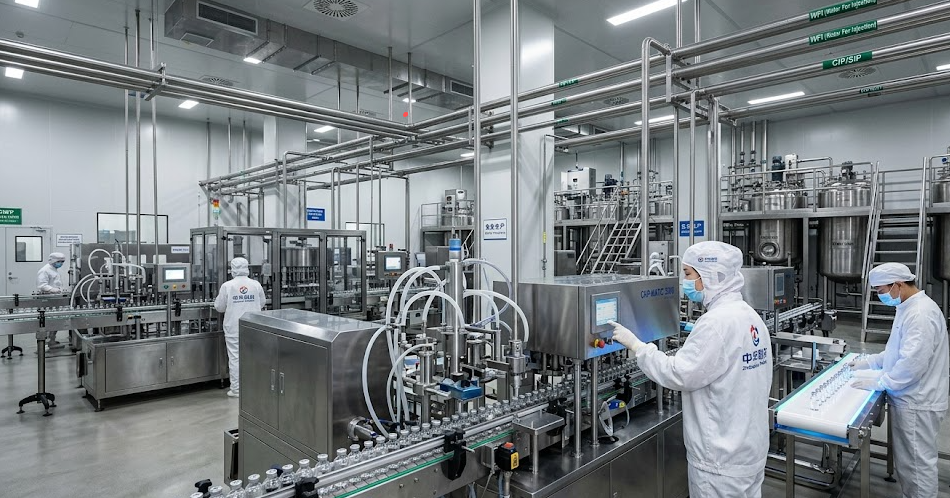
Regulatory requirements are the primary catalyst behind TOC analyzer adoption. In the pharmaceutical sector, the United States Pharmacopeia (USP) Chapter <643> mandates TOC testing for Purified Water (PW) and Water for Injection (WFI), with a limit of 500 ppb for both water types. The European Pharmacopoeia (Ph. Eur. 2.2.44) and WHO International Pharmacopoeia enforce similar standards, making TOC compliance a universal requirement for drug manufacturers worldwide.
Beyond pharmaceuticals, the U.S. Environmental Protection Agency (EPA) and the European Environmental Agency (EEA) have established strict limits on organic carbon discharge in industrial effluents. For drinking water treatment plants, TOC serves as a critical process control parameter throughout the treatment train—from raw source water to finished product. Power generation facilities, semiconductor fabs, and food and beverage producers also rely on TOC analysis to maintain process purity and prevent costly downtime.
Recent regulatory developments further underscore the importance of online TOC monitoring. The USP's revised General Chapter <1231> on Pharmaceutical Water now explicitly recommends online TOC measurement over offline testing, citing advantages in data reliability and process control. This shift toward real-time monitoring is reshaping procurement priorities across regulated industries.
How TOC Analysis Works: UV Oxidation and Detection Methods
TOC analyzers operate by oxidizing organic carbon in a water sample to carbon dioxide (CO₂), then measuring the CO₂ produced to calculate the original organic carbon concentration. Two primary oxidation methods dominate the market:
UV Oxidation Method: Uses ultraviolet light combined with an oxidizing agent to break down organic molecules. This method is valued for its simplicity, low operational cost, and compatibility with diverse sample types. It is particularly well-suited for low-TOC applications such as pharmaceutical water and ultrapure water systems, and is gaining further momentum with the development of portable and online analyzers.
High-Temperature Combustion Method: Oxidizes samples at elevated temperatures (typically 680–1000°C) in the presence of a catalyst. While offering a wider detection range suitable for wastewater and high-particulate samples, this method generally involves higher equipment costs and greater maintenance requirements.
The choice of oxidation technology should align with your sample matrix, required detection range, and operational environment. For laboratories and facilities focused on ultrapure water testing, UV oxidation offers a compelling balance of performance, cost-effectiveness, and ease of use.
7 Key Factors for Selecting a TOC Analyzer
Choosing the right TOC analyzer is a decision that impacts data quality, regulatory compliance, and operational efficiency for years. Based on industry best practices, here are the seven most important criteria to evaluate:
Detection Range and Sensitivity. Match the instrument's capabilities to your application. Pharmaceutical water testing typically requires sensitivity in the low ppb range (≤1 ppb detection limit), while wastewater applications may need measurements in the ppm range.
Oxidation Technology. As discussed, UV oxidation suits clean water applications, while combustion methods handle more complex matrices. Some advanced instruments support both modes for maximum flexibility.
Accuracy and Reproducibility. Look for instruments with documented accuracy error rates (ideally ≤5%) and repeatability specifications (≤3%) to ensure confidence in every measurement.
Speed and Throughput. Analysis cycle time directly affects laboratory productivity. Fast analyzers can deliver results in under 5 minutes per sample, enabling higher daily throughput.
Regulatory Compliance. Verify that the instrument meets relevant pharmacopeia standards (USP <643>, Ph. Eur. 2.2.44) and includes features such as password protection, audit trails, and compliance with FDA 21 CFR Part 11 for electronic records.
Ease of Use and Maintenance. An intuitive touchscreen interface, automated calibration, and modular design that simplifies maintenance can significantly reduce operator training time and ongoing service costs.
Total Cost of Ownership. Consider consumables, reagents, power requirements, and expected maintenance frequency. Some UV oxidation analyzers require no additional reagents, carrier gases, or catalysts—substantially reducing long-term operational expenses.
A Purpose-Built Solution: Total Organic Carbon Analyzer ERUN-SP3-J3
For laboratories and facilities seeking a high-performance, cost-effective TOC analyzer, the
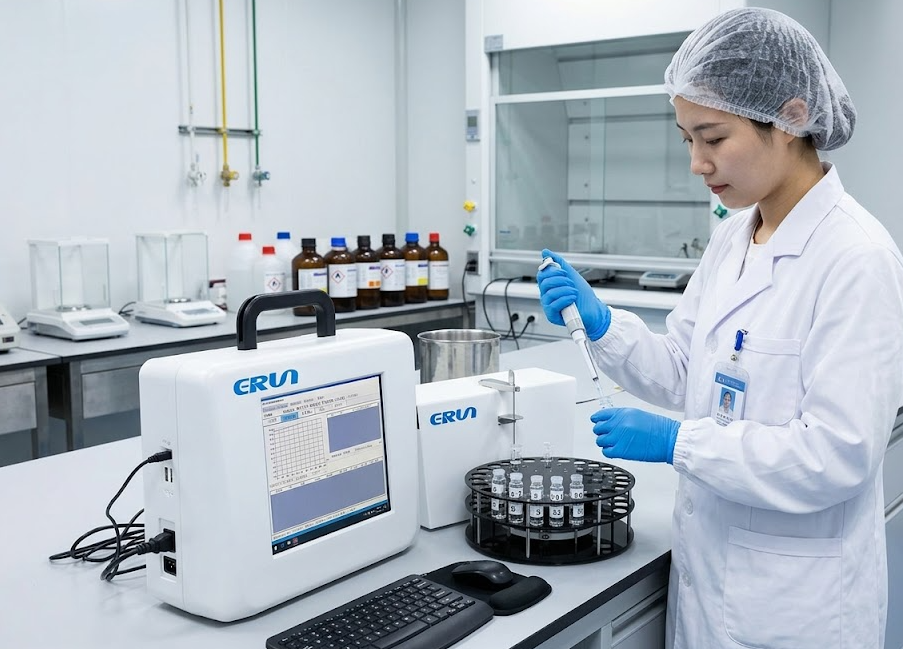
Total Organic Carbon Analyzer ERUN-SP3-J3 offers a purpose-built solution designed specifically for ultrapure and pharmaceutical-grade water testing.
Key specifications and capabilities include:
Detection range: 0.1–1000.0 µg/L, with a minimum detection limit of 1 ppb and detection accuracy of 0.1 µg/L—ideal for Purified Water and Water for Injection applications
Comprehensive testing parameters: Simultaneously measures TOC, conductivity, and temperature; supports TC, TIC, and NPOC analysis modes for complete carbon profiling
UV catalytic oxidation technology: Eliminates the need for acid reagents, catalysts, and carrier gases—resulting in near-zero daily maintenance costs
Fast analysis: Cycle time under 5 minutes, with detection typically completed in less than 3 minutes
Full regulatory compliance: Meets USP Chapter <643> system suitability requirements and CP2010 standards; features password protection and audit trail functionality aligned with FDA 21 CFR Part 11
Flexible configuration: Switchable between online and offline testing modes; optional autosampler for unattended continuous testing of multiple samples; optional external online monitoring device
Data management: 32 GB standard memory with unlimited storage duration; USB data export; historical query by inspection date
The ERUN-SP3-J3 is widely deployed across pharmaceutical production, power generation, electronic manufacturing, and pure water testing environments—delivering reliable, regulation-ready results in every application.
Looking Ahead: The Future of TOC Monitoring
The TOC analyzer landscape is evolving rapidly. Key trends shaping the market include the proliferation of online and portable analyzers for real-time process control, integration with IoT platforms and cloud-based data management systems, and the use of artificial intelligence for predictive maintenance and anomaly detection. For procurement managers and laboratory directors, selecting a TOC analyzer that balances accuracy, compliance, operational simplicity, and long-term value is more critical than ever.
Whether you are upgrading an existing water quality program or building one from the ground up, investing in the right TOC analysis technology is a decision that pays dividends in regulatory confidence, operational efficiency, and product safety.