


In industrial operations, the boiler is often considered the "heart" of the facility, with water serving as its "blood." Poor water quality management leads to scaling, corrosion, and foaming, which not only inflate fuel costs but can also cause catastrophic equipment failure.
The following guide outlines the critical parameters and modern strategies for effective boiler water analysis.
1. Scaling Prevention:
Calcium and magnesium ions precipitate under heat to form hard scale. Because scale has a thermal conductivity of only about 1% that of steel, even a 1mm layer can increase fuel consumption by over 10% and cause boiler tubes to overheat and rupture.
2. Corrosion Control:
Dissolved oxygen and improper pH levels are the primary enemies of carbon steel and stainless steel components. Oxygen causes localized "pitting," while acidic conditions lead to general thinning of the metal walls.
3. Steam Purity:
High concentrations of dissolved solids cause "carryover" or foaming, where water droplets enter the steam flow. This contaminates downstream processes and damages sensitive equipment like turbines and valves.
To maintain a healthy boiler system, several key chemical indicators must be tracked:
Parameter Primary Purpose Typical Range (Low Pressure)
Hardness Prevents calcium/magnesium scaling 0.03 mmol/L (Softened)
pH ValueInhibits acid corrosion Feedwater: 7.0 - 9.0; Boiler: 10.0 - 12.0
Dissolved Oxygen (DO)Prevents oxygen pitting Feedwater: 0.05 mg/L
Conductivity Measures Total Dissolved Solids (TDS) Varies by boiler pressure
Alkalinity Buffers pH and inhibits corrosion 8.0 - 26.0 mmol/L
Phosphate Internal treatment to prevent scale 10.0 - 30.0 mg/L
Industrial water testing has evolved from slow laboratory titration to rapid, real-time digital monitoring.
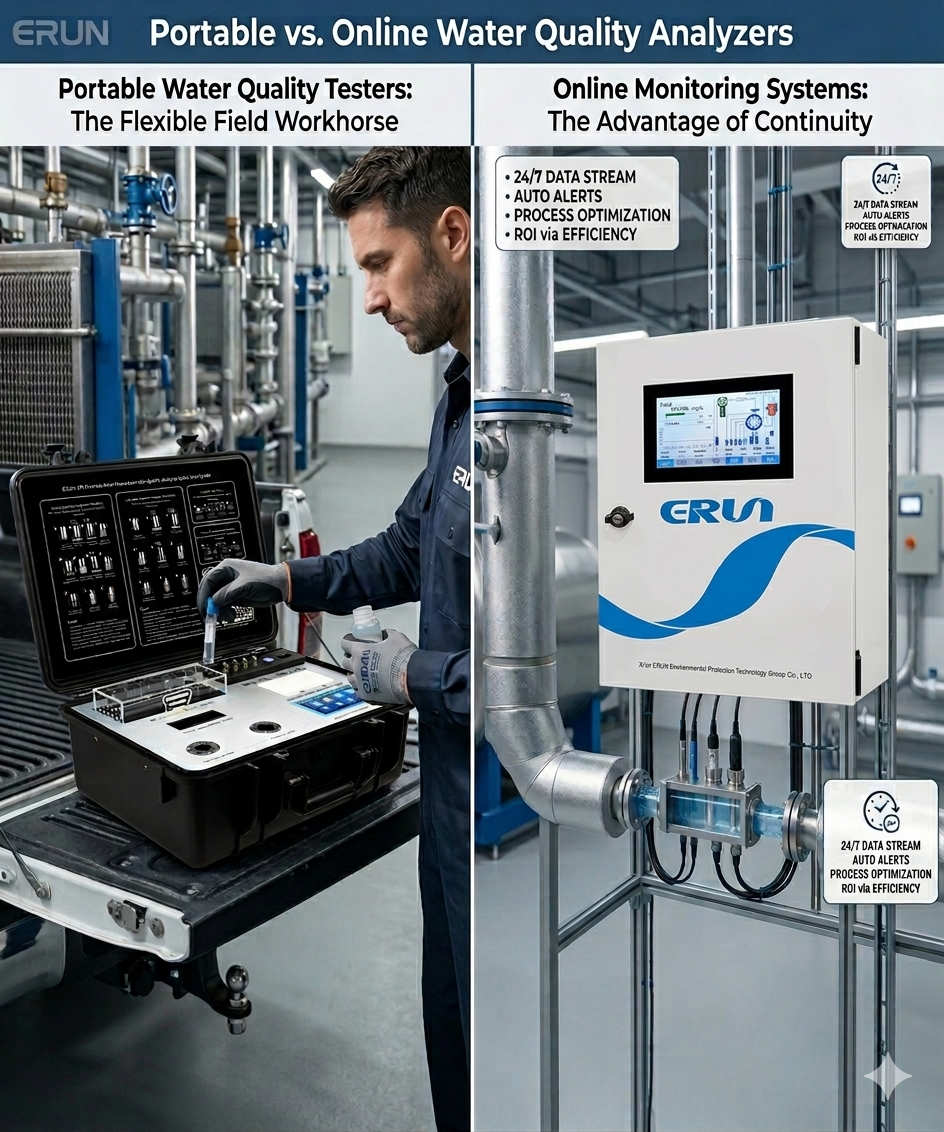
For field technicians or smaller plants (e.g., 200-300 HP fire-tube boilers), portable water quality kits are essential. These integrated systems often use colorimetric or electrochemical methods to measure hardness, alkalinity, and phosphate in minutes. Their rugged, "box-style" design makes them ideal for harsh industrial environments.
High-pressure or mission-critical boilers benefit from dedicated online sensors for conductivity and pH.
Automatic Blowdown: When conductivity exceeds a set limit, the system triggers a blowdown valve to reduce mineral concentration.
Chemical Dosing Control: Systems can automatically adjust chemical feed pumps based on real-time pH or phosphate readings to maintain the ideal chemical balance.
Calibration is Key: Regardless of the equipment used, regular calibration with standard solutions is mandatory to ensure data accuracy.
Trend Analysis: Don't just look at a single data point. Maintain a digital log to spot trends—a sudden spike in hardness may indicate a failure in your water softener system.
Regulatory Compliance: Ensure your testing protocols align with regional industrial safety standards (such as ASME or local boiler inspection codes).
By implementing a rigorous water quality monitoring program, enterprises can extend the lifespan of their assets, ensure operator safety, and achieve significant energy savings in an increasingly competitive industrial landscape.