


If you have noticed a bitter taste in your water, unusual scaling in pipelines, or inconsistent water quality reports, one key factor may be elevated sulfate levels. Many customers ask: what causes high sulfates in water, and more importantly, how can they identify the source quickly and accurately?
The answer often depends on the water source, surrounding environment, and industrial conditions. For laboratories, water treatment companies, and industrial buyers, understanding the cause is the first step toward choosing the right treatment plan.
This article explains the most common causes of high sulfates in water and introduces a professional testing solution designed around real customer needs.
High sulfate concentrations in water usually come from a combination of natural geological sources and human activities.
The most common cause is natural mineral dissolution.
As groundwater moves through soil and rock layers, it dissolves sulfate-containing minerals such as:
· gypsum
· magnesium sulfate
· sodium sulfate
This is especially common in groundwater and well water systems. In many regions, sulfate is naturally present and can accumulate over time.
For customers using private wells or groundwater sources, this is often the primary reason for elevated sulfate readings.
For industrial customers, sulfates may come from production processes.
Industrial wastewater discharge can introduce significant sulfate concentrations into local water systems.
This is especially relevant for factories and environmental monitoring agencies that need compliance testing
Sulfate-based fertilizers and agricultural chemicals can also raise sulfate levels.
When irrigation water or rainfall carries these compounds into groundwater, rivers, or reservoirs, sulfate concentrations may increase.
For agricultural water monitoring customers, this is a frequent testing concern.
In low-oxygen environments such as deep wells, sulfate-related bacterial activity may also contribute to water quality issues.
Sulfate-reducing bacteria use sulfur compounds as an energy source and may create secondary water problems, including corrosion and odor-related issues.
This is often a major concern for customers managing pipelines, tanks, and water distribution systems.
Most customers are not simply looking for a machine—they need a solution that helps them make confident decisions.
Typical customer pain points include:
· uncertainty about contamination source
· repeated retesting costs
· inaccurate strip-test results
· compliance pressure
· inability to determine treatment method
The key need is clear:
accurate sulfate concentration data that supports fast action
That is where a professional laboratory testing solution becomes essential.
The ERUN-ST-YS740 laboratory desktop sulfate quality detector is designed specifically to solve these customer challenges.
Rather than focusing only on technical specifications, this instrument helps customers answer critical operational questions such as:
Is the sulfate source geological or industrial?
Has wastewater contamination occurred?
Does the water require treatment?
Is the concentration within compliance range?
This allows customers to move from uncertainty to action quickly.
The detector uses a professional laboratory detection principle:
In acidic solution, sulfate reacts with barium chromate solution to form a precipitate. After standing, the solution is adjusted to alkaline conditions and filtered to remove the precipitate and excess reagent.
This method helps customers obtain stable and trustworthy sulfate readings.
With a measuring range of 5.00–200.00 mg/L, the instrument is ideal for identifying sulfate concentration changes within key operational ranges.
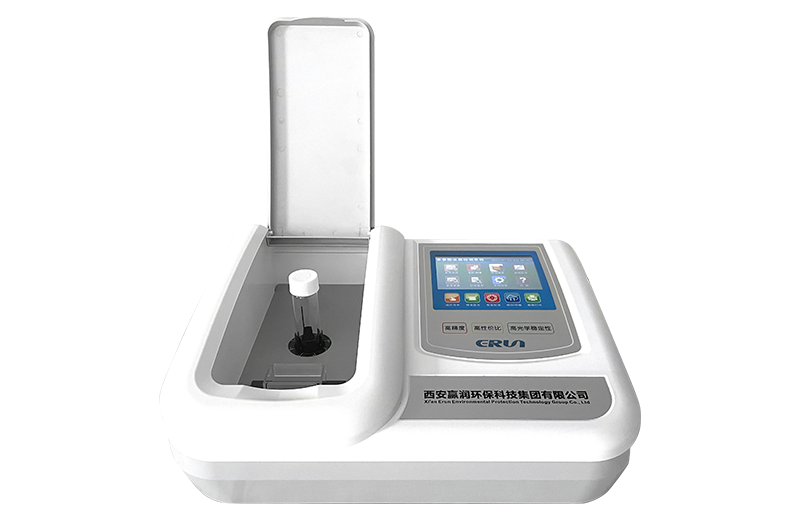
With an error range of ≤ ±5% and repetitiveness of ≤ 2%, customers can reduce repeated manual testing and improve reporting consistency.
Once sulfate concentration is confirmed, customers can decide whether solutions such as reverse osmosis, ion exchange, or source-water changes are needed.
This product directly supports that workflow.
So, what causes high sulfates in water?
The most common causes are natural mineral dissolution, industrial wastewater, agricultural runoff, and bacterial activity.
For customers, the most important step is not guessing the cause—it is accurate testing.
The ERUN-ST-YS740 sulfate quality detector provides a reliable solution tailored to the real needs of laboratories, industrial users, and water treatment professionals.