


If you have ever noticed a bitter taste in tap water or wondered whether sulfate levels are affecting water quality, you are not alone. Sulfates are one of the most commonly found minerals in groundwater, well water, and industrial water systems. The key question many homeowners, laboratories, and water treatment professionals ask is: are sulfates in water bad for you?
The short answer is: not usually at normal levels, but when concentrations rise too high, sulfates can create health concerns, unpleasant taste issues, and operational challenges for water systems.
This article will help you understand the risks, safe limits, and most importantly, how to accurately test sulfate levels with a professional solution designed for customer needs.
Sulfates are naturally occurring mineral salts made from sulfur and oxygen (SO₄²⁻). They are commonly found in:
groundwater
well water
rivers and lakes
industrial wastewater
municipal water systems
These minerals often come from natural rock formations such as gypsum and magnesium sulfate deposits. In industrial settings, sulfates may also enter water through mining, manufacturing, and wastewater discharge.
Because sulfates are so common, trace amounts are present in most drinking water supplies.
In most cases, sulfates in drinking water are safe at normal concentrations.
According to the U.S. EPA and multiple health agencies, the recommended aesthetic guideline is 250 mg/L. This level is mainly based on taste rather than toxicity.
However, when sulfate levels exceed 500 mg/L, some people may experience:
diarrhea
stomach discomfort
dehydration
laxative effects
This is especially important for:
infants
elderly people
travelers not used to local water
livestock and agricultural use
At very high concentrations above 1000 mg/L, digestive symptoms may become much more noticeable.
So the real issue is not whether sulfate exists, but whether the concentration exceeds safe operating levels.

For many customers, the biggest challenge is uncertainty.
You may notice:
unusual taste
bitter or medicinal flavor
customer complaints about water quality
concerns from regulatory inspections
inconsistency in industrial water processes
The problem is that sulfates cannot be reliably identified by taste alone.
For laboratories, water treatment companies, distributors, and environmental testing organizations, inaccurate readings can lead to:
· compliance risks
· wrong treatment decisions
· product quality issues
· customer dissatisfaction
This is why a professional sulfate testing solution is essential.
To solve this customer pain point, ERUN Environmental Protection developed the ERUN-ST-YS740 laboratory desktop sulfate quality detector.
Rather than simply selling an instrument, this product is designed to help customers obtain stable, repeatable, and trustworthy sulfate results for decision-making.
Whether you are a laboratory, industrial buyer, or water treatment service provider, your core needs are:
reliable concentration data
reduced testing errors
repeatable results for reporting
fast decision support
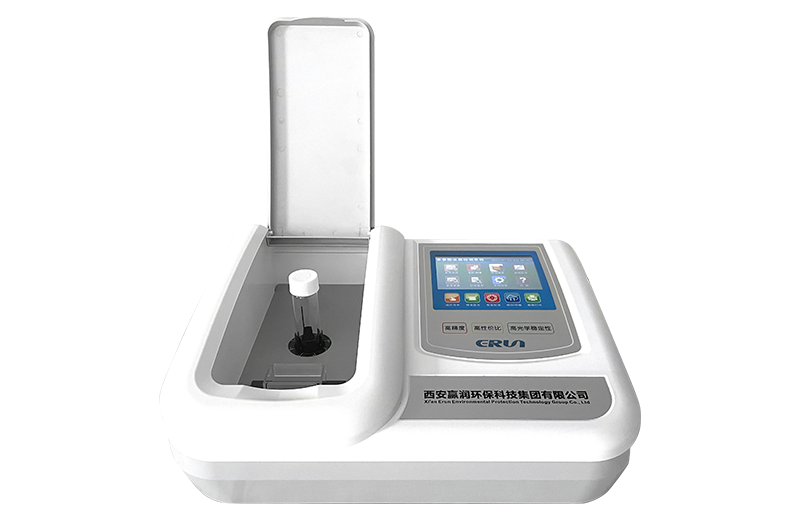
The ERUN-ST-YS740 directly addresses these needs.
Its detection principle uses a professional laboratory method:
In acidic solution, sulfate reacts with barium chromate to form a precipitate. After standing, the solution is adjusted to alkaline conditions and filtered to remove the precipitate and excess barium chromate solution.
This method helps customers achieve accurate sulfate concentration analysis for water samples.
With a measuring range of 5.00–200.00 mg/L, the detector is ideal for monitoring sulfate levels within the critical decision-making range.
This helps customers quickly determine whether water quality remains within acceptable standards.
With an error range of ≤ ±5%, customers can confidently use the results for:
· laboratory reporting
· quality assurance
· environmental compliance
· client documentation
A repetitiveness of ≤ 2% means highly consistent results across multiple tests.
For customers running frequent batch testing, this is crucial because it minimizes result fluctuation and improves trust in the data.
For water treatment companies, precise sulfate data helps determine whether further treatment solutions such as reverse osmosis or ion exchange are necessary.
In other words, this product helps customers avoid over-treatment costs and under-treatment risks.
So, are sulfates in water bad for you?
At normal levels, usually no.
But once sulfate concentrations rise above recommended standards, they may cause taste issues and digestive discomfort.
For customers who need accurate, repeatable sulfate testing results, the real solution is not guesswork—it is professional laboratory-grade detection.
The ERUN-ST-YS740 sulfate quality detector provides the precision and consistency customers need to solve water quality challenges efficiently.