


In modern agriculture and smart horticulture, hydroponics is often hailed as a "stationary factory." However, many growers face a frustrating reality: even with the premium nutrient solutions, plants still suffer from yellowing leaves, stunted growth, or even large-scale root rot.
The core of the problem isn't the fertilizer—it's the dynamic balance of water quality. Today, we will take an in-depth look at why professional water quality monitoring is the only shortcut to hydroponic success.
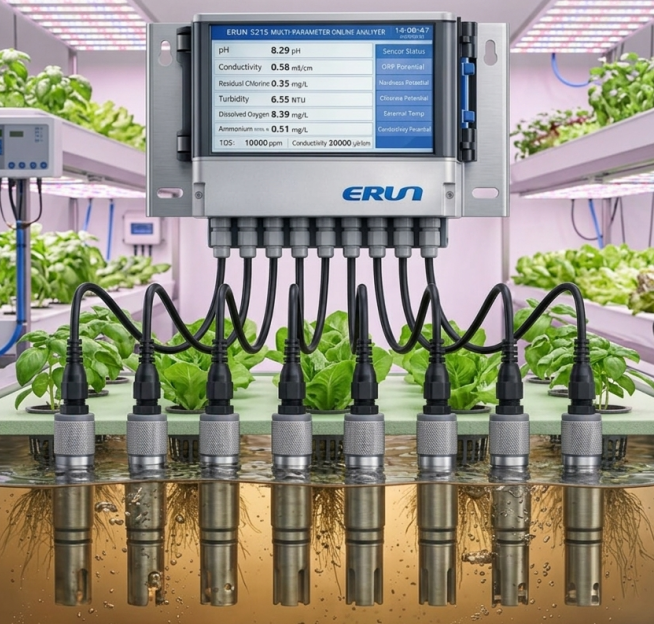
Unlike traditional soil-based farming, hydroponic roots lack the natural "buffering" effect of soil. Soil can dilute excess nutrients and stabilize pH levels; however, in a hydroponic system, the root system is directly exposed to the solution. A minor fluctuation in water quality can trigger a negative response in plant growth within just a few hours.
Without monitoring, you are essentially "blind farming."
To achieve standardized yields, you must maintain real-time control over these key parameters:
pH Value (The Nutrient "Vacuum"): Most hydroponic crops (such as lettuce, strawberries, and tomatoes) prefer a slightly acidic environment of pH 5.5-6.5. Once the pH drifts, "ionic lockout" occurs—even if the water is full of nutrients, the roots simply cannot absorb them.
EC Value (Electrical Conductivity): This represents the concentration of inorganic salts in the water. If it's too low, growth stalls; if it's too high, you get "root burn." By monitoring EC, growers can achieve precision fertilization, significantly reducing nutrient costs.
DO (Dissolved Oxygen): Oxygen deficiency is the leading cause of root rot. Maintaining high DO levels inhibits the growth of anaerobic pathogens (like root rot fungi) and ensures roots stay white, healthy, and vigorous.
Water Temperature: Temperature directly impacts metabolism and oxygen solubility. When water temperature exceeds 28°C, dissolved oxygen levels plummet, and the risk of disease and pests skyrockets.
Beginner Stage: Test Strips & Simple Pens Suitable for small-scale home hobbyists. While affordable, they have high error margins and cannot track data trends over time.
Intermediate Stage: Portable Multi-Parameter Analyzers
Ideal for regular greenhouse inspections. These provide high precision and are essential tools for professional technicians.
Advanced Stage: Online Intelligent Monitoring Systems
Designed for plant factories and commercial greenhouses. These use sensors for 24/7 monitoring, uploading data to the cloud in real-time. When paired with automated dosing systems, they enable truly unmanned management.
In commercial cultivation, sensor stability and lifespan are paramount. Common, low-cost probes often suffer from drift or damage in the high-salinity environment of nutrient solutions.
Utilizing industrial-grade electrochemical sensors (such as pH/EC sensors with RS485 output) allows for superior resistance to environmental interference. This ensures that monitoring data remains accurate and reliable over the long term, protecting your crops while reducing long-term maintenance and labor costs.
The essence of hydroponics lies in "precision control," and the prerequisite for control is "precision sensing." A professional water quality monitoring solution can increase your yield by over 30% and eliminate hidden disease risks.
Are you struggling with water quality fluctuations in your greenhouse? Or do you need an online monitoring solution tailored to a specific crop?
As experts in industrial water quality monitoring, we provide comprehensive solutions ranging from the SP series handheld devices to online automated monitoring cabinets. Contact us via our homepage or leave a message to get your customized smart agriculture plan!