


In industrial boiler operations, water quality management is not just a routine task—it is the lifeline of your facility's safety and energy efficiency. A recent field water quality report revealed a staggering TDS (Total Dissolved Solids) of 16,010 mg/L, nearly five times the industry limit of 3,500 mg/L, alongside elevated Silica (SiO2) levels.
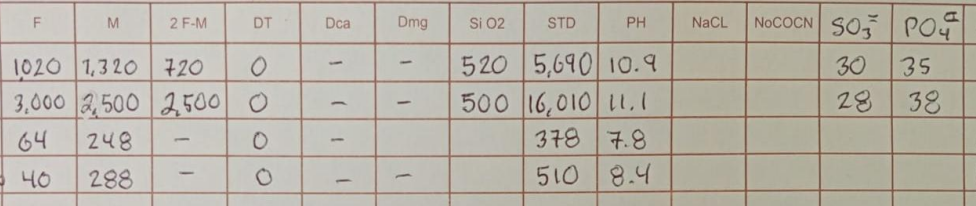
Operating under these conditions poses massive risks: irreversible scaling, reduced heat transfer, and catastrophic tube failure. How should professional engineers manage these critical parameters?
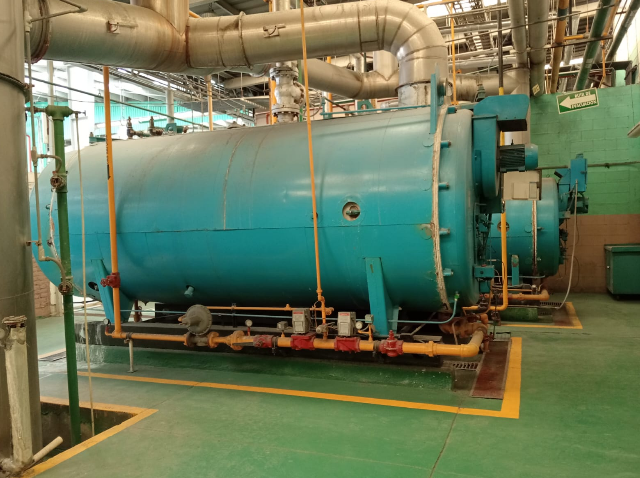
TDS / Conductivity (Total Dissolved Solids):
When TDS exceeds safety limits, "carryover" occurs. This process drags boiler water into the steam, contaminating downstream processes and causing "foaming" that damages valves, instruments, and turbines.
Silica (SiO2):
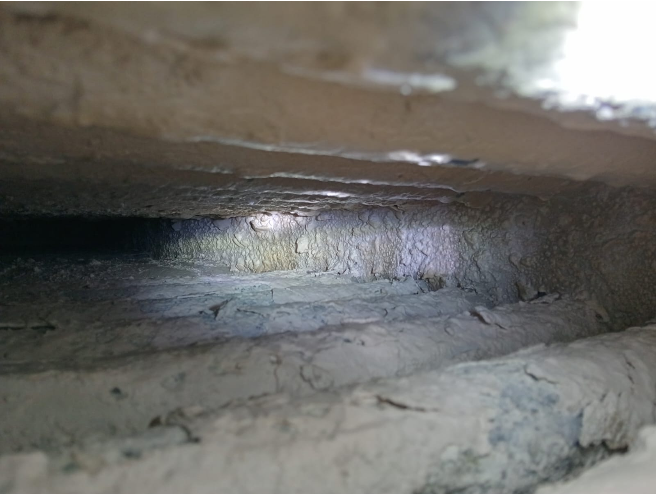
Silica is known as the "silent killer" of boilers. It forms an incredibly hard, glass-like scale that is nearly impossible to remove chemically. Even a thin layer of silica scale acts as an insulator, causing the metal to overheat and eventually rupture.
pH & Alkalinity:
Boiler water must typically be maintained between 10.5 and 11.8. This alkaline environment ensures the formation of a passive magnetite layer on steel surfaces, protecting them from acid corrosion.
Phosphate (PO4) & Sulfite (SO3):
These chemical residuals act as oxygen scavengers and scale inhibitors. Maintaining them within the 20-40 ppm range is crucial for ongoing internal treatment.
If your testing shows extreme values like 16,010 mg/L TDS, immediate action is required:
Increase Blowdown Frequency: Both continuous and bottom blowdowns must be increased to physically purge concentrated impurities and replace them with fresh feedwater.
Audit the Pre-treatment System: High incoming TDS often points to a failure in the softener or Reverse Osmosis (RO) system.
Implement Real-time Monitoring: Manual grab sampling is often too slow to catch rapid spikes. Switching to online conductivity analyzers provides the real-time data needed for automated blowdown control.
In harsh industrial environments, precision and durability are non-negotiable. ERUN Environmental provides a comprehensive suite of instrumentation specifically engineered for boiler water loops:
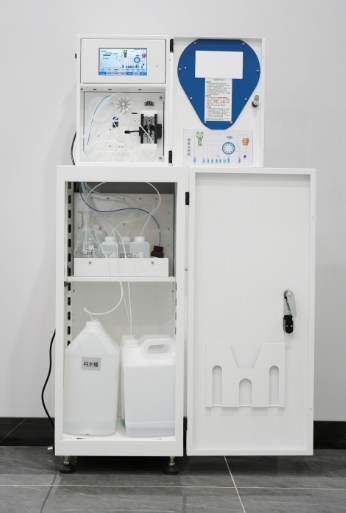
ERUN-SZ Online Monitoring Cabinets: An all-in-one solution for pH, Conductivity, Dissolved Oxygen, and ion analysis with real-time alarming.
Portable Water Quality Analyzers: Built for rugged field use, providing lab-grade accuracy for spot checks.
High-Temperature Resistant Sensors: Our proprietary sensors are designed to withstand the high-pH and high-pressure conditions of boiler blowdown lines without drifting.
Effective boiler water management is the balance of precise monitoring and scientific blowdown. By keeping TDS and Silica within strict limits, you protect your capital assets and significantly reduce fuel costs through optimized heat transfer.