


Deciding between a portable water quality tester and an online monitoring system? Compare accuracy, cost-efficiency, and application scenarios to find the right solution for your industrial or municipal needs.
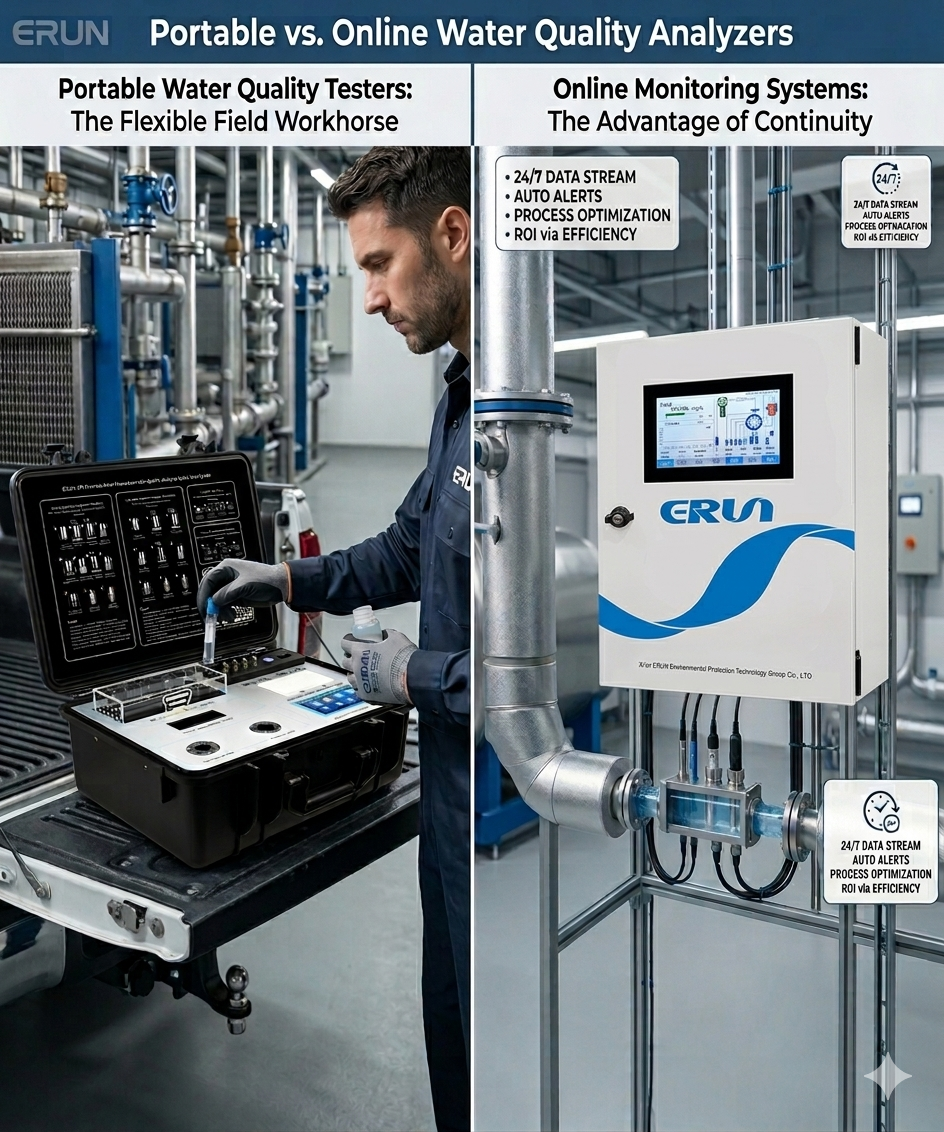
In modern industrial water treatment, the choice between manual spot-checking and continuous automated monitoring is a critical decision. Whether you are managing a power plant's cooling water or a municipal drinking water network, the right instrumentation directly impacts both safety and operational costs.
Portable devices, such as the ERUN-SP series, are indispensable for field professionals.
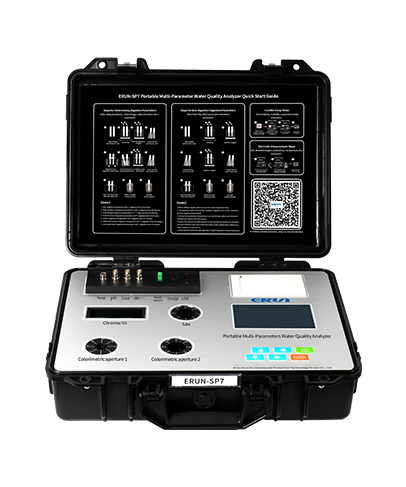
Best for: On-site inspections, emergency troubleshooting, and decentralized testing at multiple points.
Key Advantages: Low initial investment, no complex installation, and the ability to test multiple parameters (pH, Residual Chlorine, COD) with a single handheld unit.
Best for: Process control in wastewater plants, boiler feed water monitoring, and ensuring regulatory compliance in real-time.
Key Advantages: Automated data logging, instant alerts for parameter spikes, and significantly reduced labor costs over time.
Response Time: If your process can change within minutes, online monitoring is a necessity.
Budget: Portable units have lower upfront costs, while online systems offer a better ROI through automated chemical dosing.
Application: For "point-to-point" field work, choose a portable water quality tester; for "fixed-point" compliance, choose an online system.
The most resilient water management strategies often combine both. Use online systems for constant oversight and a reliable handheld tester, like the ERUN-SP7, for laboratory-grade verification on the go.