


Water conductivity is one of the fastest and most practical indicators of water quality. Whether you are managing drinking water, monitoring industrial processes, or protecting natural water resources, conductivity provides immediate insight into what’s happening inside the water.
But what does water conductivity really tell you?
In simple terms, it reveals the concentration of dissolved ions—such as salts, minerals, and chemicals—which directly affects water purity and usability. However, to make accurate decisions, you need not only to understand conductivity but also to measure it correctly.
Water conductivity refers to the ability of water to conduct electricity. This ability depends on the presence of dissolved ions.
It measures how many charged particles are present in water. The more ions, the higher the conductivity.
Conductivity is often used as a quick indicator of Total Dissolved Solids (TDS) and salinity. While they are related, conductivity offers a faster and more efficient way to assess overall water composition.
High conductivity typically indicates a higher concentration of dissolved substances, while low conductivity suggests purer water. However, it does not identify the specific substances present.
Understanding conductivity helps you interpret water conditions more effectively.
Conductivity provides a quick estimate of how many dissolved ions are present. This helps identify whether water is mineral-rich or potentially contaminated.
Low conductivity usually means fewer impurities, making it suitable for applications like drinking water or laboratory use. High conductivity may indicate the presence of unwanted substances.
Sudden increases in conductivity can signal pollution from industrial discharge, agricultural runoff, or wastewater contamination. This makes conductivity a valuable early warning indicator.

In industrial environments, conductivity helps monitor chemical concentrations and maintain stable processes, ensuring efficiency and product quality.
In rivers, lakes, and aquaculture systems, conductivity changes can indicate shifts in environmental conditions, helping protect ecosystems.
Accurate interpretation is just as important as measurement.
Drinking water typically has low to moderate conductivity, depending on local standards and mineral content.
Low conductivity suggests high purity, while high conductivity indicates more dissolved substances—but not necessarily contamination.
Conductivity should be used alongside other parameters such as pH and turbidity to get a complete picture of water quality.
Regular monitoring allows users to detect trends, identify anomalies, and take corrective action when needed.
Many users face challenges such as delayed test results, inconsistent data, and difficulty conducting on-site measurements. These issues can lead to poor decision-making and increased risks.
The ERUN-SP8-ASC-A4 portable conductivity analyzer is designed to solve these problems by offering a reliable and efficient testing solution.
This portable device allows users to perform conductivity testing directly on-site, eliminating the need for time-consuming laboratory analysis. This is especially valuable for fieldwork, industrial operations, and environmental monitoring.
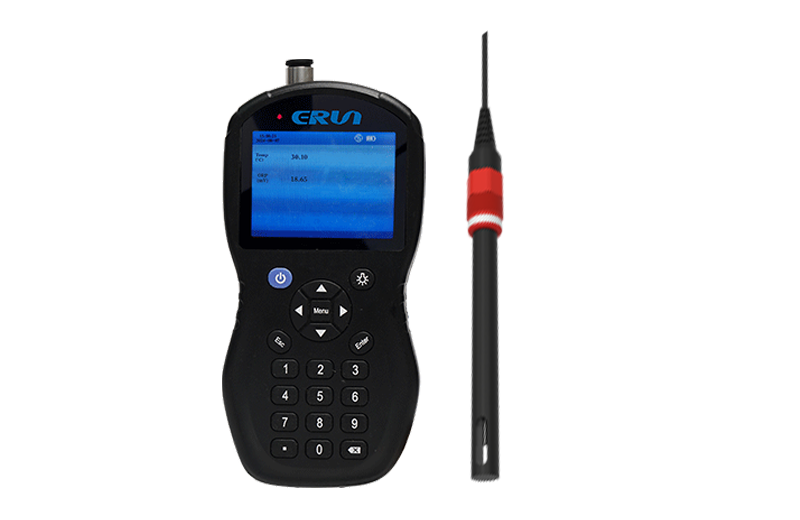
Using a proven measurement principle based on electrode plates and electrical conductivity, the analyzer delivers precise and consistent results. This helps users trust the data and act with confidence.
Water conductivity tells you how many dissolved ions are present and provides a quick snapshot of water quality. While it is a powerful indicator, it must be interpreted correctly and supported by accurate measurement.
With the right tools and consistent monitoring, conductivity becomes a valuable asset for ensuring water safety, optimizing processes, and protecting the environment