


TOC testing methods for water play a critical role in evaluating organic contamination across drinking water, pharmaceutical systems, and industrial processes. Total Organic Carbon (TOC) is a key indicator used in global regulatory frameworks such as the Guidelines for Drinking-water Quality, the Safe Drinking Water Act (SDWA), and GB 5749-2022. Accurate TOC analysis helps ensure water safety, process efficiency, and compliance with strict quality standards.
TOC represents the amount of carbon bound in organic compounds within water. It serves as a non-specific but highly sensitive parameter for detecting contamination from natural organic matter, industrial pollutants, or microbial activity. Regulatory agencies emphasize TOC monitoring because elevated organic content can lead to harmful disinfection byproducts during water treatment.
In pharmaceutical and ultrapure water systems, TOC limits are particularly stringent. Even trace levels can compromise product quality, making reliable testing methods essential.
Different analytical techniques are used depending on the application, required sensitivity, and regulatory requirements. The most widely adopted TOC testing methods include:
This method oxidizes organic carbon at temperatures above 680°C, converting it into carbon dioxide (CO₂), which is then measured using non-dispersive infrared (NDIR) detection.
Feature | Description |
Oxidation Mechanism | Thermal combustion |
Detection | NDIR |
Advantages | High accuracy, suitable for complex samples |
Limitations | Higher energy consumption |
This method is commonly used in environmental laboratories and wastewater analysis due to its robustness and reliability.
UV radiation combined with a chemical oxidant (persulfate) breaks down organic compounds into CO₂. The resulting CO₂ is then quantified.
Feature | Description |
Oxidation Mechanism | UV + chemical oxidation |
Advantages | Lower temperature, good sensitivity |
Limitations | Requires reagent handling |
This method is often applied in drinking water and laboratory analysis where moderate TOC levels are expected.
A more advanced approach uses UV light with a catalyst to oxidize organic carbon without additional reagents. This method is increasingly popular in high-purity applications.
Feature | Description |
Oxidation Mechanism | UV catalytic |
Advantages | No reagents, low maintenance, environmentally friendly |
Limitations | Best suited for low TOC concentrations |
This technique aligns well with pharmaceutical and ultrapure water standards due to its clean operation and minimal contamination risk.
In this approach, Total Carbon (TC) and Total Inorganic Carbon (TIC) are measured separately. TOC is calculated as:
TOC = TC – TIC
This method is versatile and can be integrated with different oxidation techniques, making it suitable for a wide range of water matrices.
TOC testing must meet strict regulatory requirements depending on the application:
· Drinking water standards (such as WHO guidelines and SDWA) emphasize controlling organic matter to prevent harmful byproducts.
· GB 5749-2022 specifies TOC as an important parameter in municipal water quality monitoring.
· Pharmaceutical standards (USP <643> and related frameworks) require highly sensitive and validated TOC measurement systems.
Modern analyzers are designed to meet these standards by offering high precision, repeatability, and traceable data management.
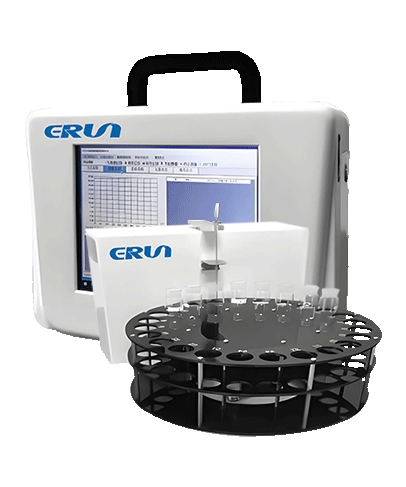
Selecting an appropriate instrument is essential for achieving accurate and compliant results. The ERUN Total Organic Carbon Analyzer (Model: ERUN-SP3-J3) is a practical solution designed for a wide range of applications, including pharmaceutical water, purified water, and drinking water systems.
This analyzer adopts UV catalytic oxidation, eliminating the need for acid reagents, catalysts, or carrier gases. Such a design reduces operational costs and minimizes environmental impact. With a detection range of 0.1–1000.0 μg/L and a minimum detectable limit of 1 ppb, it meets the sensitivity requirements of high-purity water testing.
Its ≤5% accuracy error and ≤3% repeatability ensure reliable performance, while the fast analysis cycle (≤5 minutes, often under 3 minutes) improves operational efficiency. The touchscreen interface, password protection compliant with FDA 21 CFR Part 11, and large 32GB data storage enhance usability and data integrity.
Additional features such as automatic micro-injection, alarm functions, optional autosampler, and online monitoring capability make it suitable for both laboratory and continuous monitoring environments. The modular design also simplifies maintenance and system upgrades.
When implementing TOC testing methods, several factors influence accuracy and consistency:
· Sample handling: Avoid contamination during collection and storage
· Calibration: Use certified standards for reliable measurement
· Instrument maintenance: Regular checks ensure stable performance
· Environmental conditions: Temperature and humidity can affect results
Choosing a method aligned with the water type and regulatory requirements is essential for obtaining meaningful data.
TOC testing methods for water remain indispensable tools for ensuring water quality across diverse industries. From high-temperature combustion to advanced UV catalytic oxidation, each method offers unique advantages tailored to specific applications. With the support of modern analyzers like the ERUN-SP3-J3, laboratories and facilities can achieve precise, efficient, and compliant TOC measurements while meeting the evolving demands of global water quality standards.