


Ensuring safe and reliable drinking water is a fundamental responsibility of municipal authorities worldwide. Best Methods for Drinking Water Testing in Municipal Systems are essential not only for protecting public health but also for maintaining regulatory compliance and operational efficiency. With increasing urbanization and environmental pressures, municipalities must adopt accurate, efficient, and standardized testing approaches to monitor water quality across treatment and distribution systems.
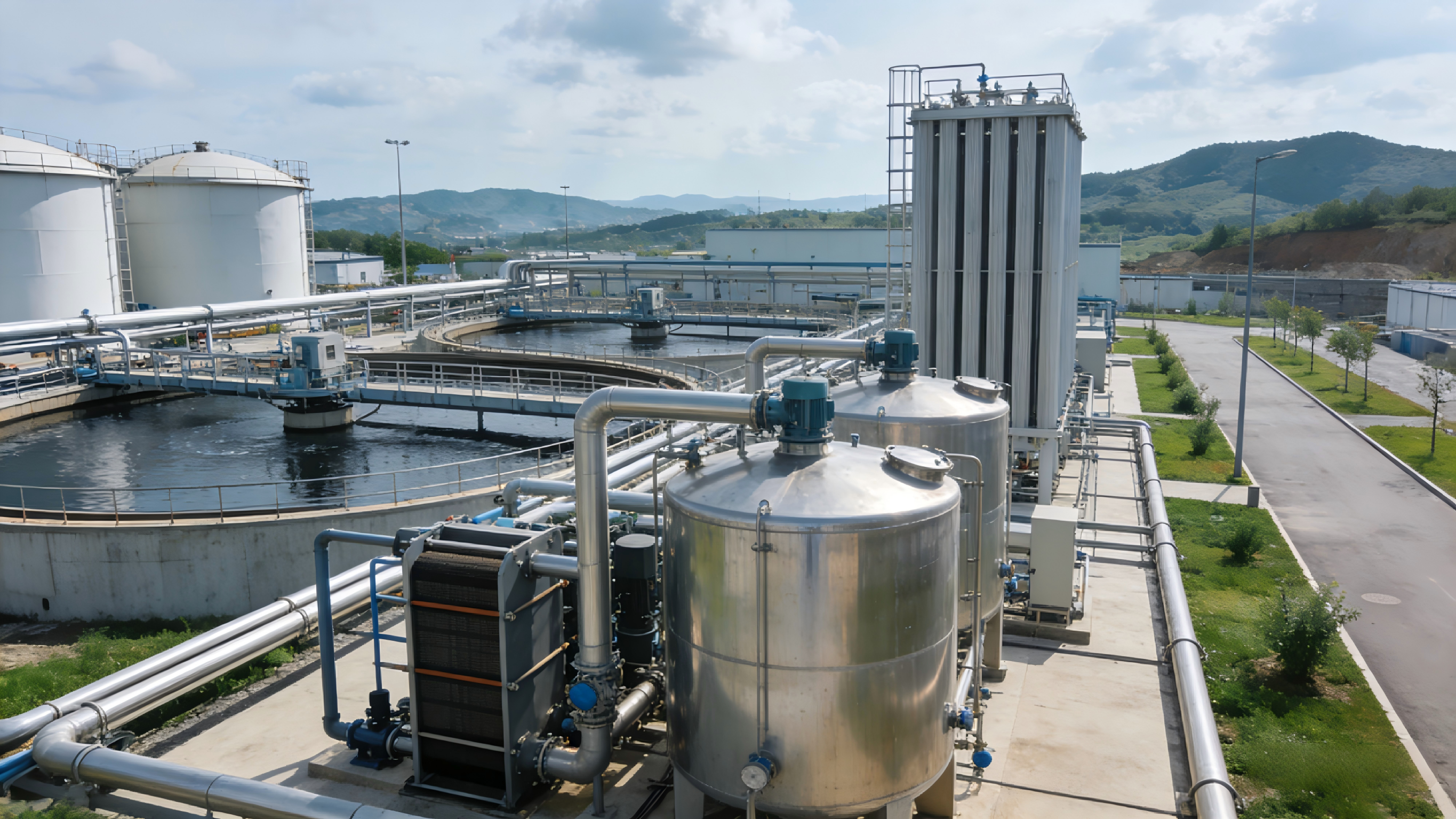
Municipal water systems must routinely monitor a wide range of physical, chemical, and biological indicators. These parameters are defined and regulated by international and national standards such as the Guidelines for Drinking-water Quality, the Safe Drinking Water Act (SDWA), and GB 5749-2022.
Category | Key Parameters | Importance |
Physical | Turbidity, color, temperature | Indicates clarity and particle presence |
Chemical | pH, residual chlorine, COD, ammonia nitrogen | Reflects chemical balance and contamination |
Nutrients | Total phosphorus, total nitrogen | Signals eutrophication risk |
Heavy Metals | Lead, copper, chromium, iron | Toxicity and long-term health impact |
Microbiological | Total coliforms, E. coli | Indicates biological contamination |
Each parameter plays a critical role in assessing water safety, and failure to meet threshold values may result in serious health risks or regulatory violations.
Municipal systems rely on a combination of laboratory-based and field-deployable testing methods to ensure comprehensive monitoring.
Widely used for detecting parameters such as COD, ammonia nitrogen, and total phosphorus, this method measures light absorbance to determine concentration levels. It is highly accurate and suitable for both laboratory and portable applications.
Electrochemical sensors are commonly applied for pH, dissolved oxygen, and residual chlorine testing. These methods provide rapid, real-time measurements and are ideal for continuous monitoring in distribution networks.
Nephelometric methods are used to measure turbidity by analyzing light scattering caused by suspended particles. Maintaining low turbidity is critical for effective disinfection.
Culture-based methods and rapid detection techniques are used to identify pathogens such as E. coli. These tests are essential for ensuring microbiological safety.
Modern municipal systems increasingly adopt online analyzers for continuous water quality monitoring. These systems enable early detection of anomalies and reduce response time to contamination events.
Municipal water testing must align with strict regulatory requirements to ensure public safety and legal compliance.
The Guidelines for Drinking-water Quality provide global recommendations on acceptable limits for key contaminants.
The Safe Drinking Water Act (SDWA) establishes enforceable standards in the United States, including Maximum Contaminant Levels (MCLs).
GB 5749-2022 defines comprehensive water quality standards in China, covering 100+ parameters with specific limits and testing requirements.
These frameworks emphasize regular monitoring, validated testing methods, and proper documentation. Municipalities must also implement quality assurance protocols, including calibration, repeatability checks, and data traceability.
Despite technological advancements, several challenges remain:
Complex water matrices that interfere with accurate measurement
Need for rapid on-site testing in remote or distributed locations
High operational costs associated with laboratory testing
Data management and reporting requirements for compliance
Addressing these challenges requires a balance between precision, efficiency, and cost-effectiveness.
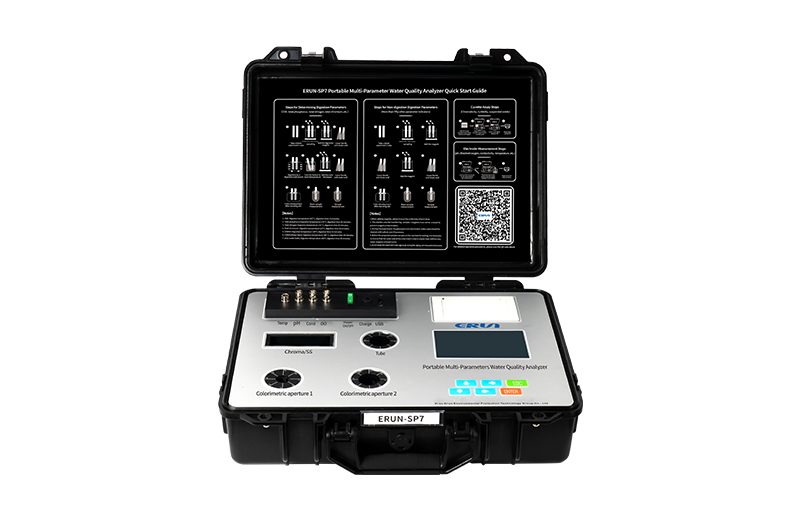
To meet modern testing demands, municipalities are increasingly turning to portable, multi-parameter instruments. The Erun ERUN-SP7 Portable Multi-Parameter Water Quality Tester is designed for on-site analysis of key indicators such as COD, ammonia nitrogen, total phosphorus, total nitrogen, turbidity, and heavy metals including copper and chromium.
This device offers high repeatability (≤3%) and excellent optical stability, ensuring reliable results even in field conditions. Its automatic wavelength selection and integrated optical system eliminate manual adjustments, improving efficiency and reducing operator error. The built-in data storage, USB interface, and printing capabilities support comprehensive data management and reporting, aligning with regulatory documentation requirements.
With a compact design and dual power supply system, the ERUN-SP7 Portable multi-parameter water quality tester enables flexible deployment across municipal networks, from treatment plants to distribution endpoints. Its ability to expand and customize testing parameters makes it adaptable to evolving regulatory standards and monitoring needs.
Accurate and consistent monitoring remains the foundation of safe drinking water supply. By combining standardized methods, advanced technologies, and compliance with international regulations, municipalities can effectively safeguard water quality. <strong>Best Methods for Drinking Water Testing in Municipal Systems continue to evolve with innovations in portable instrumentation and real-time monitoring, enabling more responsive and data-driven water management strategies.