


Municipal and industrial water disinfection practices are essential for keeping us safe from harmful pathogens. However, while these chemical treatments successfully eliminate bacteria and viruses, they often leave behind hidden and potentially dangerous disinfection byproducts (DBPs) like chlorate. For modern water facility managers, environmental scientists, and public health officials, understanding how to remove chlorate from water is no longer just an option—it is a critical priority to ensure safe, compliant water systems.
Before diving into the solutions, we must understand the source of the problem. Chlorate is an inorganic anion, chemically represented as ClO3-. But how does it actually enter our water supply? In most cases, it is introduced during the drinking water purification process. Chlorate typically forms through the degradation of sodium hypochlorite (liquid bleach) during storage or as a direct byproduct when chlorine dioxide is used as a primary disinfectant. Prolonged exposure to high levels of chlorate can lead to severe health risks, most notably impaired thyroid function, making its immediate detection and effective removal an urgent necessity for treatment plants.

When facility managers ask how to remove chlorate from water, the answer lies in advanced filtration and chemical treatments. Because chlorate is a stable, highly soluble ion, simple boiling or basic filtration will not work. Here are the most effective chlorate removal methods used in the industry today.
Reverse Osmosis (RO) stands out as a top-tier treatment. This process works by forcing contaminated water through a highly specialized, semi-permeable membrane under high pressure. Because chlorate ions are larger than water molecules, the membrane effectively catches and rejects them, producing highly purified water. It is widely considered one of the most reliable chlorate removal methods available for facility-level treatment.
Can ion exchange and activated carbon filtration fix the problem? Yes, with the right setup. Specialized anion exchange resins can be engineered to specifically target and bind chlorate ions, swapping them for harmless chloride ions. Meanwhile, Granular Activated Carbon (GAC) is often used to treat oxidized water supplies. While standard GAC is better suited for organic compounds, catalytic carbon can help reduce specific disinfection byproducts when properly managed by operators.
For large-scale industrial treatment, chemical reduction techniques are often deployed. This involves introducing chemical reducing agents—such as ferrous iron or sulfur dioxide—into the water supply. These agents react chemically with the chlorate, successfully breaking it down and reducing it back into harmless, naturally occurring chloride ions before the water is distributed.
When you need instant, reliable data to protect your water supply, waiting days for laboratory results is unacceptable. You need a solution that works where you work. Enter the ERUN-80-C5 portable chlorite detector—the ultimate prerequisite to your purification strategy.
This advanced equipment provides field rapid detection of chlorite concentrations by using highly precise spectrophotometry to detect the absorbance of your samples under a specific light source wavelength. We understand that field conditions are harsh and unpredictable, which is why this device features an imported cold light source and narrow-band interference technology. Combined with microcomputer automatic data processing, it instantly and directly displays exact concentration levels on the screen, completely eliminating the need for a traditional lab.
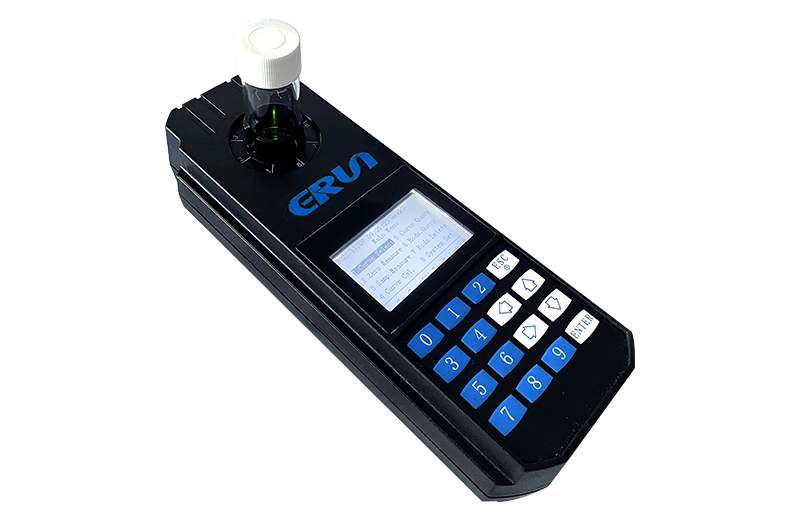
Whether you are conducting water quality testing on natural surface water, evaluating heavy sewage, or verifying industrial waste water and drinking water, this highly portable device is built for you. It empowers facility operators to perform rapid field detection anywhere, allowing you to make immediate, critical adjustments to your treatment processes before dangerous levels of byproducts can spread.
Successfully managing disinfection byproducts requires proven filtration methods, but true safety always begins with accurate, rapid testing. Do not leave your public health compliance to chance. Equip your facility with the ERUN-80-C5 portable chlorite detector by visiting erunwas.com today, and take absolute control over your water purification processes.