


Municipal water treatment is one of the greatest public health achievements in modern history, keeping us safe from harmful bacteria and waterborne pathogens. However, the chemical processes used to purify our municipal supplies often leave behind hidden disinfection byproducts. For facility managers, environmental scientists, and concerned citizens alike, understanding these chemical residues is crucial. This brings us to a vital question: What is chlorite in water, and why is monitoring it so essential for both public health and industrial compliance?
To understand this topic, we first need a clear definition. Chlorite is an inorganic anion, chemically represented as ClO2-. It is not a naturally occurring substance in most aquatic environments. Instead, a high chlorite concentration is almost always the direct result of human intervention—specifically, the water disinfection process.
When treatment facilities use chlorine dioxide to eliminate viruses, bacteria, and parasites, the chemical does its job but eventually breaks down. As the chlorine dioxide degrades, it leaves behind chlorite ions as a residual byproduct.
Many people wonder how these chemicals actually make their way into the local supply. The journey of chlorite in drinking water begins at the treatment plant or in environmental water sources. When chlorine dioxide is introduced into lakes, rivers, or reservoirs to treat raw water, it aggressively reacts with the natural organic matter present in the environment.
During this chemical reaction, roughly 50% to 70% of the chlorine dioxide breaks down into chlorite. Because chlorite is highly soluble and stable, it does not easily dissipate. If the treatment process is not meticulously monitored and adjusted, this residual chlorite simply flows through the distribution network, ultimately pouring out of residential taps and industrial valves.

Monitoring these levels is not just a matter of compliance; it is a matter of safety. The health effects of chlorite are well-documented and present a significant concern for human and animal exposure.
When individuals consume water with excessive chlorite levels over time, the primary concern revolves around the blood. Chlorite can cause oxidative damage to red blood cells, leading to a condition similar to anemia, which reduces the blood's ability to carry oxygen. Furthermore, exposure poses severe risks to vulnerable populations; infants and young children exposed to high levels may experience delayed nervous system development. Additionally, direct contact with highly concentrated chlorite can cause severe irritation to the stomach, throat, and mucous membranes.
For professionals who cannot afford to wait for lab results, the ERUN-80-C5 is the ultimate solution. This portable chlorite detector is engineered specifically for rapid field detection, giving you laboratory-grade accuracy right in the palm of your hand.
Using advanced spectrophotometry, the ERUN-80-C5 detects the absorbance of your water samples under a specific light source wavelength. We designed this device with an imported cold light source and narrow-band interference technology, which eliminates environmental light disruptions. This means that even in harsh outdoor conditions, the microcomputer automatically processes the data and directly displays the exact chlorite concentration on the screen—solving your need for instant, reliable decision-making.
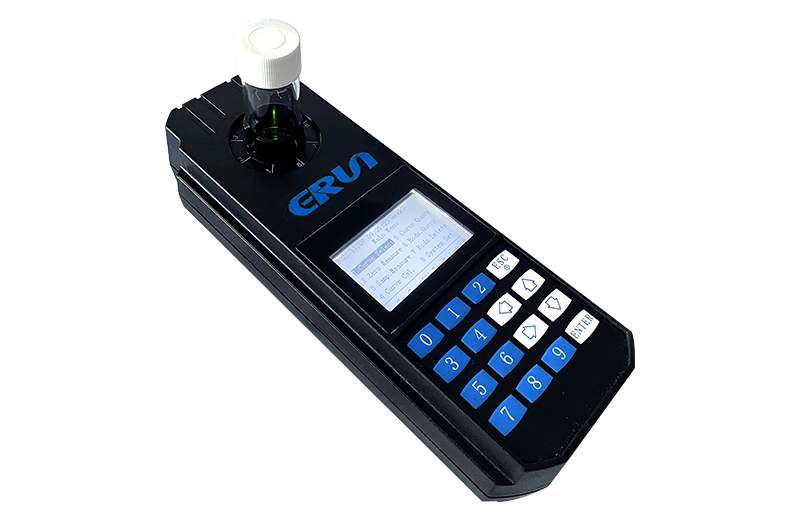
Your testing environments vary, and your equipment should adapt to your needs. Because of its rugged portability, the ERUN-80-C5 is perfectly suited for a wide array of environments. Whether you are conducting water quality testing on municipal drinking water, analyzing natural surface water, or monitoring heavy sewage and industrial waste water, this device provides rapid, accurate results without ever needing to step foot in a lab.
Understanding the origins and dangers of chlorite is the first step in responsible water management. Do not leave your facility's safety and compliance up to slow, traditional laboratory timelines. Take control of your water quality testing today by visiting erunwas.com. Equip your team with the ERUN-80-C5 portable chlorite detector and ensure ultimate safety, accuracy, and peace of mind in every drop.