


Understanding water hardness measurement methods is essential for ensuring safe, compliant, and efficient water use across drinking water systems, industrial processes, and environmental monitoring. International standards such as the World Health Organization Guidelines for Drinking-water Quality, the Safe Drinking Water Act, and China’s GB 5749-2022 all emphasize accurate monitoring of key parameters, including total hardness. While hardness is not typically a direct health risk, it significantly affects scaling, taste, and operational efficiency, making reliable testing methods indispensable.
Water hardness is mainly caused by dissolved calcium and magnesium ions and is usually expressed as mg/L of CaCO₃. Elevated hardness levels can lead to scale buildup in pipes and boilers, reduce the effectiveness of soaps and detergents, and increase maintenance costs in industrial systems. Regulatory frameworks recommend monitoring hardness not only for aesthetic quality but also for infrastructure protection and operational stability.
Accurate measurement plays a vital role in:
Meeting regulatory compliance requirements
Optimizing industrial and municipal water treatment
Supporting environmental and laboratory research
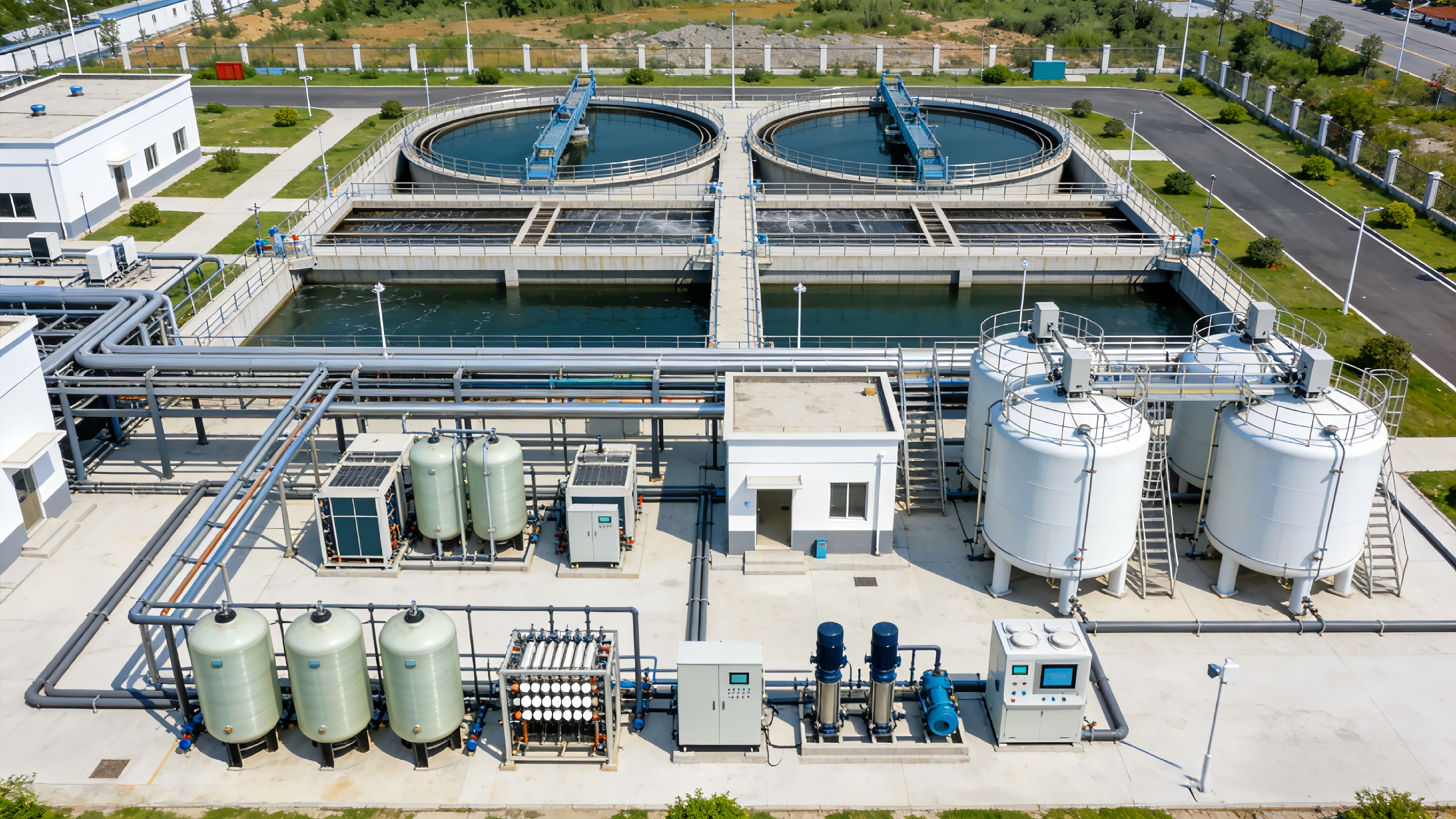
EDTA titration remains a benchmark technique in laboratory analysis. It relies on the formation of stable complexes between EDTA and hardness ions under controlled pH conditions.
Strengths:
High accuracy and repeatability
Widely accepted in standard methods
Limitations:
Requires skilled technicians
Involves multiple preparation steps
This method is commonly referenced in regulatory testing aligned with WHO and SDWA guidelines.
Spectrophotometry determines hardness through colorimetric reactions, often using reagents such as Acid Chrome Blue K. The intensity of the color change is measured as absorbance and correlated with hardness concentration.
Strengths:
High precision and sensitivity
Faster and more user-friendly than titration
Suitable for both field and laboratory use
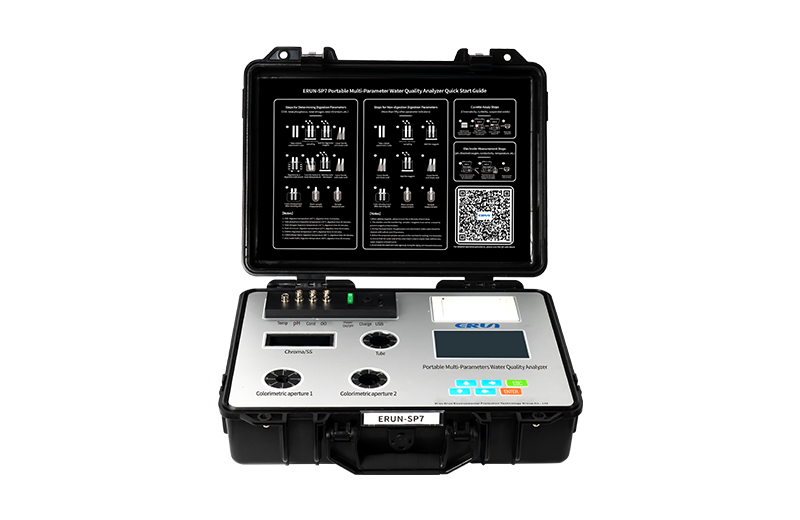
A representative solution is the ERUN-SP7-H2 Portable Water Quality Hardness Tester from Erun Environmental Protection. Designed for modern water analysis, it uses spectrophotometry to directly display total hardness values with a measuring range of 0.1–500.0 mg/L and an error margin within ±5%. Its optical stability ensures minimal drift (less than 0.002A in 20 minutes), which enhances measurement reliability.
The device also integrates practical features such as a 5.0-inch LCD display, built-in printer, USB interface, and the ability to store up to 3,000 data curves. With dual power supply and a built-in lithium battery, it is well-suited for field deployment in surface water, wastewater, and industrial environments, as well as laboratory research.
Colorimetric test strips and kits provide a quick and convenient way to estimate water hardness. These tools are widely used in household and preliminary field testing.
Strengths:
Low cost and easy operation
Rapid results without specialized equipment
Limitations:
Limited accuracy and precision
Results may vary depending on user interpretation
They are best suited for rough assessments rather than regulatory compliance.
Ion-selective electrodes (ISE) measure specific ions such as calcium directly by detecting electrical potential differences.
Strengths:
Real-time monitoring capability
High selectivity for individual ions
Limitations:
Requires frequent calibration
Does not directly measure total hardness without combining data
This method is useful in continuous monitoring systems where rapid feedback is required.
AAS is a high-precision analytical technique used to quantify calcium and magnesium at trace levels.
Strengths:
high sensitivity and accuracy
Suitable for advanced laboratory applications
Limitations:
Expensive instrumentation
Requires skilled operation and controlled conditions
It is typically used in research institutions and high-level compliance testing.
Method | Accuracy | Speed | Typical Use Case |
EDTA Titration | High | Moderate | Laboratory analysis |
Spectrophotometry | High | Fast | Field & lab testing |
Test Kits/Strips | Low | Very fast | Household screening |
Ion-Selective Electrode | Medium | Fast | Online monitoring |
AAS | Very high | Slow | Advanced lab research |
Choosing the appropriate method depends on the required accuracy, available resources, and testing environment. For regulatory compliance and industrial applications, high-precision techniques such as titration or spectrophotometry are generally preferred. Portable spectrophotometric devices offer a balance between laboratory-grade accuracy and operational convenience, making them increasingly popular in modern water quality management.
Environmental conditions should also be considered. Measurements should be conducted in stable environments, avoiding vibration, electromagnetic interference, and direct sunlight to ensure consistent results, especially when using optical instruments.
Reliable water hardness measurement methods are fundamental to maintaining water quality, protecting infrastructure, and meeting international regulatory expectations. With advancements in analytical technology, modern solutions now enable accurate, efficient, and field-ready testing, empowering professionals to manage water systems with greater confidence and precision.