


Dissolved oxygen is one of the most important indicators of water quality in environmental monitoring and drinking water management. The presence of oxygen dissolved in water influences biological activity, chemical reactions, and the stability of aquatic ecosystems. Accurate measurement of Dissolved Oxygen in Water helps regulators, laboratories, and water utilities evaluate ecosystem health, optimize treatment processes, and ensure compliance with international drinking water standards.
Global guidelines such as the Guidelines for Drinking-water Quality, regulatory frameworks under the Safe Drinking Water Act (SDWA), and China’s GB 5749-2022 Standards for Drinking Water Quality highlight the importance of monitoring key physical and chemical parameters that affect water safety and treatment efficiency. Dissolved oxygen monitoring, although not always a direct regulatory parameter, provides critical insights into water system performance and potential contamination risks.
Dissolved oxygen (DO) refers to the concentration of oxygen molecules dissolved in water, typically expressed in milligrams per liter (mg/L) or as a percentage of oxygen saturation. It plays a vital role in maintaining aquatic life and regulating biochemical reactions in natural and engineered water systems.
In drinking water and environmental management, DO testing is widely used to:
Evaluate the ecological health of rivers, lakes, and reservoirs
Monitor aeration efficiency in water treatment processes
Detect microbial activity and organic pollution
Support wastewater treatment performance analysis
Assess biological oxygen demand trends in environmental studies
Water bodies with low dissolved oxygen often indicate excessive organic matter, microbial decomposition, or limited circulation. Elevated DO levels are commonly associated with well-oxygenated and biologically balanced water environments. Monitoring these variations helps water professionals maintain stable treatment conditions and prevent ecosystem deterioration.
Electrochemical sensors represent one of the most widely used technologies for measuring dissolved oxygen. These sensors operate based on the reduction of oxygen molecules at an electrode surface, generating an electrical current proportional to the oxygen concentration.
The most common electrochemical sensors include:
Polarographic sensors
Galvanic sensors
Both sensor types use an oxygen-permeable membrane that allows dissolved oxygen to diffuse into an electrolyte solution where the electrochemical reaction occurs.
Electrochemical methods offer several advantages:
Mature and well-established measurement technology
High sensitivity and reliable laboratory performance
Relatively affordable instrumentation
Suitable for field and portable applications
Some operational considerations exist. Membranes and electrolyte solutions require periodic replacement, and calibration may be needed more frequently compared with newer technologies. Oxygen consumption during the measurement process also means stable water flow or stirring improves measurement accuracy.
Optical dissolved oxygen sensors, often referred to as luminescent DO sensors, rely on fluorescence or luminescence quenching principles. A light source excites a luminescent dye located on the sensor surface. Oxygen molecules interact with the dye and reduce the emitted light intensity or decay time. The instrument converts this optical signal into an oxygen concentration value.
This technology provides several operational benefits:
No oxygen consumption during measurement
Reduced maintenance requirements
Greater long-term measurement stability
Less sensitivity to water flow conditions
Optical DO sensors are increasingly used in automated monitoring stations, environmental research applications, and smart water networks. The main limitation is the higher initial equipment cost, although reduced maintenance and longer calibration intervals can offset this over time.
Both technologies are widely accepted in water quality laboratories and field monitoring programs. The differences between them are summarized below.
Feature | Electrochemical Method | Optical Method |
Measurement principle | Electrochemical oxygen reduction | Luminescence quenching |
Oxygen consumption | Yes | No |
Maintenance | Membrane and electrolyte replacement | Occasional sensor cap replacement |
Calibration frequency | Higher | Lower |
Sensitivity to water flow | Moderate | Minimal |
Initial cost | Lower | Higher |
The choice between these methods depends on monitoring frequency, budget considerations, and maintenance capability. Electrochemical sensors remain popular in portable testing devices, while optical systems are increasingly favored in continuous monitoring installations.
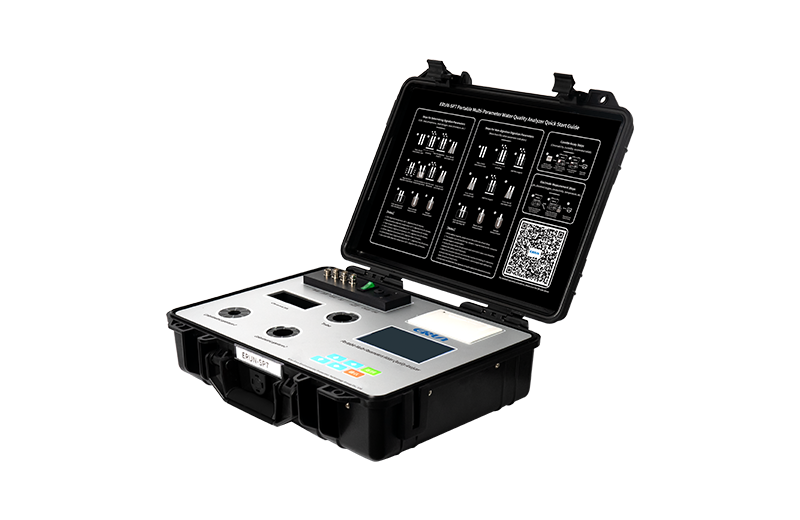
Field monitoring requires reliable and easy-to-operate equipment that can deliver accurate results under varying environmental conditions. The Erun Portable Water Quality Dissolved Oxygen Tester (Model: ERUN-SP7-A5) is designed to support professional DO measurement in environmental monitoring, water treatment plants, and industrial applications.
Using the oxygen electrode method, the ERUN-SP7-A5 provides stable and precise dissolved oxygen analysis across multiple measurement scenarios.
Key technical features include:
Measuring range: 0.0–20.0 mg/L
Measurement accuracy: ±0.02 mg/L
Measurement of oxygen concentration, oxygen saturation (%), and temperature
Compatible with the ERUN-20 DO electrode for reliable detection
Large color touch screen with bilingual interface
Data storage capacity for 100,000 records
Printable results and automatic data backup
One-click data recovery and security protection system
Adjustable light intensity with Grade 16 brightness control
Custom calibration curve support
The instrument is designed for convenient one-hand operation, making it suitable for field technicians conducting environmental surveys, drinking water inspections, and wastewater monitoring tasks.
Reliable Dissolved Oxygen in Water testing continues to play a crucial role in modern water quality management. Electrochemical and optical technologies each provide valuable solutions for laboratories, environmental agencies, and water utilities seeking accurate oxygen measurements.
When integrated with advanced portable instruments and standardized monitoring practices, dissolved oxygen analysis provides deeper insight into ecosystem health, treatment efficiency, and regulatory compliance. Continuous improvements in sensor technology and field equipment are making Dissolved Oxygen in Water monitoring more accessible, accurate, and essential for protecting global water resources.