


Safe drinking water depends on continuous monitoring of chemical and biological contaminants. Among the various water quality indicators, heavy metals receive special attention because they may accumulate in the human body and affect long-term health. Laboratory testing for copper in water plays a crucial role in identifying contamination sources and ensuring that drinking water systems comply with international safety standards. Copper is widely used in plumbing materials and may dissolve into water through corrosion processes. Reliable laboratory analysis allows water utilities, research institutions, and environmental agencies to determine copper concentrations accurately and maintain safe drinking water supplies.
Copper naturally occurs in the environment and is widely used in industrial and household plumbing materials. In controlled concentrations, copper is considered an essential trace element for human health. However, elevated levels in drinking water may cause health concerns and affect water taste and appearance.
Several factors may lead to copper contamination in water systems:
Corrosion of copper pipes and fittings: Acidic or soft water can dissolve copper from plumbing infrastructure.
Natural geological deposits: Copper-bearing minerals may enter groundwater through natural weathering processes.
Industrial and mining activities: Wastewater discharge from industrial operations can introduce copper into water sources.
Improper water treatment processes: Insufficient corrosion control measures in distribution systems can increase copper leaching.
In many cases, copper contamination occurs inside building plumbing systems rather than at the original water source. This makes monitoring and testing particularly important in residential and institutional water supplies.
Copper is required in small amounts for human metabolism, but excessive intake may lead to adverse health effects. Short-term exposure to high concentrations of copper in drinking water may cause gastrointestinal symptoms such as nausea, stomach irritation, or vomiting. Prolonged exposure can affect liver and kidney function, especially in sensitive individuals.
Children and infants are more vulnerable to heavy metal exposure due to their lower body weight and developing organs. For this reason, public health authorities recommend strict monitoring of heavy metals in drinking water systems.
Regular laboratory testing for copper in water helps detect abnormal concentrations early, allowing water suppliers to implement corrosion control measures or infrastructure improvements before public health risks emerge.
Regulatory standards play an essential role in protecting drinking water quality. Governments and international organizations have established guideline values for copper concentration in drinking water based on toxicological research and risk assessment.
Standard / Regulation | Maximum Copper Concentration |
WHO Guidelines for Drinking-water Quality | 2.0 mg/L |
U.S. Safe Drinking Water Act (EPA Action Level) | 1.3 mg/L |
China Drinking Water Standard GB 5749-2022 | 1.0 mg/L |
The World Health Organization (WHO) provides global guidance recommending a limit of 2.0 mg/L to prevent taste problems and potential health effects. In the United States, the Safe Drinking Water Act (SDWA) establishes an action level of 1.3 mg/L under the Lead and Copper Rule, requiring water utilities to implement corrosion control measures if this threshold is exceeded. China’s GB 5749-2022 Drinking Water Standard sets a maximum allowable concentration of 1.0 mg/L for copper.
Compliance with these regulatory frameworks relies heavily on precise laboratory analysis and continuous monitoring.
Several analytical techniques are widely used for determining copper concentrations in water samples. These methods differ in sensitivity, cost, and operational complexity.
Atomic Absorption Spectroscopy is one of the most commonly used methods in environmental laboratories. The technique measures the absorption of light by copper atoms in a flame or graphite furnace, providing reliable results for trace metal analysis.
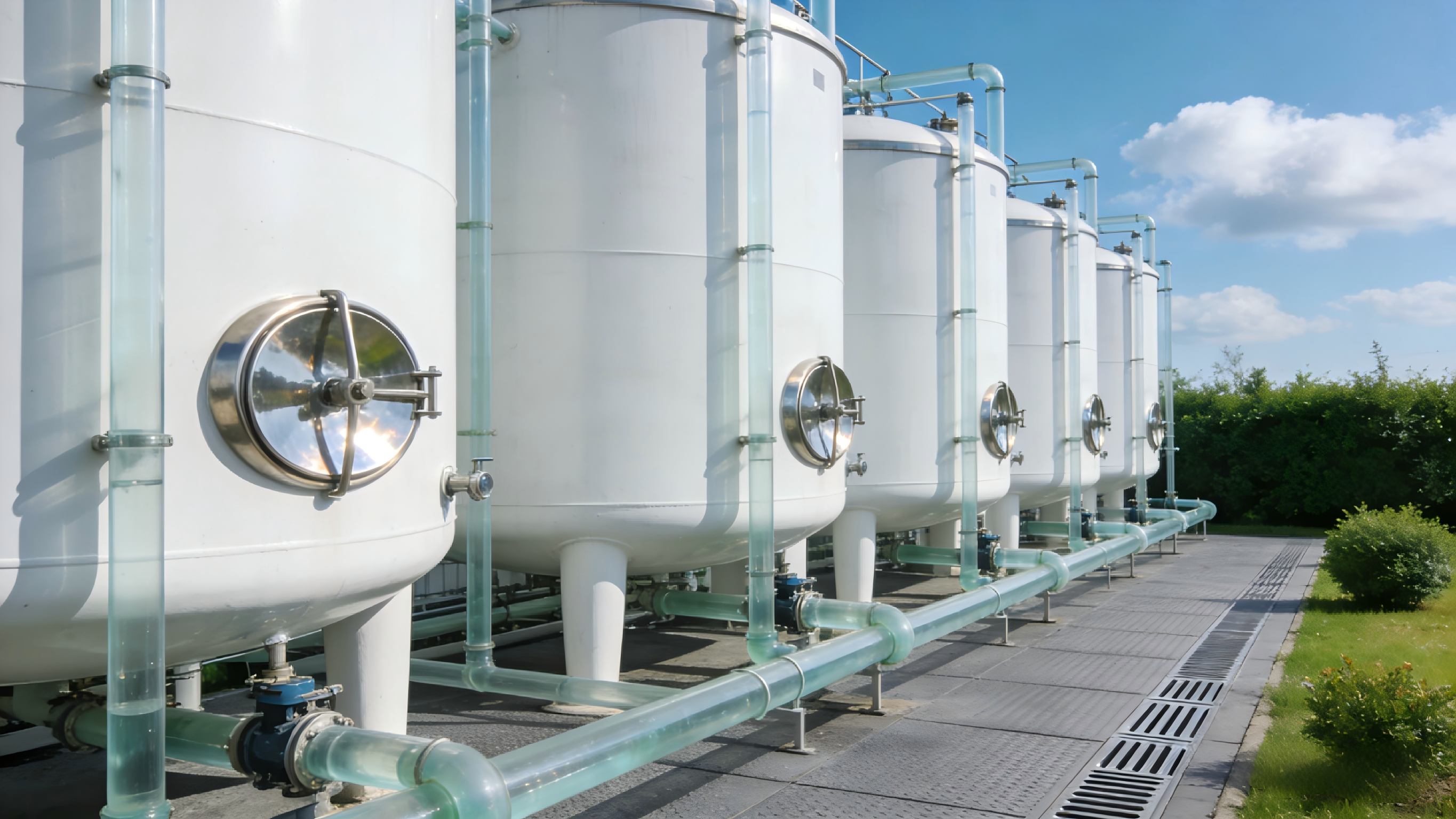
ICP-MS offers extremely high sensitivity and allows simultaneous detection of multiple metals. It is frequently used in advanced environmental laboratories where accurate measurement of trace elements is required.
Colorimetric methods rely on chemical reagents that react with copper ions to produce a colored complex. The intensity of the color is measured using a spectrophotometer and correlated with copper concentration. This approach is widely used in routine water quality monitoring because it is efficient and relatively simple.
These laboratory methods provide accurate and reproducible results, forming the scientific basis for water quality assessment and regulatory compliance.
Although laboratory instruments offer high analytical precision, field monitoring equipment is increasingly used to support rapid screening and on-site testing. Portable instruments allow technicians to detect potential contamination before samples are transported to laboratories for further analysis.
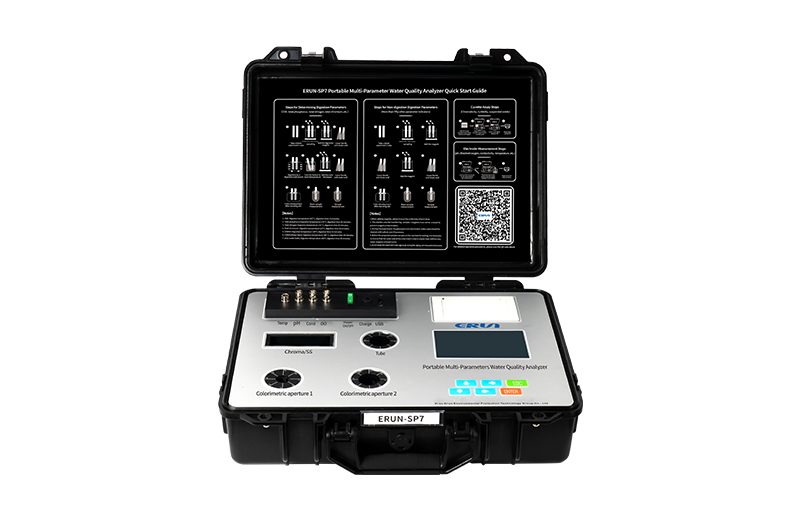
The ERUN-SP7-C6 Portable Water Quality Copper (Cu) Tester is designed specifically for field applications, environmental monitoring, and academic research. The instrument uses copper reagent spectrophotometry to measure copper concentration in water samples and automatically processes data through an integrated microcomputer system.
Key performance characteristics include:
Parameter | Specification |
Measuring Range | 0.02–10.0 mg/L |
Measurement Error | ±5% (F.S) |
Repeatability | ≤2% |
Stability | ≤0.002A / 20 min |
Protection Level | IP65 |
By combining portable detection with laboratory verification, water professionals can improve monitoring efficiency and identify contamination risks more quickly.
Reliable water monitoring programs rely on accurate analytical methods, strict regulatory standards, and advanced testing technologies. Continuous environmental surveillance and scientific testing ensure that copper levels remain within safe limits and help prevent corrosion-related contamination in distribution systems. As global attention to drinking water quality continues to grow, laboratory testing for copper in water remains an essential tool for safeguarding public health and maintaining confidence in drinking water supplies.