


Maintaining clean and balanced pool water requires monitoring several chemical and physical indicators. One of the most important indicators is total dissolved solids in pool water, commonly known as TDS. Understanding what is TDS in pool water testing helps pool operators and maintenance professionals maintain safe swimming conditions and protect pool equipment.
TDS represents the total amount of dissolved substances in water, including salts, minerals, chemicals, and organic matter. These substances accumulate over time through pool chemicals, environmental contaminants, and swimmer activities.
Regular pool water testing ensures that TDS levels remain within acceptable limits. When TDS becomes too high, it can affect water clarity, reduce sanitizer efficiency, and create an uncomfortable swimming experience. Therefore, monitoring and controlling TDS is an essential part of modern pool maintenance.
To understand what is TDS in pool water testing, it is important to know what TDS actually measures. TDS refers to the total concentration of dissolved materials present in pool water. These materials are invisible particles that dissolve completely and cannot be removed by simple filtration.
Several common factors contribute to increasing TDS levels in swimming pool water:
Pool treatment chemicals such as chlorine and stabilizers
Sweat, body oils, sunscreen, and cosmetics from swimmers
Dust, leaves, and environmental debris
Minerals present in the source water used to refill the pool
As these substances accumulate over time, the concentration of dissolved solids increases, which can gradually affect overall pool water quality.
High TDS levels in pool water can lead to several maintenance problems. Excess dissolved solids may interfere with chlorine’s ability to sanitize the water effectively. In addition, high TDS can contribute to cloudy water, scaling on pool surfaces, and reduced filtration efficiency.
For these reasons, monitoring total dissolved solids in pool water is an essential step in maintaining healthy and safe swimming environments.

Although some dissolved solids are normal, maintaining the proper TDS level in swimming pool water is important for balanced water chemistry.
In most pool maintenance guidelines, the recommended TDS level is generally within the following range:
1,000–2,000 ppm: Typical and acceptable range for many pools
Up to 1,500 ppm above source water: Generally considered manageable
Above 3,000 ppm: May cause water quality problems and require corrective action
When TDS becomes excessively high, pool water may appear dull or cloudy. It may also become more difficult to maintain proper chlorine levels.
In many cases, reducing high TDS levels requires partially draining and refilling the pool with fresh water. However, accurate water quality testing is necessary before deciding on corrective measures.
For pool operators, environmental technicians, and water treatment professionals, monitoring multiple water quality indicators can be challenging when using separate instruments. This is where a comprehensive portable water quality analyzer becomes extremely valuable.
The ERUN-SP7 portable water quality analyzer is designed to provide efficient and comprehensive water quality testing for a wide range of applications, including swimming pool monitoring.
The ERUN-SP7 can measure numerous parameters, including TDS, COD, ammonia nitrogen, total phosphorus, total nitrogen, residual chlorine, total chlorine, chlorine dioxide, turbidity, color, copper, chromium, manganese, iron, zinc, aluminum, cyanide, phosphate, sulfate, nitrite, and hardness.
By combining multiple testing capabilities in one device, the instrument allows users to evaluate pool water conditions more thoroughly and identify potential contamination sources.
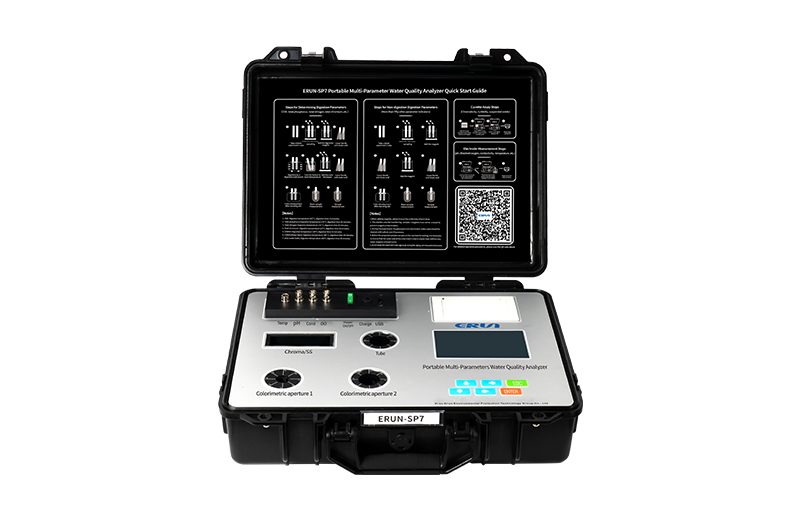
Pool operators often face difficulties when water quality problems appear without clear causes. For example, cloudy water may result from chemical imbalance, excessive dissolved solids, or contamination.
With the ERUN-SP7, professionals can quickly test multiple parameters on site. This helps identify whether the problem is related to TDS levels in swimming pool water, sanitizer imbalance, or other water quality indicators.
Understanding what is TDS in pool water testing is essential for maintaining safe and comfortable swimming environments. TDS represents the concentration of dissolved substances in pool water, and excessive levels can negatively affect sanitizer efficiency, water clarity, and swimmer comfort.
Maintaining proper TDS levels in swimming pool water requires regular monitoring and accurate testing. While basic test kits may provide limited information, advanced tools such as the ERUN-SP7 portable water quality analyzer allow professionals to perform comprehensive water quality testing and identify potential problems quickly.
By using reliable monitoring solutions, pool operators can maintain balanced water chemistry, ensure swimmer safety, and improve overall pool maintenance efficiency.