


Understanding what is a good TDS range is essential for evaluating water quality. TDS, or total dissolved solids, refers to the combined amount of dissolved minerals, salts, metals, and organic substances present in water. These dissolved substances can affect water taste, safety, and overall usability.
In this article, we will explore the recommended TDS range for drinking water, the factors that influence TDS levels, and how modern water quality testing solutions help ensure reliable monitoring.
To understand what is a good TDS range, it is important to know how TDS levels are typically classified. TDS is measured in milligrams per liter (mg/L), which represents the concentration of dissolved substances in water.
According to commonly referenced water quality guidelines, water with lower TDS values is generally considered better in terms of purity and taste. Typical classifications include:
0–50 mg/L: Very low mineral content
50–150 mg/L: Ideal drinking water range
150–300 mg/L: Good water quality
300–500 mg/L: Acceptable but may affect taste
Above 500 mg/L: High mineral content and may require treatment
In many drinking water standards, TDS levels below 300 mg/L are considered excellent, while water above 500 mg/L may not meet recommended guidelines.
The concentration of total dissolved solids directly influences the taste and clarity of water. Low TDS water typically tastes clean and refreshing, while high TDS water may taste salty, bitter, or metallic.
However, extremely low TDS water may also lack beneficial minerals such as calcium and magnesium. Therefore, maintaining a balanced TDS level is important for both water quality and consumer acceptance.
Many natural and human factors can influence TDS levels in water.
As water moves through soil and rocks, it dissolves minerals such as calcium, magnesium, and sodium. These natural processes increase the concentration of dissolved solids in groundwater and surface water.
Industrial activities and agriculture can significantly raise TDS levels. Wastewater discharge, fertilizer runoff, and urban pollution introduce additional dissolved substances into water systems.
High TDS levels may indicate contamination or excessive mineral concentration. In industrial systems, elevated TDS can also cause scaling, corrosion, and equipment damage. Regular water quality monitoring helps detect these issues early and supports effective water management.

For professionals responsible for water monitoring, measuring TDS alone is often not enough. Water systems frequently require comprehensive analysis of multiple parameters to identify pollution sources and maintain treatment efficiency.
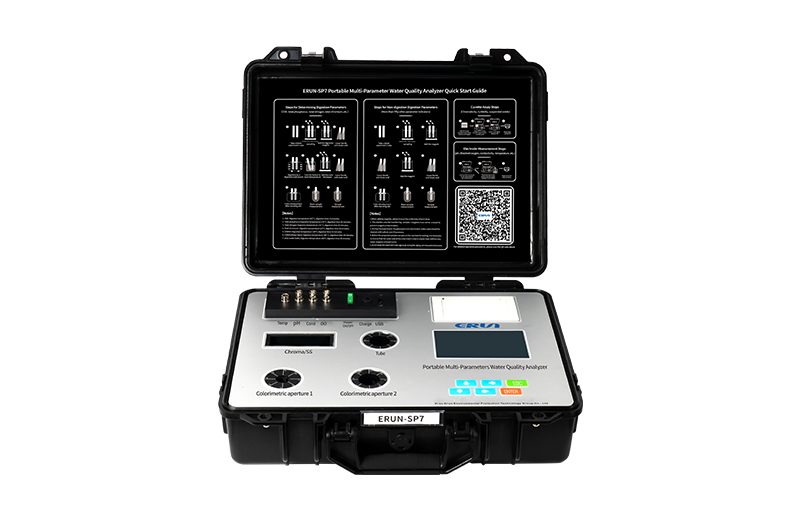
The ERUN-SP7 portable water quality analyzer offers a practical solution by enabling comprehensive water quality testing in a single device.
The ERUN-SP7 is designed to detect a wide range of parameters including TDS, COD, ammonia nitrogen, total phosphorus, total nitrogen, residual chlorine, turbidity, and many others. It can also measure heavy metals and inorganic salts such as copper, chromium, manganese, iron, and zinc.
This capability allows users to obtain a more complete understanding of water conditions rather than relying on a single indicator.
Many water quality professionals face difficulties when using multiple instruments for different tests. This process can be time-consuming and inefficient, especially during field monitoring.
The ERUN-SP7 addresses this challenge by integrating multiple testing functions into one portable device. Users can quickly analyze several water parameters during a single testing session, improving both efficiency and accuracy.
Another key advantage of the ERUN-SP7 is its flexible configuration. The instrument supports customized testing items, allowing users to expand detection parameters according to their monitoring needs.
This flexibility makes the device suitable for various applications, including environmental monitoring, wastewater treatment plants, drinking water analysis, and scientific research laboratories.
Understanding what is a good TDS range is an important step in evaluating water safety and overall quality. Generally, drinking water with TDS levels between 50 and 300 mg/L is considered ideal, while levels above 500 mg/L may require treatment.
However, TDS alone cannot fully represent water quality. Comprehensive monitoring of multiple parameters is necessary to detect contamination and maintain safe water systems.
With advanced tools like the ERUN-SP7 portable water quality analyzer, professionals can perform efficient and reliable water quality testing, ensuring accurate monitoring and better management of water resources.