


Chemical Oxygen Demand (COD) is one of the most critical indicators in water quality analysis. But many professionals still ask: what does a high COD indicate?
If you are managing a wastewater treatment plant, operating an industrial facility, or responsible for environmental compliance, understanding high COD levels is not optional—it directly affects operational safety, regulatory compliance, and environmental responsibility.
Let’s break it down clearly and professionally.
Chemical oxygen demand (COD) measures the amount of oxygen required to chemically oxidize organic and inorganic pollutants in water. It is expressed in mg/L and reflects the total pollution load present in a water sample.
In simple terms, COD in wastewater indicates how much oxidizable material is present. The higher the value, the greater the level of contamination.
COD is widely used in:
Wastewater treatment plants
Industrial effluent monitoring
Environmental supervision
Laboratory research
Because it provides a fast and reliable indication of pollution strength, COD testing has become a standard requirement for wastewater monitoring worldwide.
The core question remains: what does a high COD indicate in practical terms?
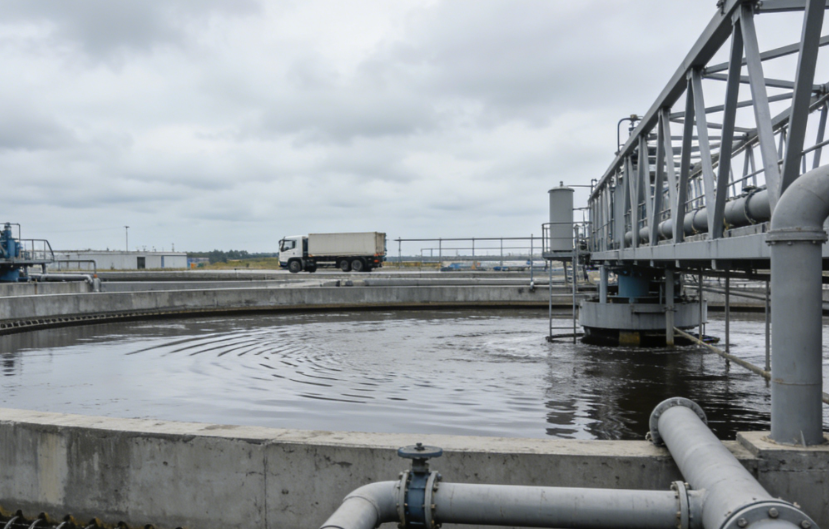
A high COD value usually means the water contains a large amount of organic matter, such as:
Industrial discharge from chemical or textile factories
Food processing wastewater
Domestic sewage
Agricultural runoff
These pollutants consume oxygen during decomposition.
When wastewater with high COD levels is discharged into natural water bodies, microorganisms begin breaking down the pollutants. This process consumes dissolved oxygen.
If oxygen levels drop significantly:
Aquatic life can suffocate
Ecosystem balance is disrupted
Eutrophication may occur
So yes, high COD often indicates serious environmental impact risk.
For industrial facilities, high COD readings may indicate:
Inefficient treatment processes
Equipment malfunction
Overloaded biological systems
Discharge limit violations
This can lead to penalties, shutdown orders, and increased operational costs.
In short, a high COD value is a warning signal that must not be ignored.
Beyond environmental impact, high COD affects operational stability:
Higher organic loads require more chemical reagents, aeration energy, and treatment time.
Unexpected COD spikes can:
Shock biological treatment systems
Reduce removal efficiency
Cause sludge bulking
Regulatory bodies strictly control discharge COD values. Continuous non-compliance can damage corporate reputation and financial stability.
Therefore, accurate and timely detection of high COD levels is essential—not only for environmental protection but also for business continuity.
When dealing with fluctuating COD values and strict regulatory limits, accuracy and reliability are non-negotiable.
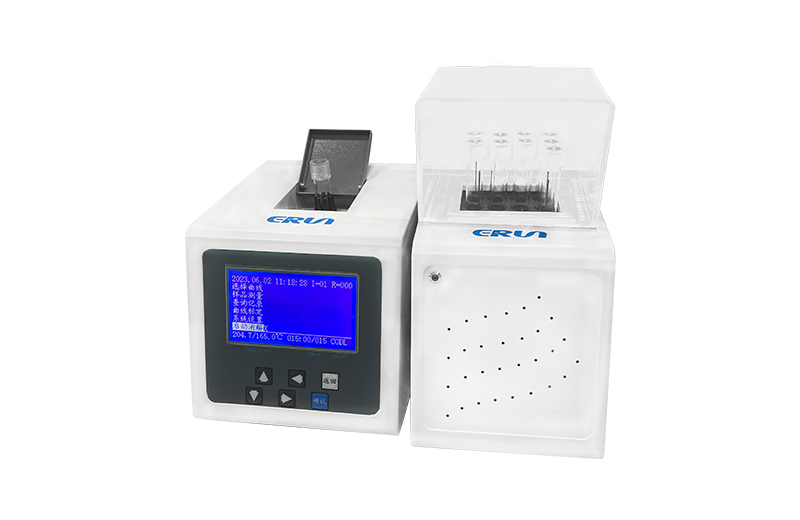
The ERUN-ST3-J5 Benchtop COD Analyser is designed specifically to solve these challenges for laboratories, wastewater treatment operators, and environmental monitoring departments.
1. Sealed Catalytic Digestion for Safety and Consistency
The instrument uses sealed catalytic digestion, ensuring uniform reaction conditions and minimizing exposure to hazardous reagents. This reduces laboratory risk and improves data reliability.
2. Advanced Colourimetric Measurement
By combining a cold light source with narrow band interference technology, the device delivers stable, precise readings with minimal fluctuation.
For users asking, “How can I reduce testing errors when COD levels are high?”—this directly addresses the problem.
3. Direct mg/L Display with Automatic Data Processing
The built-in microcomputer automatically processes data and directly displays COD values in mg/L. This eliminates manual calculations and prevents transcription errors.
Accurate measurement is the first step. Once confirmed, high COD can be reduced through:
Biological treatment optimization
Chemical oxidation processes
Improved industrial pre-treatment
Process control adjustments
However, without precise testing data, corrective actions become guesswork. Reliable instrumentation ensures that treatment strategies are based on real-time, dependable results.
So, what does a high COD indicate?
It indicates elevated pollution levels, environmental risk, potential oxygen depletion, and possible regulatory non-compliance.
But more importantly, it signals the need for accurate, professional monitoring.
By investing in a dependable COD analyser like the ERUN-ST3-J5, laboratories and wastewater facilities gain:
Reliable data
Safer operations
Improved compliance confidence
Long-term operational stability
In water quality management, precision is not a luxury—it is a necessity. If you are serious about controlling high COD levels and strengthening your wastewater monitoring system, professional-grade testing equipment makes all the difference.