


What Is CODmn in Drinking Water and Why Does It Matter? This question is increasingly important as regulators and water utilities focus on controlling organic pollution in potable water. CODmn, also known as the permanganate index, is a key indicator used to assess the level of oxidizable organic substances in water. While it does not identify specific contaminants, it reflects the overall organic load, which directly affects taste, odor, disinfection efficiency, and public health protection.
CODmn stands for Chemical Oxygen Demand measured by the manganese method. In this test, potassium permanganate is used as an oxidizing agent under controlled conditions to determine how much oxygen is required to oxidize organic matter present in water. The result is expressed in mg/L of oxygen consumed.
Compared with CODcr (dichromate method), CODmn is milder and more suitable for low-pollution water such as drinking water sources. It is widely applied in raw water monitoring, treated water evaluation, and distribution system assessment.
High CODmn values generally indicate:
Elevated natural organic matter (NOM)
Possible surface water contamination
Increased risk of disinfection by-product formation
Reduced disinfection efficiency
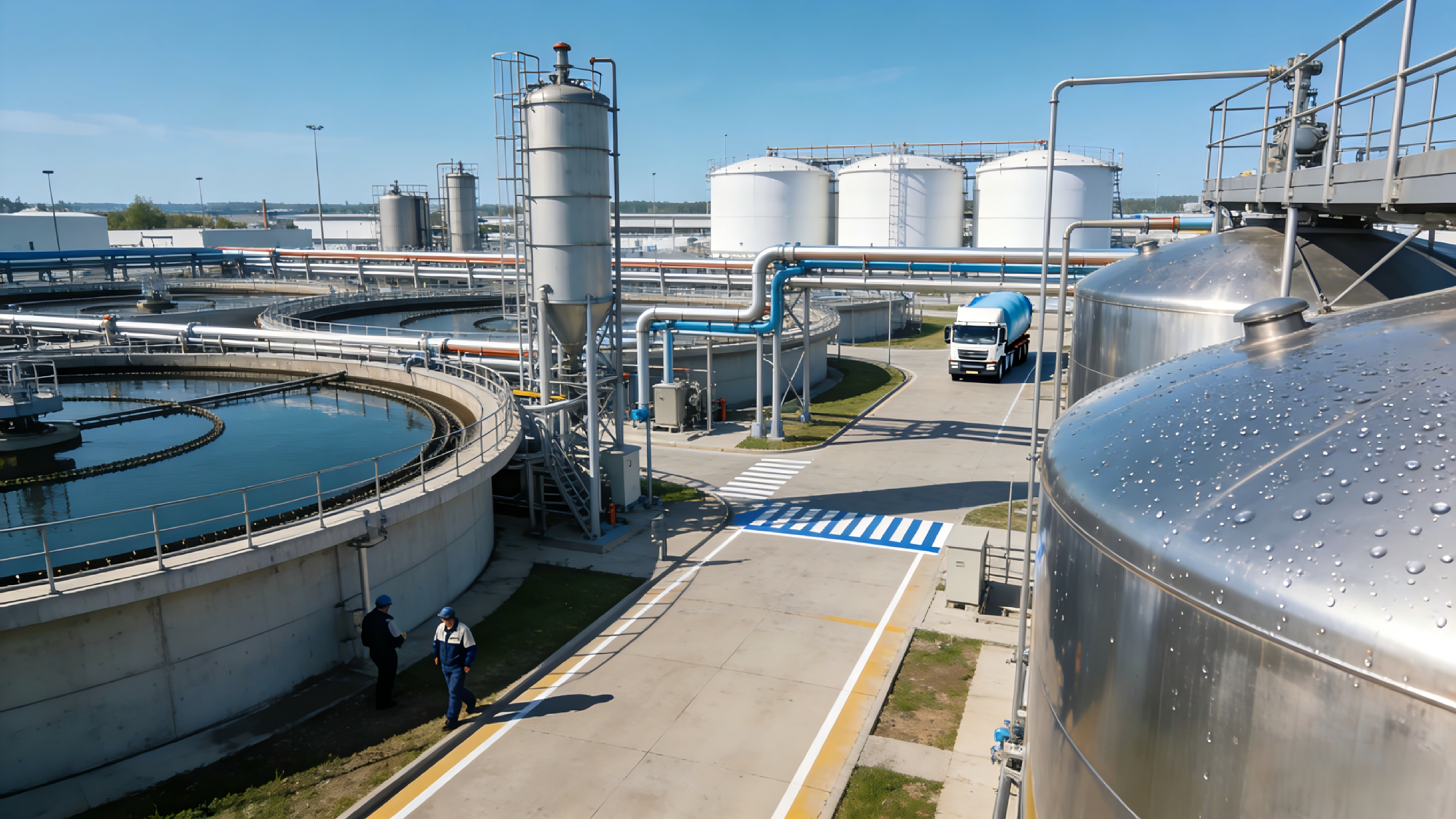
Organic matter itself is not always toxic. However, it can react with disinfectants such as chlorine or chlorine dioxide, producing potentially harmful by-products. Monitoring CODmn helps operators control this risk.
The importance of organic control is emphasized in international regulatory frameworks such as the World Health Organization Guidelines for Drinking-water Quality, which stress minimizing precursors of disinfection by-products. In the United States, the Safe Drinking Water Act establishes enforceable standards for contaminants and supports treatment techniques to reduce organic content where necessary.
In China, GB 5749-2022 sets a limit for CODmn in drinking water at ≤3 mg/L, demonstrating how the parameter functions as a routine control index for organic pollution in potable supplies.
The relationship between CODmn and treatment performance can be summarized below:
CODmn Level (mg/L) | Water Quality Implication | Operational Impact |
< 2.0 | Low organic content | Stable disinfection |
2.0–3.0 | Moderate organics | Increased monitoring required |
> 3.0 | Elevated organics | Risk of by-products and taste issues |
Maintaining CODmn within acceptable limits supports safer and more efficient water treatment.
The manganese method involves heating the water sample with potassium permanganate under acidic conditions at approximately 100°C. After a specified reaction time, the remaining oxidant is titrated to calculate oxygen consumption. Precision and temperature stability are critical to achieving accurate results.
Laboratory-based testing can be time-consuming and may delay operational decisions. Portable analyzers have therefore become valuable tools for on-site monitoring, especially in treatment plants, environmental supervision, and academic research.
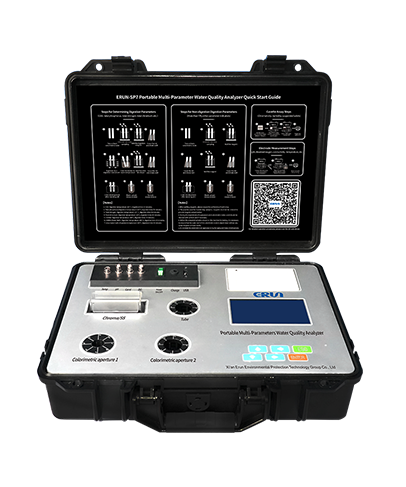
The ERUN-97-C2 Portable Water Quality COD Analyzer is designed specifically for CODmn determination using the manganese method. It provides a measuring range of 0.00–10.00 mg/L, with detection as low as 0.20 mg/L and resolution of 0.01 mg/L. An error range within ±5% and repeatability within 3% help ensure reliable data.
The device operates at 100℃±1.5℃ for controlled digestion and completes dissolution within 30 minutes. Features such as an imported high-precision light source, color touch screen, large-scale data storage, and durable ABS housing enhance usability in field conditions. Its bilingual interface and low energy consumption make it suitable for environmental monitoring agencies, sewage treatment facilities, universities, and research institutions.
By enabling rapid and accurate CODmn measurement, portable instruments support real-time decision-making and compliance with drinking water standards.
Monitoring CODmn is not only about regulatory compliance. It also provides insights into watershed protection, seasonal variations, and source water changes. Rising CODmn values can signal upstream pollution, agricultural runoff, or increased biological activity.
In distribution systems, abnormal increases may indicate biofilm development or contamination events. Integrating CODmn data with turbidity, residual disinfectant levels, and total organic carbon (TOC) creates a more comprehensive water quality profile.
Utilities worldwide recognize that controlling organic matter improves consumer confidence, reduces treatment costs, and enhances long-term infrastructure stability. CODmn remains one of the most practical and widely used indices for this purpose.
What Is CODmn in Drinking Water and Why Does It Matter? It matters because it reflects the organic burden that influences disinfection performance, regulatory compliance, and overall public health protection. Through standardized monitoring methods aligned with global guidelines and supported by reliable analytical equipment, water providers can maintain safer, cleaner, and more stable drinking water systems.