


When consumers ask, is hard water safe to drink, they are usually concerned about both health and long-term household impacts. Hard water contains elevated concentrations of dissolved minerals, mainly calcium (Ca²⁺) and magnesium (Mg²⁺), which enter water supplies as groundwater moves through limestone, chalk, or gypsum formations. While hard water often leaves scale on kettles and pipes, its health implications are frequently misunderstood. International standards and scientific evidence provide a clear perspective: hardness is primarily an aesthetic and operational issue rather than a direct health hazard.
Water hardness is defined by the concentration of multivalent cations, predominantly calcium and magnesium salts. It is commonly expressed as milligrams per liter (mg/L) of calcium carbonate (CaCO₃).
Typical classification:
Hardness Level (as CaCO₃) | Category |
0–60 mg/L | Soft |
61–120 mg/L | Moderately Hard |
121–180 mg/L | Hard |
>180 mg/L | Very Hard |
Hardness does not generally pose acute toxicity risks. Instead, it influences taste, soap efficiency, scaling in pipes, and industrial equipment performance.
The World Health Organization, through its Guidelines for Drinking-water Quality, does not set a health-based maximum limit for hardness. The organization states that calcium and magnesium in drinking water are not harmful at typical concentrations and may even contribute modestly to dietary intake. Hardness becomes a concern mainly for acceptability—taste and scaling—rather than safety.
In the United States, the United States Environmental Protection Agency regulates drinking water under the Safe Drinking Water Act (SDWA). Hardness is not regulated as a primary contaminant with a Maximum Contaminant Level (MCL). Instead, it may be addressed under Secondary Drinking Water Standards, which relate to aesthetic qualities such as taste, odor, and staining.
China’s latest drinking water regulation, GB 5749-2022, sets a recommended limit for total hardness (expressed as CaCO₃), typically not exceeding 450 mg/L. This threshold is intended to maintain water palatability and infrastructure protection rather than to prevent toxicity.
Across these frameworks, hardness is treated as a water quality parameter affecting user experience and system maintenance, not as a direct health threat.
Scientific research suggests that moderate hardness levels may provide small nutritional contributions of calcium and magnesium. Magnesium intake, in particular, has been associated in some epidemiological studies with cardiovascular benefits. However, drinking water generally contributes only a fraction of daily mineral intake compared to food.
At extremely high concentrations, very hard water may cause:
Temporary gastrointestinal discomfort in individuals unaccustomed to it
Scaling in hot water systems, reducing efficiency
Increased soap consumption
There is no consistent evidence linking typical hard water exposure to serious chronic diseases in healthy populations. Therefore, from a toxicological standpoint, hard water within regulatory guidelines is considered safe.
Although the answer to is hard water safe to drink is generally yes, operational challenges can justify monitoring and treatment:
Industrial boilers and cooling systems suffer from scale buildup
Reverse osmosis membranes foul more quickly
Laboratory accuracy may be affected by mineral interference
Municipal distribution systems experience pipe encrustation
In these cases, hardness measurement becomes essential for process control and regulatory compliance.
Precise monitoring ensures compliance with standards such as those outlined by WHO, SDWA frameworks, and GB 5749-2022. Modern spectrophotometric methods provide reliable results for laboratory and field applications.
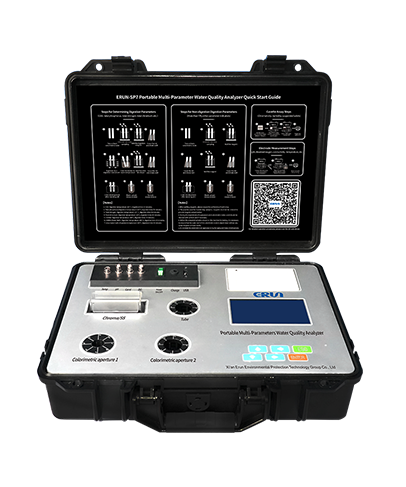
The ERUN-SP7-H2 Portable Water Quality Hardness Tester offers a professional solution for hardness detection using the Acid Chromium Blue K spectrophotometric method. Designed for surface water, sewage, and industrial wastewater analysis, it delivers:
Measuring range: 0.1–500.0 mg/L
Error range: ≤±5%
Repeatability: ≤2%
Optical stability drift <0.002A within 20 minutes
5.0-inch LCD display with built-in printer
Data storage for 3,000 curves
Dual power supply system with built-in lithium battery
USB interface and self-diagnostic function
With high optical stability and minimal interference under proper operating conditions, the ERUN-SP7-H2 supports field inspections, laboratory research, and municipal monitoring programs. Accurate hardness data helps water utilities maintain compliance while protecting infrastructure investments.
Where hardness exceeds recommended levels or operational limits, common treatment methods include:
Ion exchange water softeners
Lime-soda ash softening
Reverse osmosis systems
Nanofiltration
Each method targets mineral removal differently and must be selected based on scale, cost, and water chemistry.
Public concern often focuses on whether mineral-rich water poses health risks. Current scientific evidence and international regulations consistently indicate that hardness alone does not represent a health hazard at typical concentrations. Instead, it influences taste preferences and infrastructure performance. For households and water professionals still wondering, is hard water safe to drink, the answer supported by global standards is reassuring: when it complies with established guidelines, hard water is safe, though monitoring remains essential for quality control and system efficiency.