


In water treatment and environmental monitoring, two parameters are frequently discussed together: TSS in water and turbidity. Many professionals ask, what is the relationship between TSS and turbidity, and can one replace the other?
Although they are closely connected, they are not the same. Understanding how they relate—and where they differ—is essential for accurate water quality monitoring, regulatory compliance, and efficient process control.
Total Suspended Solids testing measures the actual mass concentration of particles suspended in water. These particles may include:
Silt and clay
Organic matter
Algae and microorganisms
Industrial residues
TSS is usually expressed in milligrams per liter (mg/L) and is determined through laboratory filtration and weighing methods.
In wastewater treatment and industrial discharge management, wastewater TSS measurement is often required to meet environmental regulations. High TSS levels can lead to:
Reduced sedimentation efficiency
Higher sludge production
Environmental harm if discharged
Regulatory violations
TSS focuses on measurable particle mass—not visual clarity.
Turbidity measures how cloudy or hazy water appears. It is an optical measurement, typically expressed in NTU (Nephelometric Turbidity Units).
Unlike TSS, turbidity does not directly measure particle weight. Instead, it detects how suspended particles scatter light. Even small particles that weigh very little can significantly increase turbidity if they scatter light efficiently.
Turbidity is widely used in drinking water systems because it provides fast, real-time indication of water clarity. However, turbidity does not always accurately reflect the actual mass concentration of solids.
So, what is the relationship between TSS and turbidity?
The connection lies in suspended particles. Suspended solids cause light scattering, which increases turbidity. In many cases, when TSS rises, turbidity also increases.
However, the relationship is not perfectly linear.
Both are influenced by suspended particles
Higher solids concentration often leads to cloudier water
Changes in solids typically impact both readings
The relationship between Turbidity vs TSS depends on:
Particle size (fine vs coarse particles)
Particle color and composition
Shape and density differences
Dissolved substances affecting light transmission
For example, fine colloidal particles may cause high turbidity but relatively low TSS mass. Conversely, larger heavy particles may increase TSS significantly without proportionally increasing turbidity.
Because of these variations, turbidity cannot always replace precise Total Suspended Solids testing, especially where compliance limits are based on mass concentration.
In some controlled systems, operators develop calibration models that estimate TSS from turbidity. This can be helpful for routine process monitoring.
However, for environmental discharge standards and industrial regulations, compliance is usually based on direct TSS measurement rather than turbidity values.
This is why many facilities combine turbidity sensors for quick visual indication and dedicated suspended solids monitoring systems for accurate mass measurement.
Precise TSS in water data is critical in:
Sewage treatment plants
Environmental protection monitoring
Thermal power facilities
Chemical and metallurgical industries
Food processing and pharmaceuticals
Real-time suspended solids monitoring helps:
Optimize sedimentation tank efficiency
Prevent accidental discharge exceedances
Reduce sludge treatment costs
Improve operational stability
Strengthen compliance documentation
Waiting for manual laboratory results may delay corrective action and increase operational risk.
To manage the relationship between turbidity and TSS effectively, facilities need accurate and stable data.
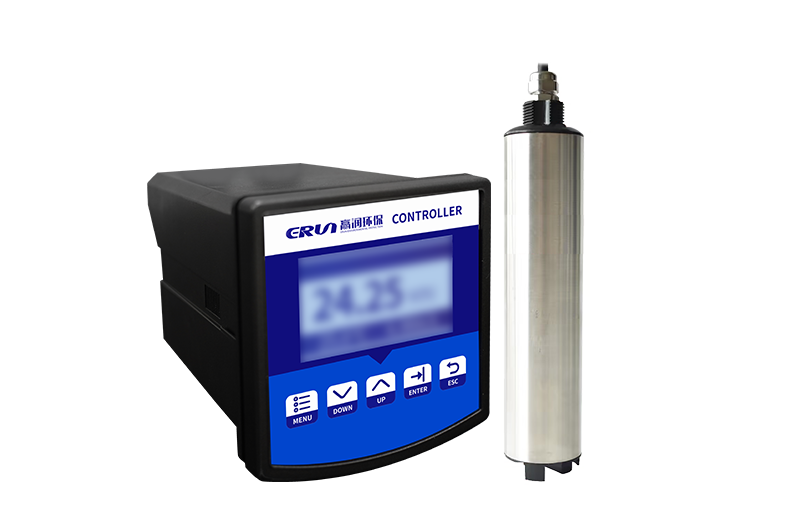
The ERUN-SZ1-A-A6 supports professional water quality monitoring system applications in industrial environments. By using RS485 communication with digital sensors, it ensures high data accuracy and strong resistance to electrical interference—an important factor in complex facilities such as wastewater and power plants.
The system supports digital sensor calibration and automatic cleaning functions, reducing the need for frequent manual maintenance. This minimizes downtime and helps maintain consistent long-term performance.
With the ability to record historical measurement curves and adjust sampling intervals, operators can analyze trends and optimize treatment processes. Instead of reacting to problems after they occur, continuous data enables proactive decision-making.
For industries that depend on dependable online TSS analyzer performance, stable communication and reliable data storage significantly improve control and compliance efficiency.
Understanding what is the relationship between TSS and turbidity is essential for accurate water quality assessment.
While both parameters are influenced by suspended particles, they measure different characteristics—mass concentration versus light scattering. In many situations, turbidity and TSS move together, but they are not interchangeable.
For regulatory compliance, process optimization, and reliable wastewater TSS measurement, direct suspended solids monitoring remains necessary.
By combining proper measurement strategy with a dependable water quality monitoring system, facilities can maintain operational stability, reduce compliance risk, and ensure accurate control of TSS in water.