


Understanding how to test total suspended solids in water is essential for wastewater treatment plants, industrial facilities, and environmental monitoring agencies. Suspended solids directly affect water clarity, treatment efficiency, discharge compliance, and overall environmental impact.
Whether you rely on traditional laboratory methods or modern online systems, accurate Total Suspended Solids testing is critical for maintaining stable operations and meeting regulatory requirements.
TSS in water refers to particles that are suspended but not dissolved. These include silt, organic matter, algae, industrial residues, and other microscopic materials floating in water.
Unlike dissolved solids, suspended solids can:
Reduce water clarity
Interfere with filtration systems
Increase sludge production
Impact aquatic ecosystems
Cause discharge violations
Because of these operational and environmental effects, suspended solids monitoring has become a standard parameter in industrial water testing and wastewater management.
In industries such as wastewater treatment, power generation, food processing, and chemical manufacturing, water quality conditions can change rapidly. Waiting for lab results may delay corrective action.
Real-time suspended solids monitoring provides:
Immediate detection of abnormal discharge levels
Better process optimization
Reduced risk of regulatory penalties
Improved efficiency of sedimentation and filtration systems
Modern online TSS analyzer systems use digital sensors to deliver continuous data, helping operators respond quickly to fluctuations.
When selecting a water quality monitoring system for TSS measurement, consider:
Data accuracy and stability
Resistance to environmental interference
Ease of calibration
Automatic cleaning capability
Long-term reliability
Data storage and communication functions
Facilities operating in harsh industrial environments need robust systems capable of consistent performance without constant manual adjustment.
For organizations seeking stable and accurate Total Suspended Solids testing, online systems offer significant operational advantages.
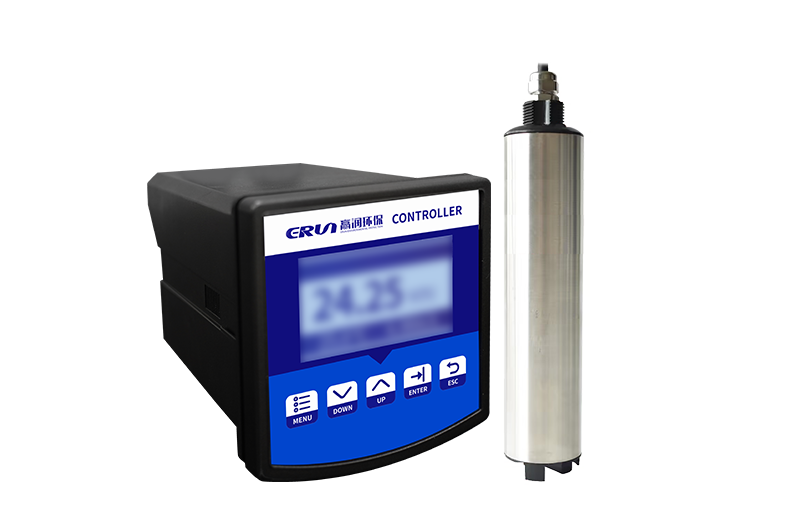
The ERUN-SZ1-A-A6 is designed to support reliable suspended solids monitoring in demanding industrial environments. By using RS485 communication with digital sensors, it provides high data accuracy and strong anti-interference capability, which is essential in electrically complex facilities such as wastewater plants and thermal power stations.
One of its key benefits is remote digital sensor calibration and automatic cleaning support. This reduces manual workload and helps ensure consistent performance over time. Instead of frequent physical adjustments, operators can manage calibration efficiently, minimizing downtime.
The system also records historical measurement curves and allows flexible sampling time settings. This helps facility managers analyze trends, optimize treatment processes, and maintain compliance with environmental discharge standards.
For industries such as sewage treatment, metallurgy, chemical manufacturing, aquaculture, and municipal water systems, continuous TSS monitoring improves transparency and operational confidence.
Implementing an online TSS analyzer helps facilities:
Prevent accidental discharge exceedances
Optimize sedimentation tank performance
Improve sludge management efficiency
Reduce manual sampling labor costs
Strengthen environmental compliance documentation
Instead of reacting to problems after laboratory results arrive, real-time monitoring enables proactive control.
Knowing how to test total suspended solids in water is fundamental for maintaining water system performance and environmental compliance. While traditional gravimetric methods remain reliable for laboratory testing, they cannot provide the immediacy required in modern industrial operations.
Continuous Total Suspended Solids testing through digital monitoring systems enhances operational stability, improves efficiency, and reduces compliance risks. With the right water quality monitoring system, organizations can achieve accurate data, simplified maintenance, and long-term reliability.
In today’s regulatory environment, proactive TSS in water monitoring is not just recommended—it’s essential for responsible and efficient water management.