


Maintaining microbiological safety in drinking water systems depends not only on disinfectant dosage but also on precise chemical balance. Among all influencing factors, pH impact on water disinfection plays a decisive role in determining how effectively pathogens are inactivated and how stable disinfectant residuals remain throughout the distribution network. Regulatory frameworks such as the World Health Organization Guidelines for Drinking-water Quality, the United States Environmental Protection Agency under the Safe Drinking Water Act (SDWA), and National Health Commission (NHC) standard GB 5749-2022 all recognize pH as a critical operational parameter in drinking water treatment.
Chlorine remains the most widely used disinfectant in municipal water systems. When chlorine dissolves in water, it forms two species:
l Hypochlorous acid (HOCl) – highly effective disinfectant
l Hypochlorite ion (OCl⁻) – significantly weaker disinfectant
The proportion of these species is governed directly by pH. At lower pH levels, HOCl predominates, enhancing microbial inactivation. As pH increases, the equilibrium shifts toward OCl⁻, reducing disinfection efficiency.
pH Level | Dominant Form | Relative Disinfection Strength |
6.0–6.5 | HOCl (>90%) | Very High |
7.0–7.5 | Mixed | High |
8 | OCl⁻ rising | Moderate |
>8.5 | OCl⁻ dominant | Reduced |
Most treatment facilities maintain pH between 6.5 and 7.5 to optimize chlorine performance while minimizing corrosion risks.
International standards emphasize that pH control is inseparable from effective disinfection management.
l The World Health Organization highlights that disinfection efficacy depends on water chemistry, including pH and temperature.
l The United States Environmental Protection Agency enforces microbial inactivation requirements through CT (Concentration × Time) calculations, where pH directly influences required chlorine contact time.
l GB 5749-2022, issued by National Health Commission (NHC), sets pH limits (typically 6.5–8.5) to ensure both chemical stability and public health protection.
If pH drifts outside recommended ranges, even compliant residual chlorine levels may fail to deliver sufficient pathogen reduction.
The relationship between pH and disinfection extends beyond microbial inactivation. Elevated pH often increases the formation of trihalomethanes (THMs) and other disinfection by-products (DBPs). High pH conditions accelerate certain chemical reactions between chlorine and natural organic matter.
Maintaining optimal pH therefore serves two purposes:
l Enhancing microbial kill efficiency
l Controlling harmful by-product generation
Balancing these outcomes is central to modern water safety management.
While chlorine is highly sensitive to pH variations, other disinfectants behave differently:
l Chlorine dioxide shows relatively stable performance across a wider pH range.
l Ozone decomposes more rapidly at high pH, altering oxidation kinetics.
l UV disinfection is largely unaffected by pH but depends on turbidity and UV transmittance.
In multi-barrier systems, pH optimization supports the overall synergy of combined treatment technologies.
Even when water leaves the treatment plant at optimal pH, conditions may shift within pipelines due to:
l Corrosion reactions
l Carbon dioxide absorption
l Alkalinity changes
l Biofilm activity
Such fluctuations can weaken disinfectant residuals before water reaches consumers. Continuous online monitoring is therefore essential for real-time adjustment.
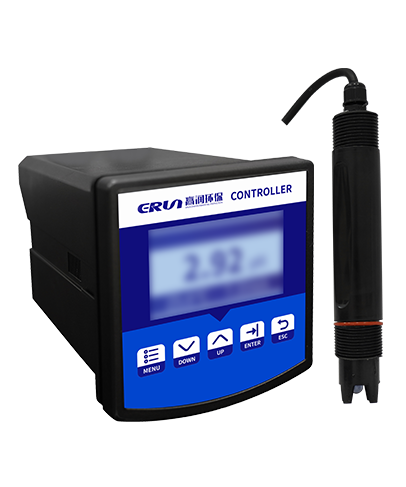
To maintain stable chemical conditions, many facilities deploy intelligent monitoring systems such as the ERUN PH Water Quality On-line Monitor (Model ERUN-SZ1-A-B7). This next-generation analyzer uses the electrode method to measure pH and temperature simultaneously, offering:
l Measurement range: -2.00–16.00 pH
l High precision: ±0.02 pH
l Stability: ≤0.01 pH/24h
l Automatic temperature compensation (0–99.9°C)
l 4–20 mA output and RS485 (ModBus protocol)
l IP65 protection rating for industrial environments
With dual relay alarm control and compatibility with AC220V or DC power supply, it supports automated dosing systems in water treatment plants, sewage facilities, food processing industries, and municipal networks. Real-time pH monitoring ensures that disinfectants operate within their optimal efficiency window, reducing compliance risks under SDWA and international standards.
Effective disinfection depends on more than disinfectant concentration. CT value, temperature, organic load, and hydraulic conditions all interact with pH. A deviation of even 0.5 units can significantly change chlorine speciation, alter microbial inactivation rates, and increase chemical by-product risks.
For utilities striving to meet global regulatory expectations and safeguard public health, understanding and controlling pH impact on water disinfection is not optional. It is a fundamental component of a resilient, standards-compliant drinking water system.