


ORP level in drinking water is more than a technical parameter on a control panel—it is a direct indicator of a water system’s ability to inactivate harmful microorganisms and maintain microbiological safety. Oxidation Reduction Potential (ORP) reflects the oxidizing capacity of water, which determines how effectively disinfectants such as chlorine or chlorine dioxide can destroy bacteria, viruses, and other pathogens. In modern water treatment systems, maintaining a proper ORP level in drinking water has become essential for protecting public health and ensuring regulatory compliance worldwide.
ORP, measured in millivolts (mV), indicates the tendency of a solution to either gain or lose electrons. In drinking water treatment, a higher ORP value generally means stronger oxidation capability, which correlates with more effective microbial inactivation. Research and operational experience show that most pathogenic bacteria cannot survive long when ORP levels exceed approximately 650 mV under appropriate disinfectant concentrations and contact times.
Unlike residual disinfectant concentration alone, ORP provides a real-time reflection of overall disinfection effectiveness. Two water systems may show similar chlorine levels, yet differences in pH, temperature, and organic matter can significantly alter actual microbial kill rates. ORP integrates these variables into a single measurable parameter, making it highly valuable for water plant operators.
Maintaining a stable ORP level in drinking water helps reduce the risk of outbreaks caused by organisms such as E. coli, Salmonella, and enteric viruses. When ORP drops below recommended operational thresholds, microbial survival rates increase, compromising public safety.
Major international standards emphasize microbial safety and disinfectant control, indirectly reinforcing the importance of ORP monitoring.
l Guidelines for Drinking-water Quality published by the World Health Organization highlights the need for effective disinfection and continuous monitoring to prevent waterborne disease. While WHO does not prescribe a specific ORP value, it underscores maintaining conditions that ensure adequate oxidation potential for pathogen inactivation.
l The Safe Drinking Water Act (SDWA) enforced by the United States Environmental Protection Agency requires public water systems to control disinfectant residuals and meet microbial standards, including zero tolerance for E. coli. ORP monitoring is widely used in U.S. plants as a practical tool to verify disinfection performance.
l China’s GB 5749-2022 specifies limits for microbial indicators and disinfectant residuals in centralized drinking water systems, reinforcing the importance of maintaining sufficient oxidation capacity.
Although ORP itself is not directly regulated as a numeric standard in these documents, operational guidance in many treatment facilities recommends maintaining ORP values typically between 650–750 mV during active disinfection processes to ensure safety margins.
Chlorine dioxide is increasingly used due to its strong oxidation ability and reduced formation of chlorinated by-products. Regulatory limits differ slightly across jurisdictions:
Standard | Chlorine Dioxide Limit in Drinking Water |
WHO Guidelines | 0.7 mg/L (provisional guideline value) |
U.S. EPA (SDWA) | MRDL = 0.8 mg/L |
GB 5749-2022 | ≤ 0.8 mg/L |
These limits demonstrate global alignment around safe concentration thresholds. However, concentration alone does not guarantee microbial control. The actual disinfection efficiency depends on oxidation strength, which is reflected in the ORP level in drinking water. Continuous ORP monitoring ensures that chlorine dioxide remains effective within permitted ranges while avoiding under-dosing or excessive chemical usage.
Fluctuations in source water quality, organic load, temperature, and pH can rapidly alter oxidation conditions. Without continuous monitoring, operators may not detect declining disinfection performance until compliance tests reveal problems.
An online monitoring system provides immediate feedback, allowing automatic dosing adjustments. This approach reduces public health risks, minimizes chemical waste, and supports regulatory documentation.
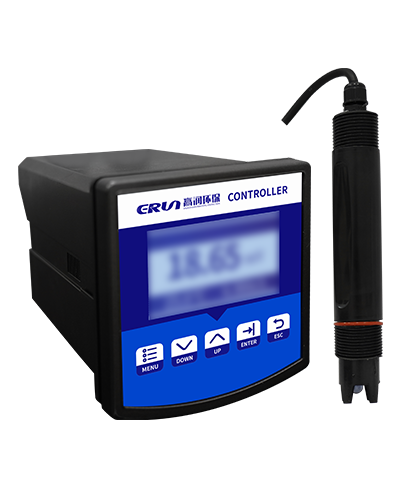
For example, the ERUN-SZ1-A-A2 ORP Water Quality On-line Analyzer offers high-precision electrode measurement with a range of –1999 to +1999 mV and ±1 mV accuracy. Designed for continuous industrial and municipal applications, it supports 4–20 mA output, RS485 (ModBus protocol), IP65 protection, and automatic temperature compensation. Features such as historical curve recording, dual relay alarm control, and long-term power-down data protection enhance operational reliability. Its stability and repeatability make it suitable for drinking water plants, sewage treatment facilities, and other public health–critical systems.
By integrating real-time ORP measurement with automated control systems, facilities can maintain stable oxidation conditions and quickly respond to unexpected changes.
Waterborne disease outbreaks often stem from inadequate disinfection or system failures. A properly maintained ORP level in drinking water serves as an early warning indicator, helping prevent such failures before they escalate. Continuous ORP control supports:
l Effective pathogen inactivation
l Stable disinfectant dosing
l Reduced formation of harmful by-products
l Improved transparency in regulatory reporting
In a world facing increasing urbanization and climate-related water variability, proactive monitoring strategies are becoming indispensable.
Maintaining an appropriate ORP level in drinking water is a cornerstone of modern public health protection. It bridges the gap between disinfectant concentration and actual microbial control, supports compliance with WHO, U.S., and Chinese standards, and strengthens operational resilience. Through accurate, real-time monitoring solutions such as advanced online ORP analyzers, water utilities can ensure safe, reliable drinking water for the communities they serve.