


Ozone is widely used in modern water treatment for its strong oxidation and disinfection ability. But because ozone is highly reactive and unstable, many operators ask a critical question: how do you test for ozone in water accurately and consistently?
Whether you are managing drinking water, swimming pools, or industrial processes, proper ozone testing is essential for safety, efficiency, and regulatory compliance. This guide explains why ozone measurement matters, compares common testing methods, and shows how advanced online monitoring simplifies ozone control.
Ozone plays a dual role in water systems. At effective concentrations, it destroys bacteria, viruses, and organic pollutants. However, if ozone levels are too low, disinfection becomes ineffective. If levels are too high, ozone may damage equipment, affect water taste, or create health risks.
In regulated environments such as municipal water treatment plants or swimming pools, inaccurate ozone in water data can lead to compliance issues and unnecessary chemical adjustments. Consistent testing ensures stable disinfection, protects infrastructure, and maintains user safety.
Unlike chlorine, ozone does not remain stable in water. It decomposes quickly and reacts with organic matter almost immediately. This makes ozone concentration in water highly dynamic and difficult to capture with occasional testing.
Temperature, flow rate, and water composition all influence ozone behavior. As a result, spot testing often fails to reflect real operating conditions. Reliable ozone control requires methods that respond quickly and accurately to changing conditions.
When answering how do you test for ozone in water, it is important to understand the strengths and limitations of different approaches.
Colorimetric methods rely on reagents that react with ozone to produce a color change. These tests are easy to perform and suitable for occasional checks. However, they are manual, time-consuming, and prone to operator error. They also lack real-time feedback.
Traditional sensors use membranes and electrolytes to detect ozone. While they offer continuous measurement, membranes require frequent replacement and are sensitive to fouling and signal drift. Maintenance costs and downtime can become significant.
Online systems provide continuous, real-time measurement and are increasingly preferred in professional applications. They eliminate guesswork and allow operators to adjust processes immediately, improving control and efficiency.
Many operators struggle with unstable readings, frequent calibration, and high maintenance workloads when using conventional tools. Reagent-based tests slow down operations, while membrane sensors suffer from aging components.
These challenges make it difficult to maintain consistent ozone measurement in water, especially in systems where ozone concentration changes rapidly. This is why more facilities are shifting toward intelligent, low-maintenance monitoring solutions.
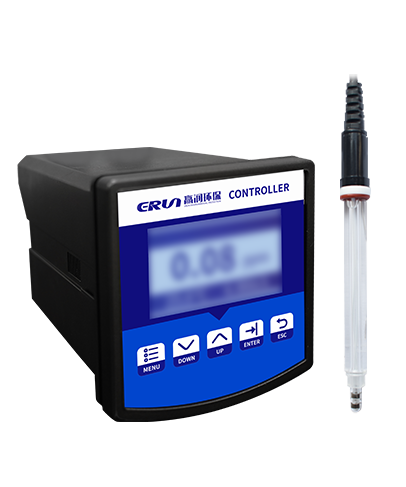
The Water quality ozone online monitor ERUN-SZ1-A-K3 is designed to address the exact challenges faced by water treatment operators.
Instead of relying on membranes or chemical reagents, it uses an advanced non-membrane constant voltage sensor. This eliminates the need for diaphragm replacement and reagent consumption, significantly reducing maintenance effort.
For users, this means:
Faster response to ozone fluctuations
Stable, accurate readings over long-term operation
Simple maintenance with minimal downtime
Clear data access through an English menu interface
By providing real-time ozone measurement in water, the system helps operators maintain precise ozone control, improve disinfection reliability, and reduce operational risk.
Online ozone monitoring is especially valuable for:
Drinking water treatment plants
Swimming pools and spas
Industrial process water systems
Environmental and public health monitoring
In these scenarios, continuous data replaces assumptions and manual testing, enabling safer and more efficient water management.
So, how do you test for ozone in water effectively? While traditional methods can provide basic insights, they fall short in accuracy and responsiveness. Continuous online monitoring offers the most reliable solution for real-world applications.
By adopting a professional online ozone monitor, operators gain real-time visibility, reduced maintenance effort, and better control over water quality. Accurate ozone testing is no longer a challenge—it becomes a manageable, predictable part of daily operations.