


Boilers are the backbone of many industrial systems, from power generation and chemical processing to food manufacturing and district heating. Yet, many operational issues—such as tube failures, energy loss, and unexpected shutdowns—can be traced back to one overlooked factor: water quality.
This is where boiler water analysis becomes essential. Proper analysis allows operators to detect problems early, maintain stable system chemistry, and protect expensive equipment. In this article, we explain what boiler water analysis is, what parameters matter most, and how modern testing solutions help industrial users stay in control.
Boiler water analysis is the process of testing and monitoring the chemical and physical properties of water used inside a boiler system. It includes testing make-up water, feedwater, boiler water, and condensate to ensure all parameters remain within acceptable limits.
The purpose is simple but critical:
Prevent scale formation that reduces heat transfer
Control corrosion that damages boiler metal surfaces
Avoid carryover and foaming that affect steam quality
Ensure compliance with industry and safety standards
Without regular analysis, even a well-designed boiler can experience accelerated failure.
Industrial boilers operate under high temperature and pressure. Small water quality problems can quickly turn into major failures. Boiler water analysis helps solve several key challenges faced by operators:
Reducing unplanned downtime caused by tube rupture or scaling
Lowering maintenance costs by identifying issues before damage occurs
Improving energy efficiency through clean heat-transfer surfaces
Extending boiler lifespan with stable water chemistry
For industries where continuous operation matters, boiler water analysis is not optional—it is a preventive maintenance necessity.
Effective boiler water analysis focuses on multiple indicators, each revealing a different risk. The most common parameters include:
pH directly affects corrosion potential. Low pH leads to acid corrosion, while excessively high pH can cause caustic embrittlement.
Hardness ions such as calcium and magnesium cause scale formation. Testing hardness helps prevent heat-transfer loss and tube overheating.
Oxygen accelerates corrosion, especially in feedwater and condensate systems. Oxygen control is a priority in high-pressure boilers.
These parameters reflect the concentration of dissolved solids. High values increase the risk of foaming and carryover.
Often present in make-up water, these substances can damage boiler metals if not removed or controlled.
Monitoring multiple indicators together provides a complete picture of boiler water health.
When boiler water is not properly tested, problems often appear gradually but escalate quickly:
Scale buildup, reducing heat efficiency and increasing fuel consumption
Internal corrosion, leading to leaks and equipment failure
Steam contamination, affecting downstream processes
Shortened inspection intervals, increasing operational costs
These problems rarely happen overnight. Regular and accurate boiler water analysis is the most effective way to prevent them.
Traditionally, boiler water testing relied on laboratory analysis, which often involves delays and additional costs. Today, many industrial operators prefer on-site testing for faster decision-making.
Modern approaches include:
Portable testing instruments for real-time results
Multi-parameter analysis from a single device
Customizable test items based on boiler type
On-site testing allows operators to adjust treatment chemicals immediately, preventing problems before they escalate.
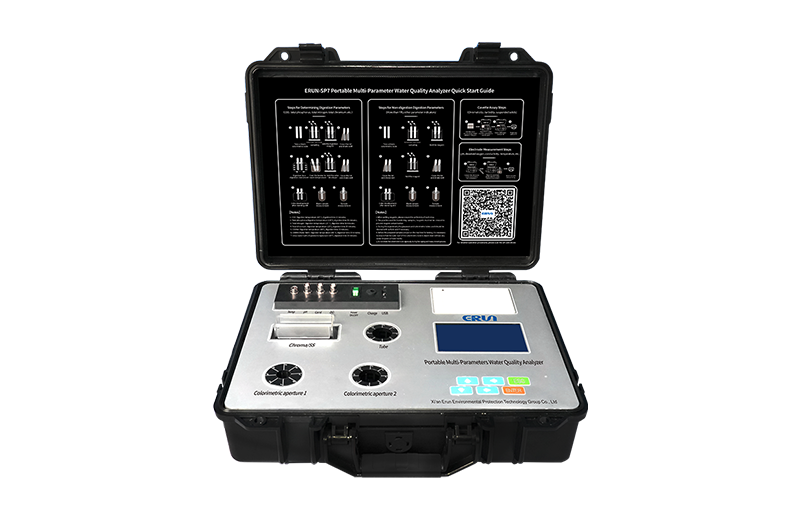
For industrial users managing complex boiler systems, testing needs are rarely limited to one or two parameters. The ERUN-SP7 portable multi-parameter water quality detector is designed specifically to solve this challenge.
Instead of using multiple single-purpose instruments, users can:
Test ozone, hardness, residual chlorine, conductivity, and other critical boiler indicators with one device
Customize parameters to match different boiler systems, pressures, and treatment methods
Perform on-site analysis quickly, reducing dependency on external laboratories
For power plants, factories, and energy facilities, the ERUN-SP7 helps operators move from reactive maintenance to proactive water quality control—saving time, reducing risk, and improving system reliability.
Consistent boiler water analysis is especially important for:
Thermal power plants
Industrial steam boiler users
Chemical and pharmaceutical manufacturers
Food and beverage processing facilities
District heating systems
Any operation relying on steam or hot water can benefit from accurate, on-site testing and customized analysis solutions.
Boiler water analysis is not just a technical procedure—it is a critical management tool. By understanding water chemistry, operators can prevent failures, optimize performance, and extend equipment life.
With portable, multi-parameter solutions like the ERUN-SP7, industrial users can gain real-time insights into boiler water conditions and make informed decisions immediately. This proactive approach is key to safer, more efficient boiler operation.