


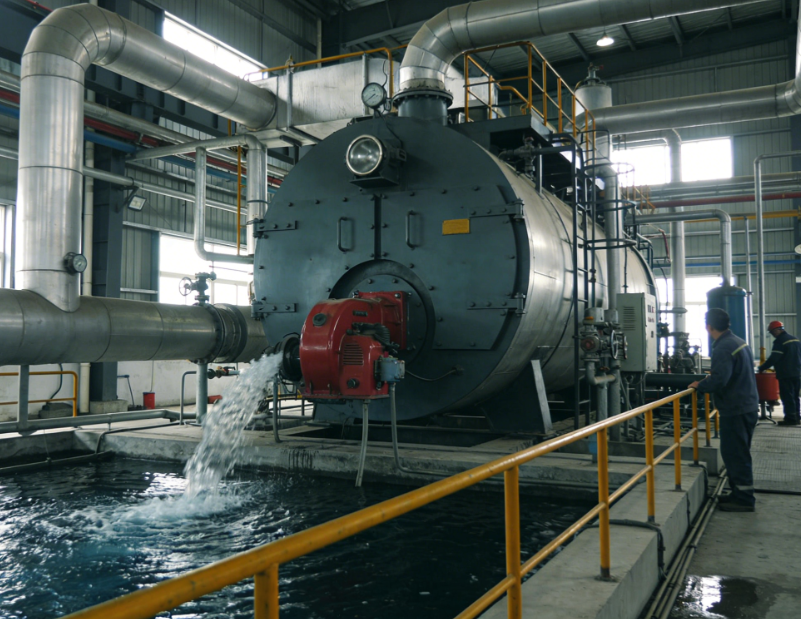
Hard water is a hidden threat in many boiler systems. At first glance, it may seem harmless. However, over time, mineral-rich water can quietly reduce boiler efficiency, increase maintenance costs, and even shorten equipment lifespan.
So, is hard water bad for boilers? The short answer is yes. More importantly, the damage is often preventable with proper monitoring and control.
This article explains how hard water affects boilers, what risks it creates, and how industrial users can manage water quality more effectively.
Hard water refers to water that contains high levels of dissolved calcium and magnesium ions. These minerals enter water naturally as it flows through limestone and mineral-rich soil.
In industrial and commercial environments, boilers often rely on:
Groundwater sources
Municipal water with variable treatment quality
Recycled or makeup water
As a result, hardness levels can fluctuate, especially in regions without strict water softening standards.
Yes, hard water is bad for boilers, and the damage is both mechanical and financial.
When hard water is heated inside a boiler:
Calcium and magnesium precipitate out
Solid scale forms on heat transfer surfaces
Heat efficiency drops rapidly
Even a thin layer of scale can reduce heat transfer efficiency by more than 10%.
Just 1.5 millimeters of scale buildup can increase fuel consumption by more than 12%-an extra cost that silently accumulates with everyheating cycle. For a moderately sized industrial boiler, this could meanwasting thousands of dollars in energy every year, while also accelerating equipment wear and leading to premature pipe damage.
Over time, this leads to higher fuel consumption and uneven heating.
Scale acts as an insulating barrier. The boiler must work harder to reach the same temperature, which accelerates wear on metal components.
Poor heat transfer forces boilers to burn more fuel. This directly increases operating costs and carbon emissions.
Scale buildup creates hot spots. These areas are more prone to metal fatigue, cracking, and corrosion under deposit.
Uncontrolled hardness often leads to:
Tube failures
Frequent shutdowns
Expensive emergency maintenance
To control hard water risks, hardness must be measured accurately and consistently.
Common hardness indicators include:
Total hardness (as CaCO₃)
Calcium hardness
Magnesium hardness
In boiler water management, hardness testing is often combined with other parameters such as conductivity, pH, iron, and phosphate. Testing only one indicator is rarely sufficient.
Many facilities install water softeners and assume the problem is solved. In reality:
Softener performance can decline
Resin exhaustion often goes unnoticed
Makeup water quality can change
Without routine testing, hardness issues are detected too late—usually after scale has already formed.
This is why on-site, multi-parameter testing plays a critical role in preventive maintenance.
For boiler operators, labs, and industrial facilities, the challenge is clear:
They need fast, reliable water quality data without relying on external labs.
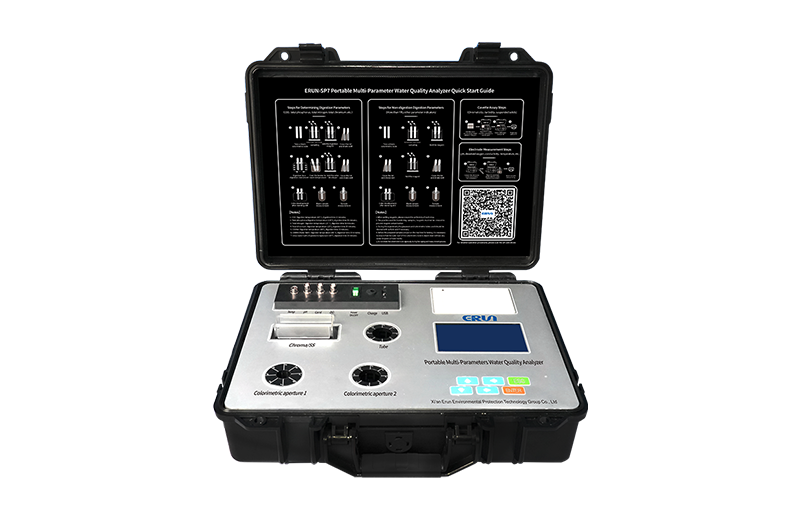
The ERUN-SP7 portable multi-parameter water quality detector is designed to address this exact need.
Instead of testing hardness in isolation, ERUN-SP7 allows users to:
Monitor hardness alongside critical boiler parameters
Detect abnormal trends early
Adjust treatment programs before damage occurs
The instrument supports testing for hardness and a wide range of inorganic salts and indicators, including sulfate, phosphate, iron, residual chlorine, total chlorine, turbidity, and more.
| Traditional Approach | With ERUN-SP7 Solution |
|---|---|
Single-parameter testing, isolated data | Multi-parameter simultaneous monitoring: hardness, phosphate, iron, pH, turbidity, etc. |
Reliance on external laboratories, delayed results | On-site real-time readings, enabling rapid decision-making |
Delayed maintenance response, often "failure occurs before action" | Trend-based early warnings, allowing adjustments to water treatment before issues arise |
Fixed device configuration, difficult to adapt to different systems | Modular design, flexible customization based on boiler type and water source characteristics |
Flexible and Expandable for Real-World Boiler Systems
Every boiler system is different. ERUN-SP7 can be expanded and customized based on:
Boiler type (steam, hot water, thermal power)
Industry requirements (power plants, manufacturing, HVAC)
Local water source characteristics
This flexibility helps engineers and maintenance teams build a targeted testing strategy rather than relying on generic assumptions.
Get a Free Quote Today!
WhatsApp / Mobile: +86 181 8913 5710
Email: [email protected]
The impact of hard water is not limited to large power plants. Monitoring is especially valuable for:
Industrial steam boiler operators
Commercial building heating systems
Thermal power plants
Water treatment and environmental monitoring teams
For these users, early detection translates directly into cost savings and operational stability.
Hard water is not just a water quality issue—it is a boiler performance and cost control issue.
Unchecked hardness leads to scale, energy waste, corrosion, and premature equipment failure. However, these risks are largely preventable.
By combining proper treatment with regular, multi-parameter water quality monitoring, boiler operators can:
Protect equipment
Reduce fuel consumption
Extend boiler service life
The question isn't whether you can afford boiler water quality monitoring, but whether you can affod the consequences of notmonitoring. The costs of hard water, while hidden, are calculable; the damage caused by scale, while gradual, is inevitable. With tools like the ERUN-SP7, you can move from guesswork to certainty, from reactive responses to proactive prevention. Start measuring what truly mattersand transform your boiler room from a cost center into a model ofefficiency and reliability.