


In the high-stakes world of thermal power generation, water is much more than a simple resource—it is the vital lifeblood that keeps turbines turning and condensers cool. However, water is also a carrier of impurities that can silently sabotage your facility. Without rigorous power plant circulating cooling water testing, systems are vulnerable to the "Triple Threat": scaling, corrosion, and biofouling.
Even a 1mm layer of calcium carbonate scaling can decrease thermal efficiency by over 12%, leading to skyrocketing fuel costs. Meanwhile, undetected corrosion eats away at expensive metallurgy, risking catastrophic tube leaks. Accurate, frequent monitoring is the only way to transform your maintenance strategy from reactive to proactive, ensuring a high-efficiency operation that meets modern energy demands.
Adhering to strict water quality standards is not just about compliance; it’s about asset protection. To maintain a healthy cooling loop, several chemical and physical indicators must be balanced:
pH and Alkalinity: Maintaining a stable pH (typically 7.0–9.0) is the first line of defense against acidic corrosion.
Hardness and Minerals: Monitoring calcium and magnesium levels prevents the "pressure cooker" effect where minerals bake onto heat exchanger surfaces.
Corrosion Markers: Testing for heavy metals like copper, iron, and zinc provides an early warning that your system’s metal components are beginning to degrade.
Chemical Additives: It is essential to track levels of phosphate and sulfate to ensure your chemical inhibitors are at the correct concentration to prevent buildup.

When a cooling tower shows signs of drift, waiting 48 hours for a third-party laboratory report is simply not an option. The modern power plant requires equipment that bridges the gap between lab-grade precision and field-ready durability.
The ideal portable multi-parameter water quality detector must offer "one-stop" testing. Instead of juggling five different devices for pH, turbidity, and metal ions, operators need an integrated solution. Key features to look for include optical stability (to prevent reading drift in humid environments), massive data storage for regulatory audits, and the flexibility to add custom testing curves as your water treatment chemicals change.
The ERUN-SP7 is specifically engineered to solve the unique challenges of power plant circulating cooling water testing. Whether you are monitoring makeup water or the highly concentrated water in a cooling tower basin, this instrument provides a "mini-lab" in the palm of your hand.
For plant managers, the ERUN-SP7 provides a total solution for:
Inorganic Salts: Get instant readings on ammonia nitrogen, total phosphorus, total nitrogen, residual chlorine, and ozone.
Heavy Metals: Rapidly screen for copper, chromium, manganese, iron, zinc, and aluminum to detect metallurgy wear before it leads to a shutdown.
Customization Power: Every plant is different. The ERUN-SP7 can be expanded to include specific test items based on your unique chemical treatment program, ensuring you never pay for features you don't need, but always have the ones you do.
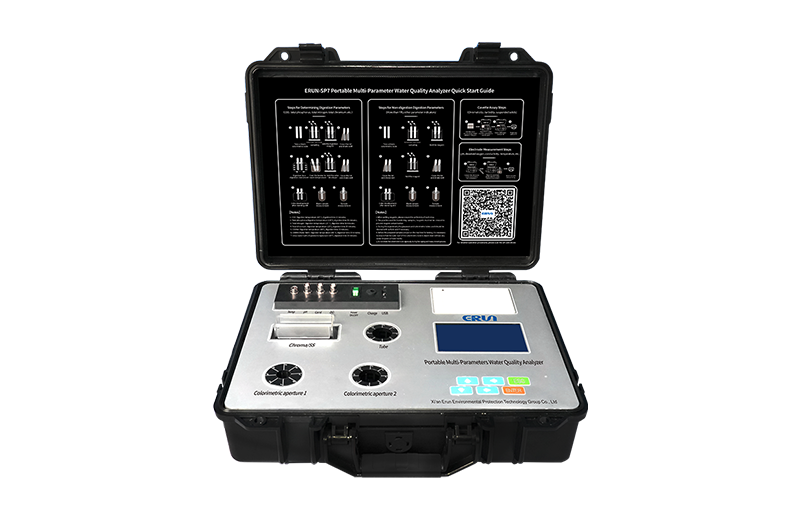
The ERUN-SP7 isn't just versatile; it’s built for the rugged environment of a power facility. It utilizes a cold light source and a narrow-band interference optical system, ensuring that your results remain stable even in fluctuating ambient temperatures.
The user interface is designed for speed: with automatic wavelength selection, there is no need for manual calibration between different tests. With a storage capacity of 100,000 data records and a high-capacity rechargeable lithium battery, your team can conduct a full day of inspections across the entire plant site without returning to the charging station or a desktop computer.
Get a Free Quote Today!
WhatsApp / Mobile: +86 181 8913 5710
Email: [email protected]
Q: How often should we perform onsite testing?
A: While online sensors provide continuous data, manual verification with a portable multi-parameter water quality detector like the ERUN-SP7 should be done daily to verify sensor accuracy and check for unmonitored heavy metals.
Q: Can this device handle high-turbidity samples?
A: Yes, the ERUN-SP7 features advanced optical sensors designed to provide accurate results even in water with high suspended solids or complex chemical backgrounds.
Q: Is the data secure if the battery dies?
A: Absolutely. The device includes a data power-off protection function, ensuring your records are safe even during an unexpected power loss.
Effective power plant circulating cooling water testing is the most cost-effective insurance policy a facility can have. By monitoring for scaling, corrosion, and biofouling in real-time, you extend equipment life and optimize energy output. The ERUN-SP7 provides the accuracy, portability, and customization needed to keep your plant running at peak performance.
Would you like me to help you create a customized list of testing parameters for the ERUN-SP7 based on your specific power plant configuration?