


Circulating water systems are widely used in industrial cooling, boilers, HVAC systems, and process water loops. Because the same water is reused continuously, even small changes in water quality can quickly lead to corrosion, scaling, microbial growth, or system inefficiency. This is why circulating water testing is not optional—it is essential for stable operation and long-term cost control.
In this article, we explain what circulating water testing is, which parameters matter most, the common testing methods, and how modern multi-parameter instruments help industries monitor circulating water more efficiently.
Unlike drinking water, circulating water remains inside a system for long periods and is constantly affected by temperature changes, chemicals, metals, and biological activity. Poor monitoring can result in heat-exchange failure, pipeline blockage, equipment corrosion, and increased energy consumption.
Regular circulating water testing helps operators:
Detect chemical imbalance early
Control disinfectant dosage
Prevent scaling and metal corrosion
Maintain stable system performance
Reduce unplanned maintenance costs
For industries operating continuously, real-time and on-site water quality testing is especially important.
Circulating water testing refers to the analysis of physical, chemical, and disinfectant indicators in water that is reused within an industrial or mechanical system.
Circulating water testing focuses on:
Higher concentrations of dissolved substances
Faster changes in water chemistry
Strong interaction with metals and equipment surfaces
This means more parameters must be monitored, and testing must be more frequent compared to standard water quality checks.
Uncontrolled hardness, metals, or disinfectant levels can cause scale deposits, pipe corrosion, and microbial growth. These issues directly shorten equipment lifespan.
When circulating water quality is stable, heat transfer is more efficient, pumps operate smoothly, and energy costs are significantly reduced.
In many industries, circulating water may eventually be discharged or replenished. Proper monitoring ensures compliance with environmental standards and internal safety requirements.
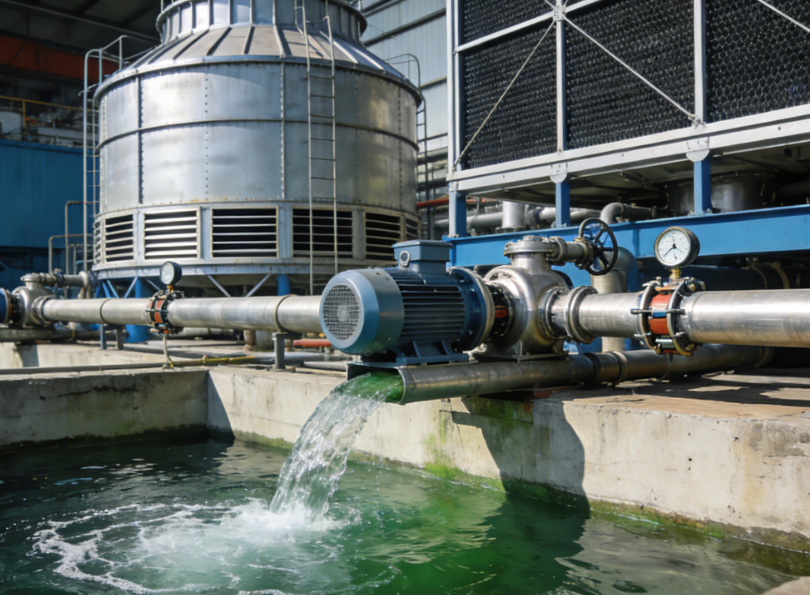
Effective circulating water testing requires monitoring multiple indicators at once.
Residual chlorine, total chlorine, chlorine dioxide, and ozone are commonly used to control microbial growth. Incorrect dosage can either lead to biofouling or accelerate corrosion.
Turbidity, color, and hardness indicate suspended particles, scaling potential, and overall system cleanliness.
Ammonia nitrogen, total phosphorus, total nitrogen, nitrite, sulfate, and phosphate influence corrosion rates and biological growth in circulating systems.
Iron, copper, manganese, zinc, chromium, and aluminum often come from pipe corrosion or source water. Monitoring metal levels helps identify material degradation early.
Laboratory analysis offers high accuracy, but samples must be transported, and results are delayed. This can limit timely adjustments in fast-changing systems.
On-site testing allows operators to detect water quality issues immediately and respond before they escalate.
Many facilities struggle with:
Too many separate test kits or analyzers
Time-consuming sampling and analysis
Inability to expand testing items as needs change
Delayed feedback for chemical dosing decisions
These challenges often lead to overuse of chemicals or unnoticed water quality deterioration.
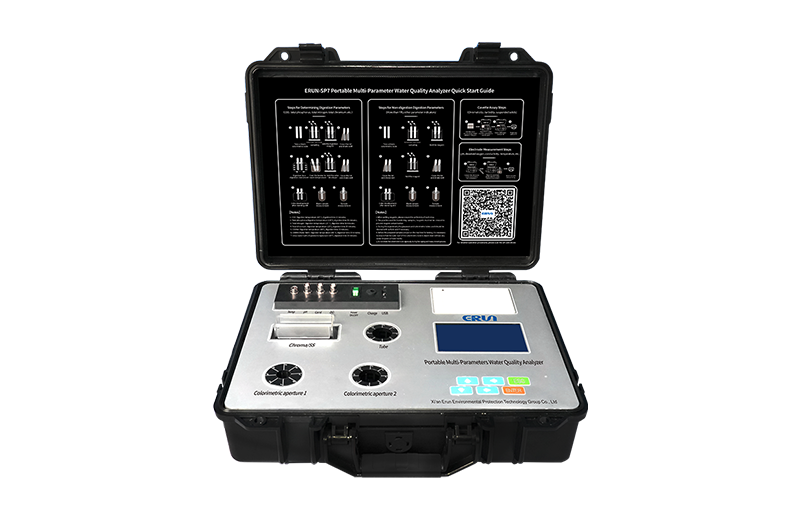
The ERUN-SP7 portable multi-parameter water quality detector is designed to meet the real needs of industrial circulating water systems.
ERUN-SP7 enables customers to test disinfectants, nutrients, heavy metals, and inorganic salts using a single device. This eliminates the need for multiple analyzers and simplifies daily monitoring.
Different circulating systems require different indicators. ERUN-SP7 can be expanded and customized to match specific monitoring needs, whether for cooling water, boilers, or industrial process loops.
Portable and easy to operate, ERUN-SP7 allows operators to test water quality directly at the system location. This helps customers adjust disinfectant dosage, detect corrosion risks, and maintain stable water chemistry without delays.
ERUN-SP7 is widely applicable in:
Cooling circulating water systems
Boiler and thermal power plant water
Industrial process water
Environmental and compliance monitoring
By focusing on efficiency, flexibility, and reliability, ERUN-SP7 helps customers reduce operating risks and long-term maintenance costs.
When selecting testing equipment, consider:
Coverage of required parameters
Ability to expand future testing needs
Portability for on-site use
Accuracy and long-term stability
A multi-parameter solution designed for industrial environments offers the best balance between performance and cost.
Circulating water testing is essential for protecting equipment, controlling operating costs, and maintaining stable system performance. Monitoring disinfectants, nutrients, metals, and physical indicators together provides a complete picture of water quality.
With a flexible and portable solution like ERUN-SP7, industries can simplify water testing, respond faster to changes, and ensure long-term operational reliability.
Get a Free Quote Today!
Contact Person: Stella (International Trade Manager)
WhatsApp / Mobile: +86 181 8913 5710
Email: [email protected]