


Chlorine dioxide (ClO₂) is widely used as a disinfectant in modern water treatment systems. Compared with traditional chlorine, it offers stronger oxidation capability, stable disinfection performance, and fewer taste and odor issues. However, many operators and decision-makers still ask an essential question: is chlorine dioxide safe for water treatment?
The answer depends on one critical factor — accurate dosing and continuous monitoring. In this article, we explain how chlorine dioxide works, what safety standards apply, and how professional testing equipment helps ensure safe and compliant water treatment.
Chlorine dioxide (ClO₂) is a selective oxidizing agent rather than a chlorinating agent. It is effective against bacteria, viruses, protozoa, and biofilms, even at low concentrations.
Chlorine dioxide penetrates microbial cell walls and disrupts protein synthesis through oxidation. Unlike chlorine, it does not react significantly with ammonia or nitrogen-based compounds, making it highly effective in challenging water conditions.
Chlorine dioxide is commonly used in:
Municipal drinking water treatment plants
Secondary disinfection in distribution systems
Industrial process water
Hospital and public facility water systems
Its high efficiency at low dosages makes it suitable for both large-scale and decentralized water treatment systems.
When properly applied, chlorine dioxide is considered safe by global health authorities.
Most international regulations specify maximum allowable concentrations for chlorine dioxide and its by-products:
WHO guideline: ≤ 0.7 mg/L
US EPA maximum residual disinfectant level: 0.8 mg/L
Staying within these limits ensures effective disinfection without negative health impacts.
Excessive chlorine dioxide can cause taste and odor problems and may lead to irritation or oxidative stress if consumed over long periods. This is why precise measurement and dosage control are essential in water treatment operations.
In many cases, chlorine dioxide offers safety advantages over conventional chlorine.
Unlike chlorine, chlorine dioxide does not readily produce trihalomethanes (THMs) or haloacetic acids (HAAs), which are regulated carcinogenic by-products.
Chlorine dioxide remains effective across a wide pH range and is less affected by organic matter, making it safer and more predictable in real-world water conditions.
Even the safest disinfectant can become hazardous if it is not monitored accurately.
Without testing, chlorine dioxide dosing can easily exceed safety thresholds or fall below effective levels, leading to:
Health compliance risks
Inadequate pathogen removal
Regulatory violations
For reliable water safety, operators should monitor multiple indicators simultaneously, such as residual chlorine, turbidity, color, and total nitrogen.
Traditional colorimetric methods are often time-consuming and prone to human error. Portable multi-parameter detectors provide a more efficient solution.
Modern water treatment facilities increasingly rely on portable instruments that can test multiple disinfectant parameters on-site, enabling faster decision-making and better control.
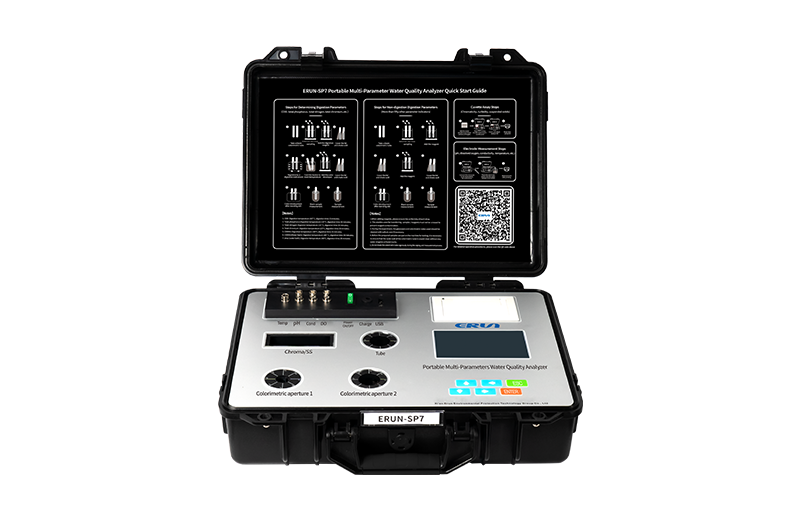
If you need a way to ensure chlorine dioxide disinfection is safe, compliant, and cost-effective, the ERUN-SP7 Portable Multi-Parameter Water Quality Analyzer is your solution.
It is designed for water treatment professionals like you to:
Control disinfectant dosage with precision: Monitor chlorine dioxide residual in real-time to prevent under or over-dosing, ensuring water safety while optimizing chemical costs.
Meet compliance with ease: With built-in data logging and printing, generate audit-ready reports instantly to simplify regulatory inspections.
Gain complete water insights on-site: Test chlorine dioxide alongside other critical parameters (like free chlorine, turbidity, ammonia nitrogen) in one device, enabling faster, more informed decisions.
The ERUN-SP7 is trusted in municipal plants, industrial water systems, and public facilities to deliver safe, compliant, and efficient water management.
Ready to transform your water monitoring?
Make precision the foundation of your safety protocol. Contact us for detailed specifications, a tailored solution overview, or to schedule a demo.
WhatsApp: +86 181 8913 5710
Email: [email protected]
Accurate testing plays a central role in chlorine dioxide management.
By performing frequent on-site measurements, operators can:
Adjust dosing in real time
Prevent over-disinfection
Maintain consistent water quality across distribution systems
Stored test data and printed records help facilities meet audit and reporting requirements, reducing operational risk.
Chlorine dioxide is safe, effective, and widely approved for water treatment — when properly monitored and controlled. Its advantages over traditional chlorine make it a preferred disinfectant in many applications, especially municipal water treatment.
However, safety depends on accurate testing. Using a professional multi-parameter detector like the ERUN-SP7 allows operators to maintain compliance, protect public health, and optimize disinfectant performance.