


Residual chlorine plays a critical role in ensuring drinking water safety. It serves as the last line of defense against microbial contamination during water distribution. However, maintaining the correct residual chlorine level requires accurate, reliable measurement. In this article, we explain how to measure residual chlorine in drinking water, compare common testing methods, and show how modern portable instruments can simplify on-site monitoring.
Residual chlorine refers to the amount of chlorine remaining in water after the disinfection process is complete. It is typically divided into free residual chlorine and combined residual chlorine (such as chloramines). Together, they form total residual chlorine.
The presence of residual chlorine ensures that water remains disinfected as it travels through pipelines, storage tanks, and distribution networks.
If residual chlorine is too low, harmful microorganisms may survive or regrow in the system. If it is too high, it can cause unpleasant taste, odor, and potential health risks. For this reason, drinking water regulations worldwide require routine residual chlorine monitoring to ensure both safety and compliance.
Most drinking water guidelines recommend maintaining residual chlorine within a controlled range throughout the distribution system. While specific limits vary by country and application, water utilities are generally required to demonstrate continuous compliance through regular testing.
Accurate residual chlorine measurement is essential not only for regulatory reporting but also for optimizing disinfectant dosage. Reliable data helps operators avoid under-dosing, reduce chemical waste, and protect public health.
The DPD (N, N-diethyl-p-phenylenediamine) colorimetric method is one of the most widely used techniques for measuring residual chlorine in drinking water.
When DPD reagent is added to a water sample, it reacts with chlorine to produce a pink color. The intensity of the color is proportional to the chlorine concentration and can be measured visually or photometrically. This method allows separate measurement of free chlorine and total chlorine, making it ideal for drinking water applications.
Electrochemical sensors are often used in online residual chlorine analyzers. These systems provide continuous monitoring and real-time feedback for automated dosing control. While highly effective for large-scale facilities, they require regular maintenance, calibration, and stable operating conditions.
Titration and laboratory-based methods offer high accuracy but are time-consuming and less practical for routine field testing. They are mainly used for verification, audits, or research applications rather than daily operation.
Several factors can affect residual chlorine measurement accuracy, including turbidity, color, ammonia nitrogen, and organic matter. These substances can interfere with chlorine reactions and lead to inaccurate readings if not properly accounted for.
By measuring related parameters such as COD, ammonia nitrogen, turbidity, and color, operators gain better insight into chlorine demand and system conditions. Multi-parameter analysis reduces misinterpretation and supports more precise disinfectant control.
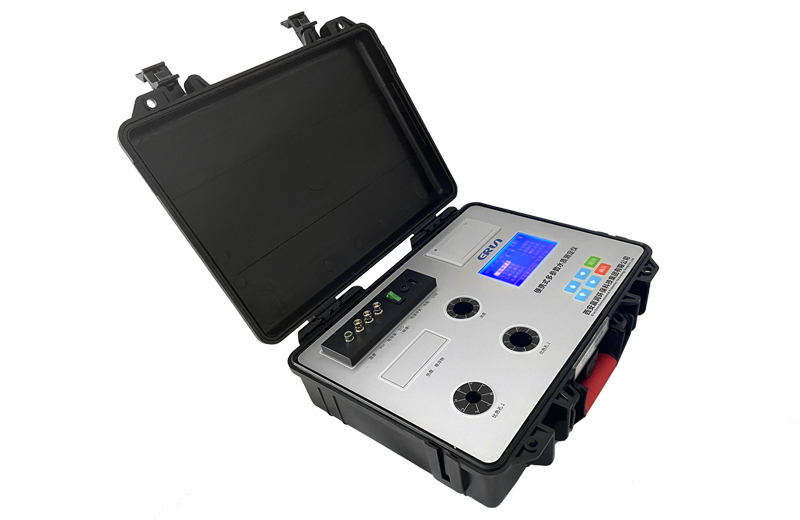
The ERUN-SP7 portable multi-parameter water quality detector supports residual chlorine, total chlorine, and chlorine dioxide testing, making it suitable for comprehensive disinfectant monitoring in drinking water systems.
In addition to chlorine-related parameters, ERUN-SP7 can measure COD, ammonia nitrogen, total phosphorus, turbidity, color, hardness, and various inorganic ions. Users can customize test items according to specific project requirements.
ERUN-SP7 is designed for convenient on-site use. It integrates measurement, data storage, statistical processing, and result printing in one portable device. This makes it especially suitable for municipal water treatment plants, distribution network inspections, and regulatory sampling.
When selecting a residual chlorine testing solution, consider your monitoring frequency, application environment, required parameters, and budget. For facilities that require flexibility, accuracy, and multi-parameter insight, a portable instrument like ERUN-SP7 offers a balanced and efficient solution.
Measuring residual chlorine accurately is essential for a safe drinking water supply and regulatory compliance. While multiple testing methods are available, portable colorimetric instruments remain the most practical choice for routine monitoring. By combining residual chlorine testing with multi-parameter analysis, water utilities can achieve better control, improved safety, and higher operational efficiency.
Ready to elevate your monitoring from simple checks to intelligent assurance?
Discover how the ERUN-SP7 provides the multi-parameter insight needed to secure both water safety and operational confidence.
Contact our water quality specialists today:
WhatsApp: +86 181 8913 5710
Email: [email protected]