


Disinfectants play a critical role in municipal water treatment plants. They eliminate pathogens, protect public health, and ensure treated water meets regulatory standards. However, adding disinfectants is not simply a matter of dosage—accurate testing is essential to balance safety, effectiveness, and cost control.
So, what are the methods of testing disinfectants, and how can water treatment plants choose the most practical solution? This article provides a clear, plant-focused overview of disinfectant testing methods and explains how modern portable instruments can improve disinfectant dosage control.
In municipal water systems, disinfectants such as chlorine and chlorine dioxide are widely used to inactivate bacteria, viruses, and protozoa. However, insufficient disinfectant levels can lead to microbiological risks, while excessive dosages increase chemical costs and the formation of disinfection byproducts.
This is why disinfectant testing is a core operational task. Reliable testing enables operators to:
Verify disinfection effectiveness
Control disinfectant dosage in real time
Meet drinking water quality regulations
Reduce chemical waste and operational risks
Without proper testing methods, even well-designed disinfection systems can fail.
Residual chlorine is the most commonly monitored disinfectant. It represents the amount of chlorine remaining in water after the disinfection process, ensuring ongoing microbial protection throughout distribution.
There are two key forms:
Free chlorine, which provides fast disinfection
Total chlorine, which includes free chlorine and combined chlorine (chloramines)
Monitoring both is essential for compliance and process optimization.
Chlorine dioxide is often used as an alternative disinfectant due to its effectiveness across a wide pH range and lower byproduct formation. However, its dosage must be carefully controlled, making accurate testing critical
Disinfectant testing methods can be broadly divided into three categories.
Colorimetric testing is one of the most widely used methods, especially for routine monitoring. The DPD (N, N-diethyl-p-phenylenediamine) method is commonly applied for residual and total chlorine measurement.
Advantages:
Simple operation
Fast results
Suitable for on-site testing
Limitations:
Susceptible to color and turbidity interference
Requires proper reagent handling
Despite these limitations, colorimetric methods remain a practical solution for most municipal plants.
Electrochemical methods, such as amperometric sensors, provide continuous disinfectant monitoring. These systems are often installed online in large water treatment plants.
Benefits:
Real-time data
High sensitivity
Challenges:
Higher installation and maintenance costs
Regular calibration required
These methods are ideal for facilities requiring continuous process automation.
Titration and laboratory methods are mainly used for confirmation testing or regulatory audits. While accurate, they are labor-intensive and unsuitable for fast operational decisions.
Online analyzers deliver continuous data and integrate well with automated control systems. They are effective for large-scale operations but require a stable power supply, skilled maintenance, and higher investment.
Portable testers offer unmatched flexibility. They are ideal for:
Spot checks at multiple sampling points
Emergency verification
Backup testing for online systems
For many municipal facilities, portable testing provides the best balance between accuracy and practicality.
Disinfectant effectiveness is influenced by factors such as turbidity, COD, ammonia nitrogen, and color. High organic load increases disinfectant demand, making single-parameter testing insufficient.
By combining disinfectant measurements with supporting water quality parameters, operators can:
Avoid under-dosing or over-chlorination
Optimize treatment efficiency
Improve regulatory compliance
This holistic approach reduces risks and improves operational consistency.
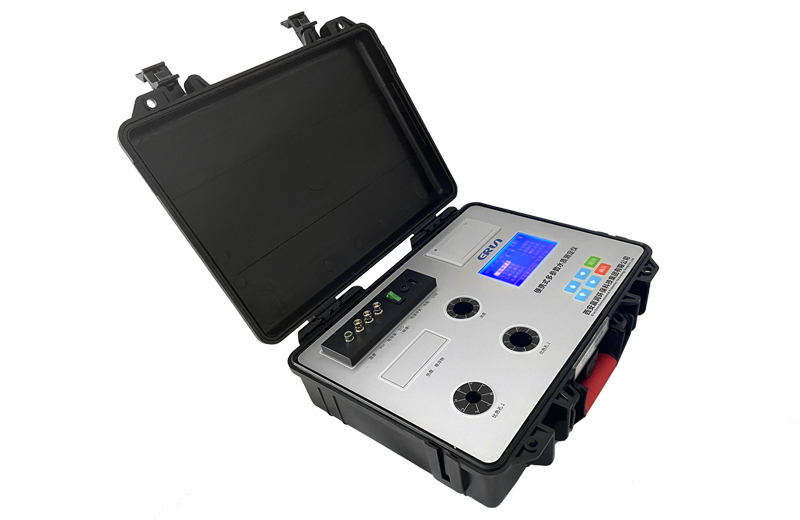
The ERUN-SP7 portable multi-parameter water quality detector, developed by Erun Environmental Protection, is designed for on-site disinfectant monitoring in municipal water treatment plants.
ERUN-SP7 accurately measures:
Residual chlorine
Total chlorine
Chlorine dioxide
In addition to disinfectants, the instrument supports multiple related indicators, including:
COD
Ammonia nitrogen
Total phosphorus and total nitrogen
Turbidity, color, hardness, and various inorganic ions
Test items can be expanded and customized based on operational needs, allowing plants to adjust disinfectant dosage using comprehensive data.
Portable and suitable for field testing
Measurement, data recording, and statistical processing in one device
Data storage with parameter labeling for traceability
These features make ERUN-SP7 a reliable tool for daily disinfectant control and compliance monitoring.
When selecting a disinfectant testing method, municipal water treatment plants should consider:
Plant scale and treatment complexity
Regulatory monitoring requirements
Budget and staffing resources
Need for flexible, on-site testing
For many facilities, portable multi-parameter testers provide the most cost-effective and operationally efficient solution.
There is no single universal method for disinfectant testing. However, combining reliable colorimetric measurement with multi-parameter portable testing offers a practical approach for most municipal water treatment plants.
Tools like the ERUN-SP7 portable multi-parameter water quality detector help operators achieve accurate disinfectant dosage control, improve safety, and maintain regulatory compliance—without unnecessary complexity.