


Total alkalinity is one of the most crucial indicators in evaluating surface water quality. Whether you are monitoring rivers, lakes, reservoirs, or surface water used for industrial or municipal purposes, understanding and accurately testing total alkalinity is essential for maintaining ecological balance and ensuring water treatment efficiency.
A surface water total alkalinity test provides insight into the buffering capacity of water—its ability to resist sudden changes in pH caused by acid rain, industrial discharge, or biological activity. In this article, we will explain what total alkalinity is, why it matters, common testing methods, and how modern portable instruments such as the ERUN-SP7 can improve accuracy and efficiency in field testing.
Total alkalinity refers to the water’s capacity to neutralize acids. In surface water, alkalinity mainly comes from bicarbonates (HCO₃⁻), carbonates (CO₃²⁻), and, to a lesser extent, hydroxides (OH⁻). Unlike pH, which measures acidity at a specific moment, total alkalinity represents the water’s long-term buffering potential.
This distinction is critical. Two surface water samples may have similar pH values but very different alkalinity levels, resulting in drastically different stability when exposed to acidic inputs.
Adequate alkalinity helps stabilize pH levels, protecting aquatic organisms from harmful fluctuations. In low-alkalinity waters, small amounts of acid can cause rapid pH drops, leading to fish stress or mortality.
For water treatment facilities, total alkalinity directly affects coagulation efficiency, corrosion control, and disinfection performance. Therefore, routine surface water total alkalinity testing is a fundamental part of environmental and operational water management.
Surface water total alkalinity varies depending on geology, land use, and climate. In general:
Low alkalinity: Below 50 mg/L as CaCO₃
Moderate alkalinity: 50–150 mg/L as CaCO₃
High alkalinity: Above 150 mg/L as CaCO₃
Waters flowing through limestone-rich regions tend to exhibit higher alkalinity, while soft-water regions often show lower buffering capacity.
While there is no universal regulatory limit for alkalinity, environmental agencies widely recognize it as a key monitoring parameter. Many surface water protection programs require regular alkalinity measurement to detect acidification trends and maintain ecosystem health.

The titration method is the traditional approach to surface water total alkalinity testing. It involves adding a standardized acid solution to a water sample until a specific endpoint pH is reached.
Although titration is reliable, it can be time-consuming and prone to operator error, especially during on-site testing under unstable environmental conditions.
Modern photometric and multi-parameter instruments significantly improve testing speed and consistency. These systems use pre-programmed methods, reducing manual steps and ensuring repeatable results.
For environmental professionals who need rapid field data with traceability, instrument-based alkalinity testing has become the preferred solution.
Testing surface water in the field presents challenges such as temperature variation, sample contamination, and inconsistent lighting. Manual methods can suffer from poor repeatability when used outside laboratory conditions.
Portable multi-parameter analyzers eliminate many of these issues. They integrate calibration, automated measurement, and data recording, making them ideal for long-term surface water monitoring programs and emergency assessments.
Accurate results begin with proper sampling. Collect samples from representative locations, avoid surface debris, and perform testing as soon as possible to prevent chemical changes.
Using a portable analyzer allows immediate measurement, reducing errors associated with sample transport and storage.
Total alkalinity is most informative when analyzed together with parameters such as COD, turbidity, hardness, nutrients, and metal ions. A comprehensive approach provides a clearer picture of overall surface water quality.
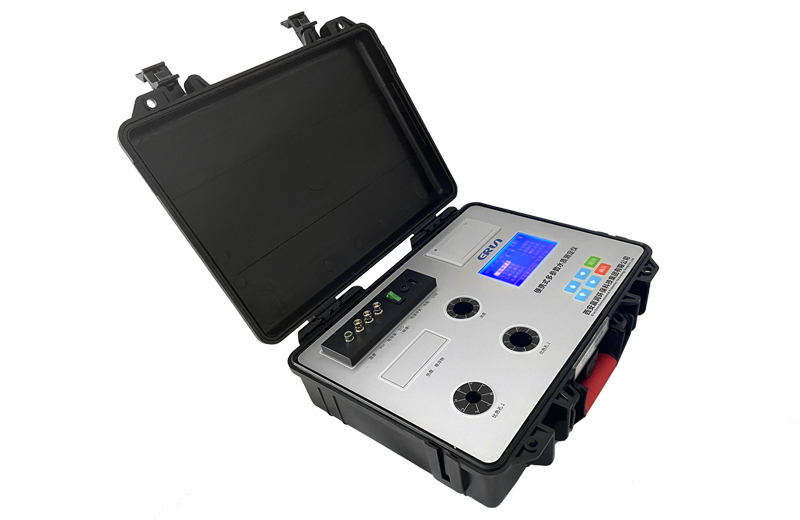
The ERUN-SP7 portable multi-parameter water quality tester, developed by Erun Environmental Protection, is designed specifically for on-site environmental testing. Its compact structure and flexible configuration make it suitable for rivers, lakes, reservoirs, and industrial surface water sources.
ERUN-SP7 supports total alkalinity along with a wide range of parameters, including COD, ammonia nitrogen, total phosphorus, turbidity, hardness, and multiple heavy metals. Users can expand and customize test items according to project requirements.
The instrument features data storage for 100 curves and 1999 data records with time and parameter labels. A built-in printer enables immediate result output, improving reporting efficiency during field inspections.
Contact me for more product details:
WhatsApp: +86 181 8913 5710
Email: [email protected]
Environmental agencies rely on alkalinity testing to assess acidification risks and ecosystem resilience. Continuous monitoring supports better decision-making for conservation strategies.
For facilities using surface water as a source, total alkalinity testing ensures stable treatment performance and reduces corrosion-related risks in distribution systems.
Surface water total alkalinity testing plays a vital role in water quality assessment, ecosystem protection, and treatment optimization. While traditional methods still have value, portable multi-parameter analyzers offer superior efficiency and reliability for field applications.
With flexible configuration, stable performance, and comprehensive parameter coverage, ERUN-SP7 provides an effective solution for professionals who require accurate and convenient surface water alkalinity testing.