


Water hardness is a decisive operational parameter—it’s a critical factor that directly impacts equipment longevity, energy costs, and operational safety. However, establishing the “ideal” hardness level is complex, with requirements differing profoundly from domestic drinking water to industrial high-pressure boilers.
This guide cuts through the confusion. We’ll clarify the official standards, explain why “good” hardness is application-specific, and show you how to accurately measure and control it with professional-grade solutions.
Water hardness refers to the concentration of dissolved minerals in water, primarily calcium (Ca²⁺) and magnesium (Mg²⁺) ions. These minerals naturally enter water supplies as groundwater passes through limestone, chalk, or other mineral-rich formations.
The higher the levels of calcium and magnesium, the harder the water. While these minerals are not harmful to human health at typical levels, excessive hardness can cause serious technical problems in pipes, boilers, and industrial systems.
Understanding Temporary vs. Permanent Hardness
Temporary Hardness: Caused by calcium and magnesium bicarbonates. It can be precipitated and removed by boiling the water.
Permanent Hardness: Resulting from calcium and magnesium sulfates or chlorides. It is not eliminated by boiling and requires chemical treatment or ion exchange.
In water testing, hardness is usually reported as total hardness, expressed in mg/L (ppm) as CaCO₃.
So, what is considered good water hardness in practical terms? Most standards classify water hardness into the following ranges:
Soft water: 0–60 mg/L
Moderately hard water: 60–120 mg/L
Hard water: 120–180 mg/L
Very hard water: Above 180 mg/L
For general use, 60–120 mg/L is widely regarded as a good water hardness range.
This level provides enough minerals to reduce pipe corrosion while minimizing scale formation in heating and industrial equipment.
However, "good" water hardness is application-specific, and acceptable limits vary significantly depending on how the water is used.
For drinking water, moderately hard water is often preferred. It has a balanced taste and provides beneficial minerals without causing excessive scaling in household appliances. Many health and water authorities accept hardness levels up to 120–150 mg/L for potable water.
In boiler systems, water hardness must be strictly controlled. Even small amounts of calcium and magnesium can lead to scale formation, which reduces heat transfer efficiency and increases energy consumption. In many industrial and boiler applications, hardness levels should be kept as low as possible, often below 5–10 mg/L after treatment.
This difference highlights why accurate measurement is critical. A hardness level acceptable for drinking water may be completely unsuitable for boilers or heat exchangers.
Excessively hard water can cause:
Scale buildup on heating surfaces
Blocked pipes and reduced flow
Increased energy costs
Shortened equipment lifespan
In industrial environments, these issues translate directly into higher maintenance costs and unplanned downtime.
While soft water reduces scaling, extremely soft or demineralized water can be corrosive. It may leach metals from pipes and damage system components if not properly conditioned.
Traditional methods include test strips and titration kits, but these approaches often lack precision and consistency. For professional users, digital water quality analyzers provide faster, more reliable results.
On-site testing allows operators to:
Detect hardness changes immediately
Adjust water treatment processes in real time
Prevent scale formation before damage occurs
This is especially important for facilities that rely on stable boiler and process water quality.
Maintaining optimal water hardness demands precise, reliable measurement—a task for which professional instrumentation is indispensable.
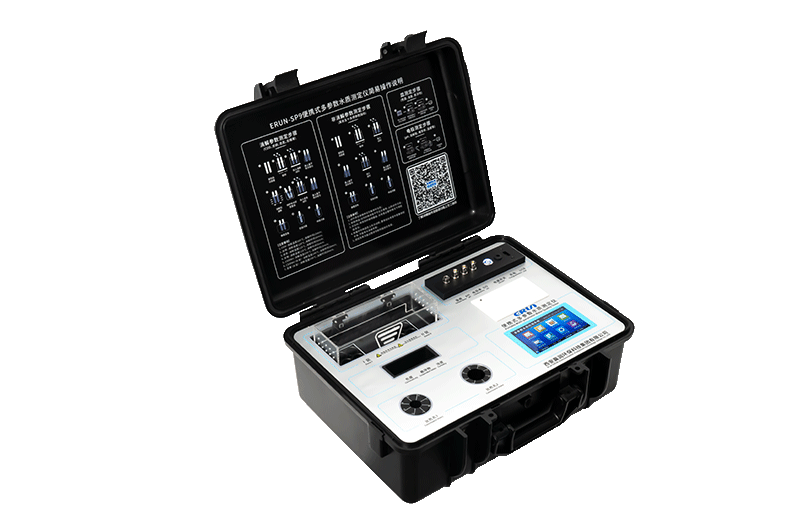
Engineered for rigorous industrial environments, the ERUN-SP9-11 Portable Multi-Parameter Water Quality Analyzer from Erun Environmental Protection delivers comprehensive on-site testing capabilities for boiler water and process applications.
ERUN-SP9-11 accurately measures total hardness along with key supporting parameters such as pH, conductivity, TDS, alkalinity, dissolved oxygen, and turbidity. This comprehensive approach allows users to understand not just hardness levels, but the overall water chemistry affecting system performance.
16-channel optical detection system compliant with international standards
Flexible parameter selection based on actual testing needs
Built-in high-capacity lithium battery for field use without external power
Integrated dual temperature-controlled dissolver for stable measurements
The instrument is widely used in boiler systems, industrial water treatment, surface water monitoring, and other professional applications.
So, what is considered good water hardness?
In most cases, moderately hard water between 60–120 mg/L is ideal, but industrial and boiler systems require much stricter control. The key is not just knowing the standard, but measuring and managing hardness accurately based on real application needs.
For a customized assessment of your water hardness profile and a tailored solution proposal, consult with our technical specialists.
WhatsApp: +86 181 8913 5710
Email: [email protected]