


Boiler water hardness is one of the most common yet costly problems in industrial boiler systems. If not properly controlled, hardness can lead to scale formation, reduced heat transfer efficiency, equipment damage, and even safety risks. For industries relying on steam boilers, understanding how to reduce boiler water hardness and accurately monitoring it is critical.
In this guide, we explain what boiler water hardness is, why it must be reduced, the most effective treatment methods, and how modern on-site testing instruments can help you maintain optimal boiler performance.
Boiler water hardness mainly refers to the concentration of calcium (Ca²⁺) and magnesium (Mg²⁺) ions in the feed water. These minerals are commonly found in groundwater and municipal water supplies.
When hard water is heated inside a boiler, these ions react to form insoluble scale deposits on heat transfer surfaces. Over time, scale buildup acts as an insulating layer, preventing efficient heat exchange and causing the boiler to work harder.
Reducing boiler water hardness is essential to:
Maintain stable boiler operation
Improve energy efficiency
Extend equipment lifespan
Reduce maintenance and fuel costs
Excessive boiler water hardness can cause several operational problems:
Scale formation: Even a thin layer of scale significantly reduces heat transfer efficiency.
Higher energy consumption: Boilers require more fuel to produce the same amount of steam.
Overheating and tube failure: Localized overheating can lead to tube deformation or rupture.
Increased downtime: Frequent cleaning and repairs disrupt production schedules.
For high-pressure or continuous-operation boilers, hardness control is not optional—it is a requirement.
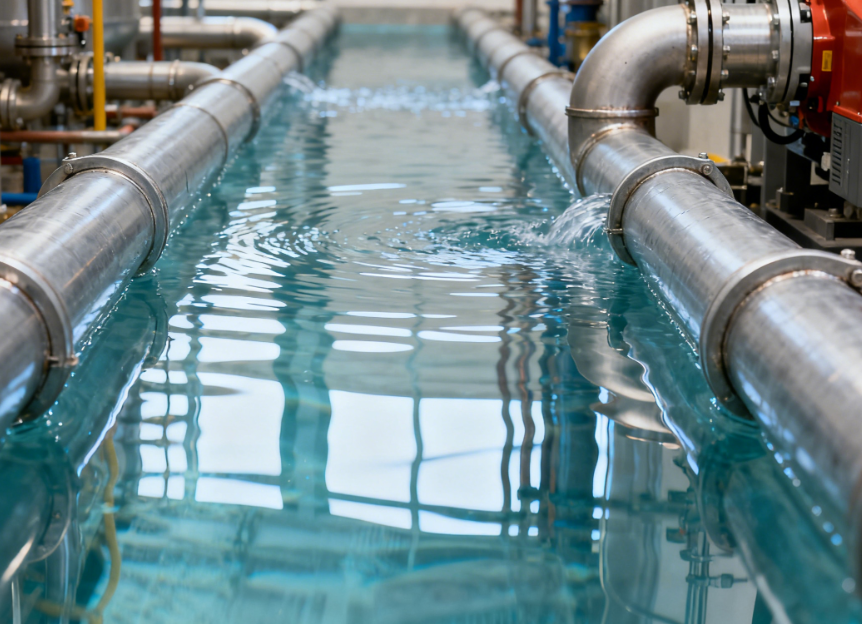
Reducing boiler water hardness usually involves a combination of external treatment, internal chemical control, and operational management.
Ion exchange water softeners
This is one of the most widely used methods. Calcium and magnesium ions are exchanged with sodium ions, effectively softening the water before it enters the boiler system. Ion exchange is reliable and suitable for most industrial boilers.
Lime-soda softening
Often used in large-scale systems, this chemical process precipitates hardness ions before filtration. It is effective but requires more space, chemicals, and operational control.
RO systems remove dissolved salts, hardness ions, and other impurities. They are especially suitable for high-pressure boilers that require very low hardness levels. However, RO systems involve higher initial investment and maintenance costs.
Even with external softening, some hardness may still enter the boiler. Internal treatment helps control residual hardness:
Phosphate treatment converts hardness into soft sludge
Chelating agents bind calcium and magnesium ions
Scale inhibitors prevent crystal growth
Proper blowdown management helps remove concentrated hardness and dissolved solids from boiler water. Both continuous and intermittent blowdown strategies are commonly used to maintain stable water chemistry.
Reducing boiler water hardness is not a one-time task—it requires regular testing and adjustment.
Traditional titration kits are still used, but they come with limitations:
Time-consuming manual operation
Operator-dependent accuracy
Limited parameter coverage
Modern boiler systems require faster, more comprehensive monitoring to ensure compliance with water quality standards.
Unsure which "treatment + monitoring" combination is best for you?
Schedule a free 15-minute technical consultation, and our engineers will help you determine the optimal solution based on your boiler type and water source:
Email: [email protected]
WhatsApp: +86-18189135710
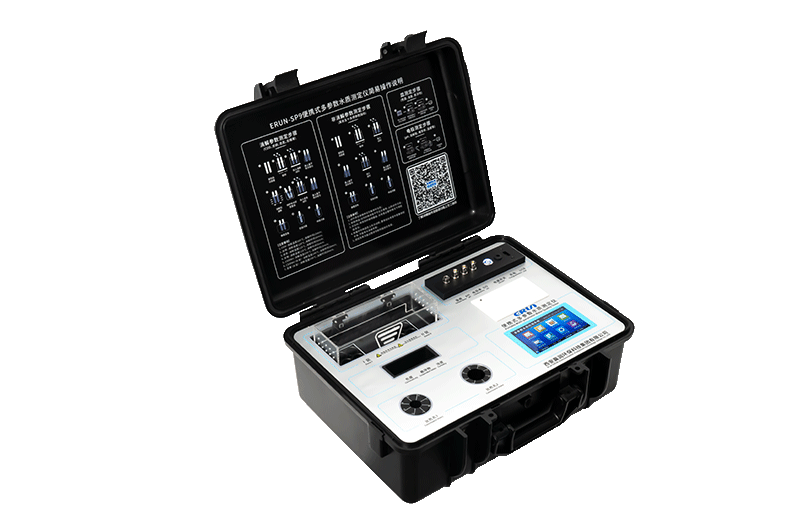
The ERUN-SP9-11 is a professional, portable solution designed for accurate boiler water analysis in industrial environments.
Key advantages include:
Accurate measurement of total hardness, pH, conductivity, TDS, phosphate, total alkalinity, dissolved oxygen, chloride, iron, copper, turbidity, and more
Advanced 16-channel optical detection system
Flexible test item selection based on actual boiler requirements
Built-in dual temperature-controlled dissolver
High-capacity lithium battery for long-term, off-grid on-site testing
Compliant with international boiler water quality standards
By using a single portable instrument, operators can quickly assess whether water softening and chemical treatment processes are effective, enabling timely adjustments and preventing scale-related issues.
On-site testing allows operators to:
Detect hardness fluctuations early
Optimize chemical dosing
Reduce unnecessary blowdown
Prevent costly boiler failures
Portable multi-parameter analyzers like the ERUN-SP9-11 are especially suitable for power plants, industrial boilers, factories, energy facilities, and remote sites without a stable power supply.
Successfully reducing boiler water hardness requires a systematic approach—combining proper external softening, internal chemical treatment, operational control, and accurate testing.
Without reliable monitoring, even the best treatment system can fail. Investing in a professional boiler water quality analyzer helps ensure hardness levels stay within safe limits, improves energy efficiency, and protects valuable equipment.
If you want to control and reduce boiler water hardness more efficiently, our team can help you select the right solution for your application.
Contact us for product details, technical support, or a quotation:
Email: [email protected]
WhatsApp: +86-18189135710
Learn more about professional boiler water testing solutions at erunwas.com.