


Ammonia nitrogen is a common parameter in water quality testing, yet many professionals and end users still ask the same question: Is ammonia nitrogen safe in water?
The answer depends on concentration, application, and the robustness of monitoring protocols. In this article, we explain what ammonia nitrogen is, its safety implications, regulatory considerations, and how accurate testing plays a key role in water quality management.
Ammonia nitrogen refers to the nitrogen present in water in the form of ammonia (NH₃) and ammonium ions (NH₄⁺). In water quality analysis, it is usually expressed as NH₃-N or NH₄⁺-N, representing the nitrogen content rather than the compound itself.
Ammonia nitrogen is widely used as an indicator because it reflects organic pollution, biological activity, and the effectiveness of water treatment processes. It is commonly detected in drinking water sources, surface water, groundwater, and especially wastewater and industrial effluents.
The ratio between ammonia and ammonium depends on pH and temperature. At higher pH values, ammonia becomes more dominant and potentially more harmful, particularly to aquatic life.
From a human health perspective, ammonia nitrogen is generally considered low in toxicity at typical concentrations found in drinking water. Unlike nitrate or nitrite, ammonia nitrogen does not have a strict health-based guideline value in many drinking water standards.
However, “safe” does not mean irrelevant. Elevated ammonia nitrogen levels can indirectly cause water quality problems, such as taste and odor issues, reduced disinfection efficiency, and biological instability in water distribution systems.
In industrial, environmental, and ecological contexts, ammonia nitrogen safety becomes more complex. High concentrations can be harmful to aquatic organisms and may indicate upstream pollution or insufficient treatment performance.
Most international drinking water guidelines, including those referenced by water utilities, do not set a strict maximum health limit for ammonia nitrogen. This is because ammonia itself is not considered highly toxic at low concentrations.
That said, many water authorities apply operational control limits, typically ranging from 0.2 to 0.5 mg/L, to prevent secondary problems. Excess ammonia nitrogen can interfere with chlorination, leading to reduced residual disinfectant levels and an increased risk of nitrification.
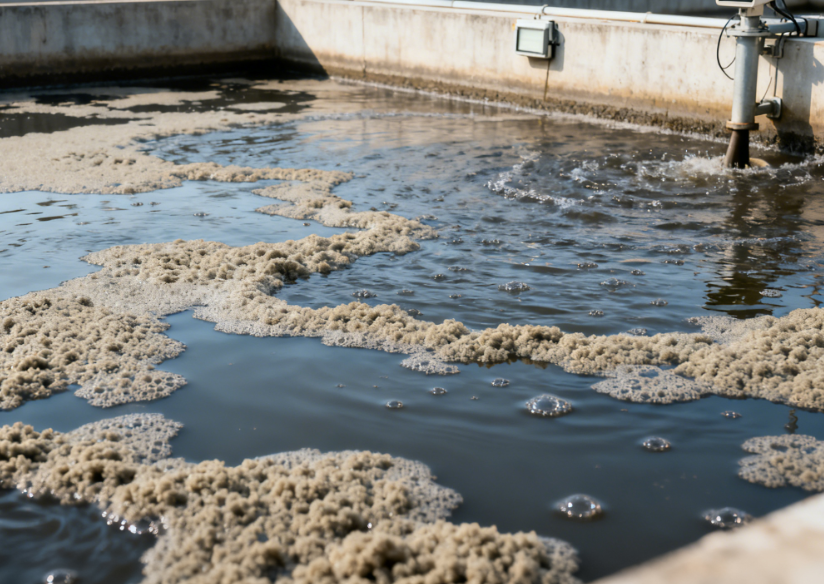
In surface water and wastewater discharge standards, ammonia nitrogen limits are often stricter due to environmental protection requirements. These limits are designed to prevent eutrophication and protect aquatic ecosystems.
Ammonia nitrogen enters water systems through both natural and human-related sources.
Natural sources include the decomposition of organic matter, microbial activity in sediments, and nitrogen cycling processes in soil and water bodies. These sources usually contribute low and stable concentrations.
Human activities are the main cause of elevated ammonia nitrogen levels. Agricultural runoff, sewage discharge, industrial wastewater, and landfill leachate all introduce ammonia nitrogen into water systems. In drinking water treatment, ammonia may also be intentionally added during chloramination, which requires precise control.
Although ammonia nitrogen may not pose an immediate health risk, high levels can significantly impact water quality and system performance.
In drinking water, elevated ammonia nitrogen often leads to unpleasant taste and odor complaints. More importantly, it consumes disinfectants such as chlorine, reducing microbial protection.
In distribution systems, excess ammonia nitrogen can promote nitrification, leading to biofilm growth, corrosion, and further water quality deterioration. In environmental waters, high ammonia nitrogen concentrations can be toxic to fish and other aquatic organisms, especially under high pH conditions.
Accurate ammonia nitrogen testing is essential for water quality control. Common detection methods include colorimetric optical analysis and electrode-based measurement. While laboratory testing offers high precision, it may not always be practical for routine monitoring.
Modern water management increasingly relies on multi-parameter analysis, as ammonia nitrogen is closely linked to parameters such as COD, total nitrogen, total phosphorus, pH, and dissolved oxygen. Testing these parameters together provides a more complete picture of water quality and treatment performance.
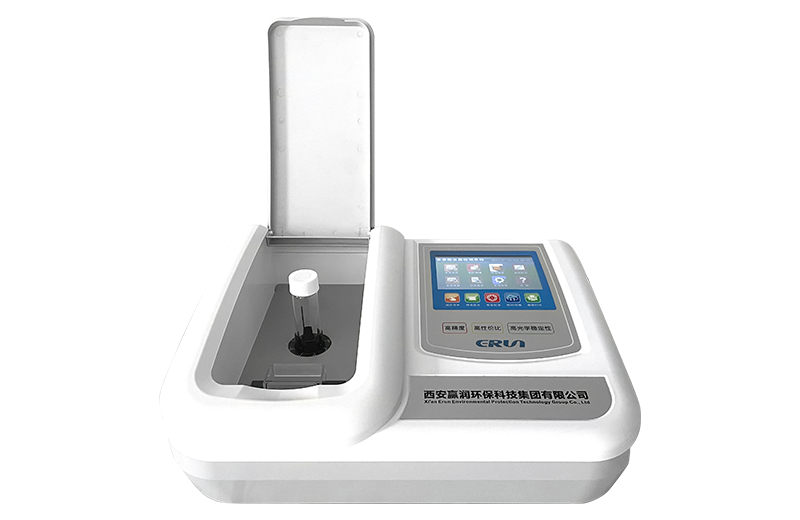
Effective safety management of ammonia nitrogen requires more than a single data point; it demands contextual understanding through multi-parameter analysis. The ERUN-ST7 desktop multi-parameter water quality analyzer is engineered precisely for this purpose, transforming raw data into actionable insights. The ERUN-ST7 desktop multi-parameter water quality analyzer, developed by Erun, is designed for accurate and efficient ammonia nitrogen monitoring across drinking water, surface water, and sewage applications.
It integrates optical methods and electrode methods, allowing users to measure ammonia nitrogen alongside COD, total nitrogen, total phosphorus, hardness, pH, conductivity, TDS, dissolved oxygen, and water temperature. This combination enables comprehensive water quality evaluation rather than isolated testing.
The instrument automatically selects measurement wavelengths and supports multiple reading modes, including concentration, absorbance, and transmittance. With up to 250 factory calibration curves and the ability to add 3500 user-defined curves, ERUN-ST7 offers exceptional flexibility.
A large color touchscreen with guided operation ensures ease of use, while the capacity to store 100,000 records supports long-term monitoring, traceability, and data analysis.
Ammonia nitrogen is generally safe in water at low concentrations, but it plays a critical role in water quality management. Elevated levels can cause operational issues, environmental risks, and system instability. Regular and accurate monitoring is the key to maintaining safe and compliant water conditions.
With advanced multi-parameter capabilities, ERUN-ST7 provides a reliable solution for professionals who need precise ammonia nitrogen testing combined with comprehensive water quality analysis.
Contact us today to explore how our solutions can be tailored to your monitoring challenges:
Email: [email protected]
WhatsApp:(+86-18189135710)