


Total Dissolved Solids (TDS) is one of the most important indicators of water quality. Whether you are testing drinking water, industrial process water, or wastewater, understanding how to check the TDS of water helps ensure safety, compliance, and optimal performance. In this guide, we'll explain what TDS is, why it matters, and the most reliable methods to measure it—both in the lab and in the field.
TDS refers to the total amount of dissolved inorganic and organic substances present in water. These include minerals, salts, metals, and ions such as calcium, magnesium, sodium, chlorides, sulfates, and nitrates.
TDS is usually expressed in milligrams per liter (mg/L) or parts per million (ppm). While TDS itself does not indicate specific contaminants, it provides a quick snapshot of overall water quality and purity.
Monitoring TDS levels is critical across many industries and applications:
Drinking water safety – High TDS can affect taste and indicate potential contamination
Industrial water systems – TDS impacts boilers, cooling towers, and manufacturing processes
Environmental monitoring – Tracks pollution levels in surface water and groundwater
Wastewater treatment – Helps evaluate treatment efficiency and discharge compliance
Regular TDS testing helps detect changes in water quality early, preventing costly equipment damage and health risks.
According to widely accepted guidelines:
0–300 ppm: Excellent water quality
300–600 ppm: Good and acceptable
600–900 ppm: Fair, may affect taste
900–1200 ppm: Poor
Above 1200 ppm: Unsuitable for drinking
However, acceptable TDS levels may vary depending on the application. For industrial or agricultural use, higher TDS may be tolerable, while drinking water requires stricter control.
This method involves evaporating a filtered water sample and weighing the remaining residue. While highly accurate, it is time-consuming and requires laboratory equipment, making it impractical for routine or field testing.
This is the most widely used method today. Because dissolved solids conduct electricity, TDS can be calculated from electrical conductivity (EC) using a conversion factor.
Advantages:
Fast and easy
Suitable for on-site testing
Cost-effective and repeatable
Most modern TDS meters and portable water analyzers use this principle.
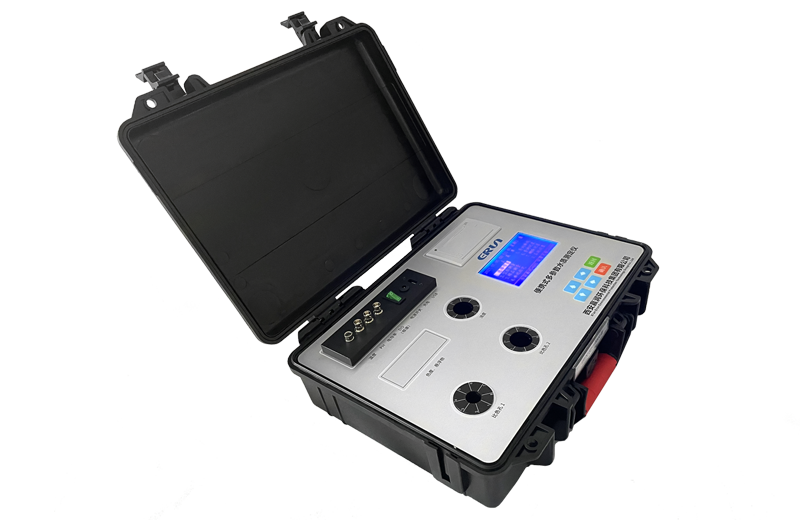
Portable water quality detectors are the most convenient solution for real-world applications. Devices like the ERUN-SP7 portable multi-parameter water quality detector allow users to measure TDS accurately alongside other critical parameters.
Collect a representative water sample
Calibrate the instrument if required
Insert the probe into the sample
Wait for the reading to stabilize
Record or store the TDS value
The ERUN-SP7 not only measures TDS, but also supports COD, ammonia nitrogen, total phosphorus, total nitrogen, nitrate, residual chlorine, turbidity, hardness, and more—making it ideal for comprehensive water quality assessment.
The ERUN-SP7 portable multi-parameter water quality detector is designed for professionals who need reliable, flexible, and accurate water testing.
Key advantages include:
Multi-parameter detection in one device
Accurate TDS measurement based on proven electrochemical methods
Expandable and customizable testing parameters
Suitable for drinking water, surface water, wastewater, and industrial water
Portable design for field and on-site testing
If you are looking for a professional solution to check TDS of water efficiently, ERUN-SP7 offers both accuracy and versatility in one instrument.
Contact us at [email protected] or WhatsApp: +86-18189135710 to learn how ERUN solutions can support your testing needs.
TDS testing is widely used in:
Municipal drinking water systems
Environmental monitoring agencies
Sewage treatment plants
Industrial process control
Agricultural irrigation management
By combining TDS with other indicators such as nitrate, ammonia nitrogen, and conductivity, water professionals can make informed decisions quickly.
Understanding how to check the TDS of water is essential for ensuring water quality and safety. While laboratory methods remain accurate, portable conductivity-based analyzers are the most practical choice for daily monitoring.
With its multi-parameter capability and portable design, the ERUN-SP7 enables fast, accurate, and flexible TDS testing across multiple applications.
Take control of your water quality monitoring today: Email us at [email protected] or WhatsApp: +86-18189135710
Visit: www.erunwas.com to learn more about professional water testing solutions.