


Cyanuric acid (CYA), widely used as a chlorine stabilizer or conditioner in swimming pools, effectively slows the photodegradation of free chlorine by ultraviolet (UV) radiation. Although moderate CYA concentrations enhance disinfection efficiency, excessive levels present serious hazards to water quality, swimmer health, and regulatory compliance. This paper reviews current global standards for cyanuric acid in pool water, analyzes the chemical, biological and health risks of over-concentration, and compares mainstream detection methods, with emphasis on the application advantages of the ERUN SP4 Water Quality Analyzer.

Maintaining stable and safe pool water chemistry is essential for public health and recreational water safety. Cyanuric acid protects free chlorine from UV decomposition, making it especially important for outdoor swimming pools. However, excessive CYA leads to over-stabilization, which significantly weakens chlorine’s disinfection capacity and creates favorable conditions for the growth of pathogens such as Cryptosporidium and Pseudomonas aeruginosa.
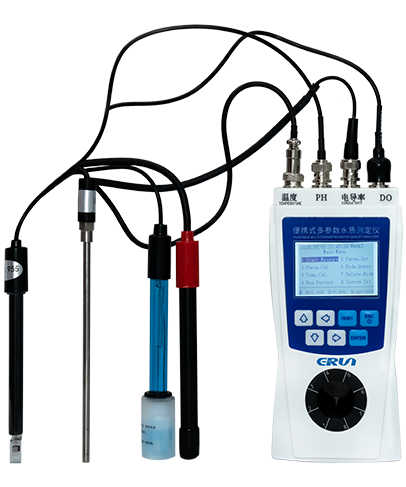
The popularization of portable and intelligent water quality analyzers, represented by the ERUN SP9, enables rapid, on-site detection of cyanuric acid and other key parameters, supporting efficient and scientific pool water management.
Guidance and limits for cyanuric acid vary by region:
Region | Recommended CYA Range | Maximum Allowable Level |
USA (CDC / Model Aquatic Health Code) | 30–50 ppm | 100 ppm |
Europe (EU Pool Guidelines) | 30–50 ppm | 75 ppm |
Australia | 30–50 ppm | 100 ppm |
2.2 Practical Implications
Insufficient CYA (< 30 ppm):Accelerated chlorine loss due to UV radiation, increased chemical consumption and operating costs.
Optimal CYA (30–50 ppm):Balanced chlorine stabilization, reliable disinfection, and safe for swimmers.
Excessive CYA (> 100 ppm):Severely reduced disinfection efficiency, increased pathogen survival risk, and elevated potential for waterborne diseases.
Significantly reduced free chlorine activity, requiring higher chlorine dosage to maintain basic disinfection.
Promotes the formation of chloramines, causing strong eye/nasal irritation and unpleasant odors.
Increases the survival rate of chlorine-tolerant pathogens.
Prone to algal blooms, reducing water clarity and deteriorating overall water quality.
Skin, eye and respiratory irritation caused by high chloramine concentrations.
Failure to meet regulatory limits may result in pool closure or administrative penalties.
• Principle: CYA reacts with melamine → white precipitate
• Measurement: Optical turbidity
• Limitations:
○ Poor accuracy above 100 ppm
○ Requires dilution for high concentrations
• Fast and low-cost
• Semi-quantitative
• Limited precision and repeatability
• Spectrophotometry
• High-performance liquid chromatography (HPLC)
Advantages:
• High accuracy
Disadvantages:
• Complex operation
• Not suitable for real-time monitoring
The ERUN SP4 represents a new generation of online and portable water quality analyzers, integrating multiple detection technologies:
Key Features:
• High-precision optical or electrochemical sensors
• Real-time continuous monitoring
• Multi-parameter integration (CYA, chlorine, pH, ORP, turbidity)
• Digital calibration and data logging
Advantages Over Traditional Methods:
Feature | Traditional Methods | ERUN SP4 Analyzer |
Accuracy | Medium | High |
Real-time monitoring | No | Yes |
Automation | Manual | Fully automatic |
Detection range | Limited | Wide (low–high ppm) |
Data traceability | None | Digital records |
Application Scenarios:
• Public swimming pools
• Water parks
• Industrial water treatment
• Aquaculture systems
Maintain cyanuric acid at 30–50 ppm to balance stability and disinfection efficiency.
Adopt intelligent analyzers such as the ERUN SP4 for real-time monitoring to avoid over-stabilization.
Regularly test chlorine effectiveness, pH value and potential microbial contamination.
Strengthen training for pool operators on the hazards of excessive cyanuric acid accumulation.
Cyanuric acid is indispensable for stabilizing chlorine in outdoor pools, but excessive concentrations severely compromise water safety and public health. Advanced portable instruments such as the ERUN SP4 provide accurate, on-site CYA detection, enabling proactive and scientific pool water chemistry management. Compliance with international CYA standards ensures efficient disinfection performance and reliable protection for swimmers.