


Ensuring the safety of potable water is no longer just the responsibility of the water treatment plant. The "last mile"—from the municipal main to the consumer's tap—is often where the highest risks reside.
Whether you are in property management, water utility maintenance, or a third-party inspection agency, you frequently encounter complaints about "yellow water," "unusual odors," or "strong chlorine smells." How can you identify the source of pollution scientifically and quickly? It requires a standardized field inspection workflow.
When water quality fluctuates, it usually corresponds to specific physical or chemical changes within the system:
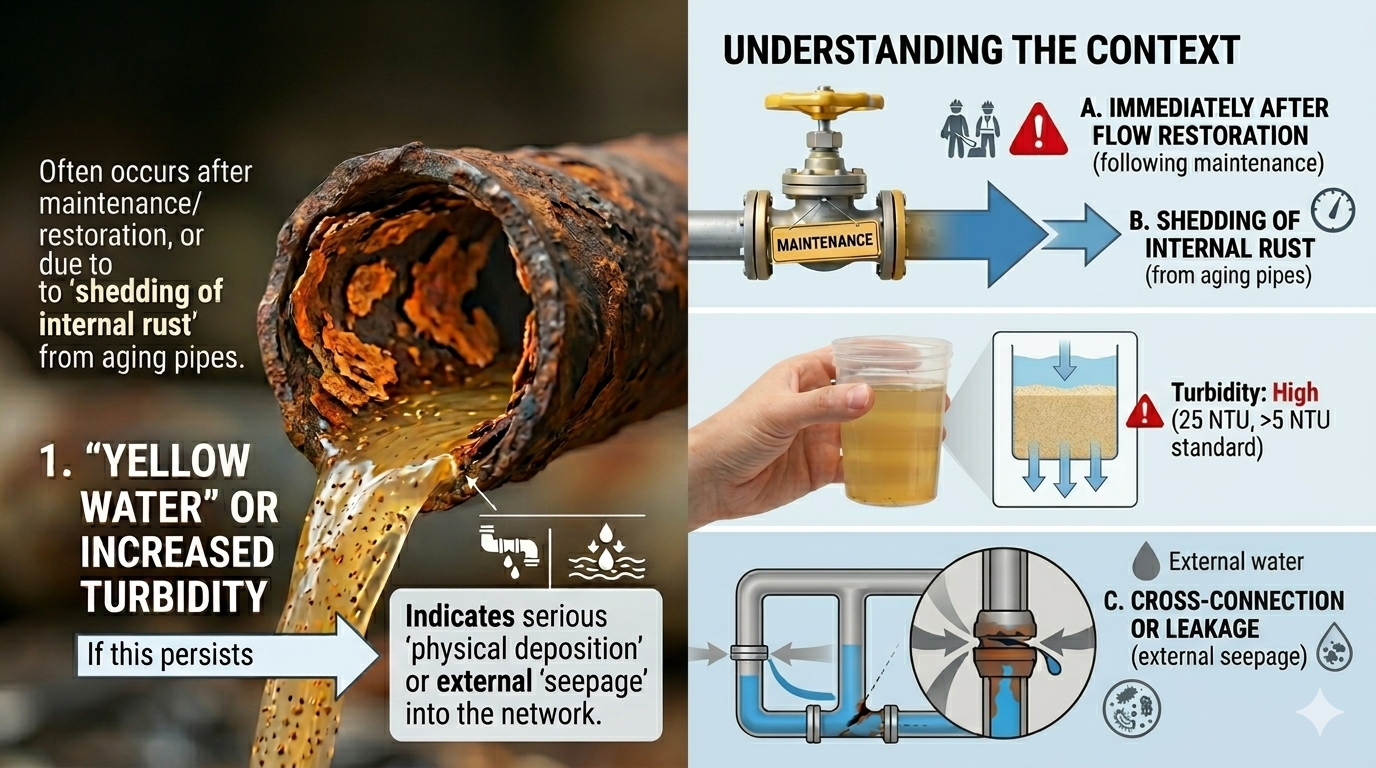
"Yellow Water" or Increased Turbidity:
This often occurs immediately after water service is restored following maintenance, or due to the shedding of internal rust from aging pipes. If this persists, it indicates serious physical deposition or external seepage within the network.
Disappearance of Residual Chlorine (or Excessive Odor):
Chlorine is the primary microbial barrier. If no residual chlorine is detected at the tap, the water is highly susceptible to bacterial regrowth. Conversely, excessive chlorine can lead to harmful disinfection byproducts.
Sudden Conductivity Spikes:
An abnormal jump in conductivity often suggests that external substances—such as domestic sewage or industrial wastewater—have infiltrated the network. This is the most dangerous "red flag" in water safety.
Before laboratory results are available, preliminary field screening is critical for immediate risk mitigation:
Comparative Testing: Collect samples at both the pump room inlet and the furthest terminal tap (e.g., a rooftop unit). If a significant discrepancy in turbidity or chlorine is found, the pollution source is likely within the building’s secondary supply system.
Stability Observation: Record pH and conductivity readings over a set period. Stable readings imply a consistent water source, while violent fluctuations suggest cross-connection or leakage.
Digital Evidence & Logging: In the 2026 regulatory landscape, manual paper logs are being replaced by digital storage. Immediate data capture is essential for compliance and liability protection.
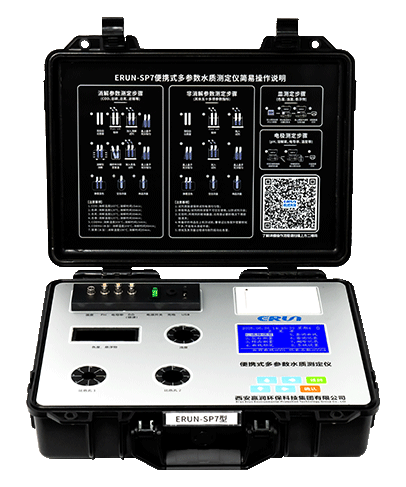
When performing high-frequency field inspections, bulky laboratory equipment is impractical. The industry is shifting toward highly integrated digital handheld terminals.
For instance, a professional-grade device like the ERUN-SP7 Multi-parameter Analyzer is valued not just for its sensors, but for its efficiency. It allows a technician to read Residual Chlorine, Turbidity, pH, and Conductivity simultaneously from a single sample. This "one-stop" data collection allows a comprehensive survey of a site in under five minutes.
Furthermore, because modern devices like the SP7 series support seamless data export, they provide unalterable original evidence for accident attribution and maintenance reports. This significantly enhances the professional image of the utility or property management team.
Protecting drinking water safety is not a matter of luck; it is a matter of rigorous data control at every node. By combining a scientific inspection workflow with precise digital tools, we ensure that every drop of water meets the required safety standards.