


Water quality plays a vital role in protecting human health, maintaining environmental balance, and ensuring efficient industrial and agricultural operations. However, when water becomes contaminated or poorly managed, the consequences can be severe. Understanding the effect of poor water quality is essential for governments, environmental agencies, and businesses responsible for water management.
Poor water conditions can affect drinking water safety, damage ecosystems, and disrupt industrial processes. In many cases, these problems develop gradually and may not be visible until the damage becomes serious. That is why reliable water quality monitoring has become a critical part of environmental protection and water resource management.
By measuring multiple water quality parameters, organizations can detect pollution early and take timely actions to maintain safe and sustainable water systems.
One of the most serious consequences of poor water conditions is the potential threat to human health. Contaminated water may contain harmful substances such as heavy metals, toxic chemicals, or excessive disinfectants.
Heavy metals such as copper, chromium, iron, and manganese can enter water systems through industrial discharge, mining activities, or aging pipelines. When these substances accumulate in drinking water, they may cause long-term health risks.
Chemical pollutants also pose significant dangers. High levels of ammonia nitrogen, cyanide, or excessive residual chlorine can affect drinking water safety and create potential health concerns.
In addition, water with high turbidity often contains suspended particles that provide a suitable environment for microorganisms to grow. This may increase the risk of bacterial contamination if the water is not properly treated.
These risks highlight why continuous water quality testing is necessary to ensure that drinking water meets safety standards.
Water pollution does not only affect humans; it also has serious consequences for natural ecosystems.
When pollutants enter rivers, lakes, or coastal areas, aquatic organisms may suffer from toxic exposure or oxygen depletion. Fish and aquatic plants are particularly sensitive to changes in water chemistry.
One common environmental issue caused by poor water conditions is eutrophication. Excessive nutrients such as nitrogen and phosphorus can stimulate rapid algae growth. When algae blooms occur, oxygen levels in the water may drop dramatically, leading to fish deaths and ecosystem imbalance.
Long-term pollution can also accumulate in sediments and aquatic organisms, creating lasting environmental damage. Therefore, regular water quality monitoring is essential for protecting natural water resources.

In industrial and agricultural systems, poor water conditions can lead to operational problems and economic losses.
For industrial facilities, contaminated water may cause corrosion in pipelines and equipment. High mineral concentrations may also lead to scaling, reducing system efficiency and increasing maintenance costs.
Agricultural operations can also be affected. Irrigation water containing excessive salts or pollutants may reduce crop productivity and damage soil quality over time.
In water treatment systems, inaccurate monitoring may lead to ineffective purification processes. Without proper testing, treatment plants may fail to remove certain pollutants or may use excessive chemicals.
These challenges demonstrate why reliable water quality monitoring equipment is necessary for efficient water management.
For professionals responsible for monitoring water safety, reliable testing equipment is essential. The ERUN-SP7 portable water quality analyzer provides a comprehensive solution for detecting the effect of poor water quality across various applications.
This advanced instrument supports the detection of a wide range of water quality parameters, including organic pollutants, nutrients, disinfectants, and heavy metals. Parameters that can be measured include COD, ammonia nitrogen, total phosphorus, total nitrogen, residual chlorine, total chlorine, chlorine dioxide, turbidity, color, copper, chromium, manganese, iron, zinc, aluminum, cyanide, phosphate, sulfate, nitrite, and hardness.
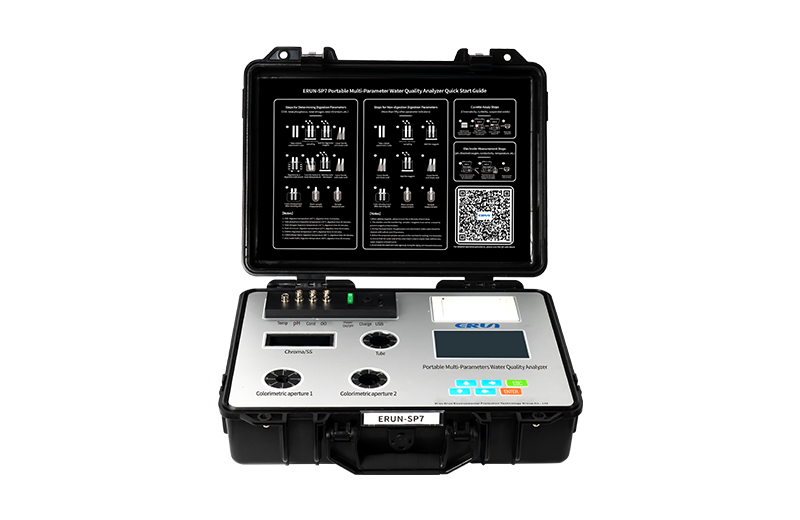
One of the key advantages of the ERUN-SP7 is its flexibility. The system can be expanded and customized according to specific testing requirements, allowing organizations to monitor the exact parameters relevant to their operations.
The device is designed for efficient on-site water quality testing, reducing the need for time-consuming laboratory analysis. With portable functionality, technicians can perform rapid monitoring directly at sampling locations.
This makes the ERUN-SP7 particularly suitable for multiple scenarios, including sewage treatment monitoring, drinking water quality inspection, and surface water environmental analysis.
The effect of poor water quality can be far-reaching, impacting human health, environmental ecosystems, and industrial operations. Without proper monitoring, pollution may remain undetected until it causes serious damage.
By analyzing key water quality parameters, organizations can detect contaminants early and maintain safe water systems. Modern monitoring technologies make this process faster and more efficient.
Instruments such as the ERUN-SP7 portable water quality analyzer provide practical solutions for comprehensive water quality monitoring, enabling users to identify pollution risks quickly and ensure safer water management practices.