


Water plays a central role in modern agriculture. From crop irrigation to aquaculture farming, water quality directly influences productivity, environmental sustainability, and economic outcomes. This is why many farmers and agricultural professionals ask an important question: how does water quality affect agriculture?
The answer is significant. Poor water quality in agriculture can reduce crop yields, damage soil health, and create harmful conditions for aquatic species such as fish and shrimp. Even small changes in water chemistry can disrupt plant nutrient absorption or reduce oxygen levels in aquaculture systems.
To maintain healthy farming systems, regular water quality monitoring has become essential. By measuring key indicators such as pH, dissolved oxygen, conductivity, and temperature, farmers can identify potential issues early and make informed decisions that protect crops and aquatic life.
Understanding how does water quality affect agriculture begins with recognizing the relationship between water chemistry and agricultural ecosystems.
In irrigation systems, water carries nutrients and minerals into the soil. When water quality is balanced, crops can absorb nutrients efficiently and maintain healthy growth. However, water containing excessive salts or pollutants may harm plant roots, reduce nutrient uptake, and limit crop development.
Poor irrigation water can also gradually damage soil structure. High salinity levels may accumulate in the soil over time, leading to reduced fertility and lower agricultural productivity.
In aquaculture, the impact of water quality is even more immediate. Fish, shrimp, and other aquatic species rely entirely on the surrounding water environment for oxygen and metabolic balance. If dissolved oxygen levels drop or pH becomes unstable, aquatic organisms can experience stress, disease outbreaks, or even mass mortality.
For this reason, maintaining stable aquaculture water quality is one of the most critical aspects of successful fish and shrimp farming.
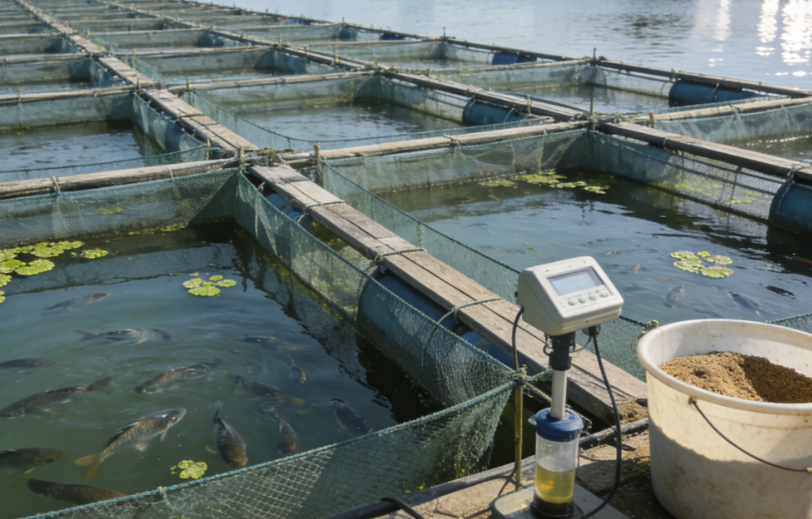
When water conditions are not properly monitored, agricultural operations may experience several serious problems.
For crop production, poor irrigation water can lead to reduced yields and plant stress. Contaminated water may contain excessive salts or harmful substances that affect root development and plant growth.
Soil degradation is another common issue. Long-term irrigation with poor-quality water can increase soil salinity, making it more difficult for crops to absorb nutrients.
In aquaculture systems, the consequences can be even more severe. Low dissolved oxygen levels may cause fish mortality, while unstable pH conditions can increase the risk of disease outbreaks.
These challenges highlight the importance of continuous water quality monitoring in agricultural environments.
For farmers who need reliable and convenient testing tools, portable instruments provide an effective solution for daily water quality monitoring.
The ERUN-SP4-ASC aquaculture water quality tester is specifically designed to help aquaculture operators monitor critical water conditions quickly and accurately. By using advanced electrode sensing technology, the device measures several essential water quality parameters, including pH, dissolved oxygen, conductivity, and temperature.
These indicators provide the information farmers need to maintain a stable aquaculture environment. When water conditions begin to change, operators can immediately adjust aeration, feeding strategies, or water circulation to prevent fish stress and maintain optimal growth conditions.
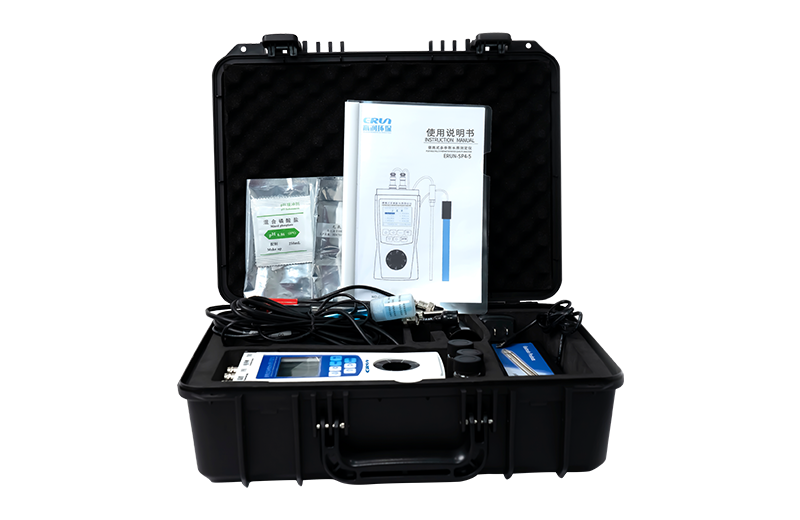
The ERUN-SP4-ASC is designed with practical farm operations in mind. Its compact structure and portable design allow farmers to perform aquaculture water testing directly at ponds or tanks without complicated procedures.
The instrument also features a high-definition LCD display for clear data reading and a built-in data storage function that helps track water quality changes over time. With its rechargeable battery and long operating life, the device supports rapid on-site testing in both indoor and outdoor farming environments.
By providing fast and accurate aquaculture water quality monitoring, the ERUN-SP4-ASC helps farmers respond quickly to environmental changes, reduce production risks, and improve overall aquaculture efficiency.
Understanding how does water quality affect agriculture is essential for sustainable farming and aquaculture development. Water conditions influence crop growth, soil health, and aquatic ecosystem stability, making accurate monitoring a critical part of agricultural management.
By tracking key water quality parameters such as pH, dissolved oxygen, conductivity, and temperature, farmers can detect potential issues early and prevent productivity losses.
Modern instruments like the ERUN-SP4-ASC aquaculture water quality tester provide a practical solution for reliable water quality monitoring. With fast on-site testing and accurate measurement capabilities, these tools help farmers maintain healthy farming environments and achieve more stable agricultural production.