


Understanding what affects dissolved oxygen levels in water is critical for maintaining healthy aquatic ecosystems, stable industrial processes, and effective water treatment systems. Dissolved oxygen (DO) plays a vital role in supporting aquatic life, controlling biological activity, and ensuring compliance with environmental standards.
From wastewater treatment plants to aquaculture farms and environmental monitoring projects, knowing which factors influence oxygen levels—and how to measure them accurately—can directly impact operational success and water safety.
Dissolved oxygen refers to the amount of free oxygen present in water, usually measured in mg/L or ppm. When DO levels drop too low, fish and microorganisms may suffer or die, aerobic treatment processes become inefficient, and unpleasant odors can develop.
In industrial and environmental contexts, unstable DO levels often signal deeper water quality issues, such as excessive organic pollution or poor aeration. That’s why professionals searching for what affects dissolved oxygen levels in water are usually looking not just for theory, but for practical ways to control and measure it reliably
Dissolved oxygen represents oxygen molecules that are physically dissolved in water, not chemically bound. Typical healthy ranges vary depending on application, but most natural waters require sufficient DO to sustain biological activity.
Measurement is commonly performed using electrode-based dissolved oxygen meters, which provide fast, on-site readings. Compared to traditional laboratory methods, portable instruments allow users to capture real-time DO data before oxygen loss or temperature changes affect accuracy.
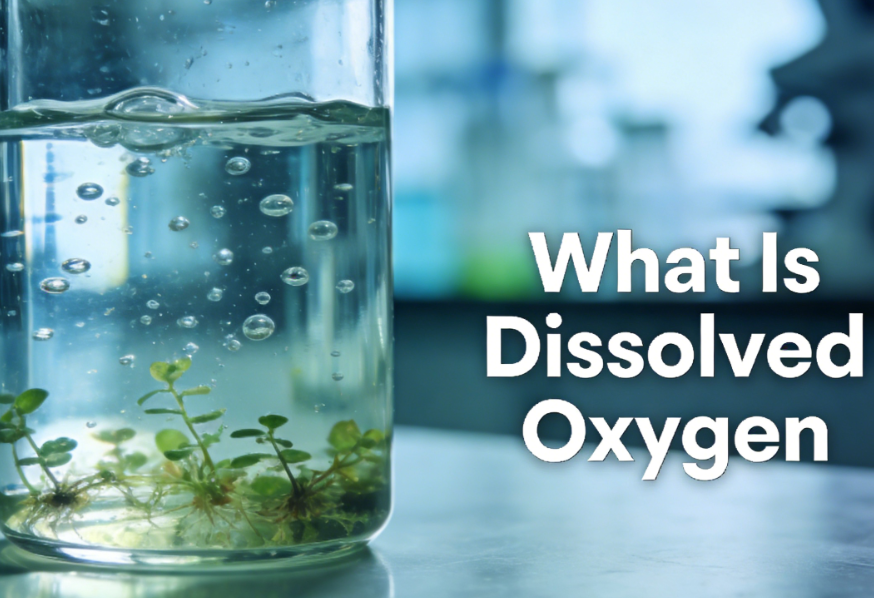
Water temperature has the strongest influence on dissolved oxygen. As temperature increases, oxygen solubility decreases. This means warm water naturally holds less oxygen than cold water.
Seasonal temperature changes, industrial heat discharge, and climate conditions can all reduce DO levels. In wastewater treatment or aquaculture environments, even small temperature fluctuations can lead to significant oxygen loss, making temperature-compensated DO testing essential for accurate control.
Microorganisms consume oxygen as they break down organic matter. In wastewater, high biological oxygen demand (BOD) often results in rapid DO depletion if oxygen supply is insufficient.
Aquatic plants and algae also impact dissolved oxygen through daily cycles. During daylight hours, photosynthesis increases DO levels, while nighttime respiration reduces them. Without proper monitoring, these fluctuations can create unstable conditions that harm aquatic systems or treatment efficiency.
Water movement plays a key role in oxygen transfer. Flowing or turbulent water absorbs oxygen from the atmosphere more efficiently than stagnant water.
In engineered systems such as treatment plants or aquaculture tanks, mechanical aeration is often used to maintain target DO levels. Monitoring oxygen response after aeration helps operators fine-tune energy use and avoid over- or under-aeration.
Salinity reduces oxygen solubility, which is why seawater holds less dissolved oxygen than freshwater. This is especially relevant in coastal aquaculture and desalination-related applications.
Altitude and atmospheric pressure also matter. At higher elevations, lower air pressure reduces oxygen saturation, making DO control more challenging. Accurate testing under these conditions requires reliable instrumentation with compensation capabilities.
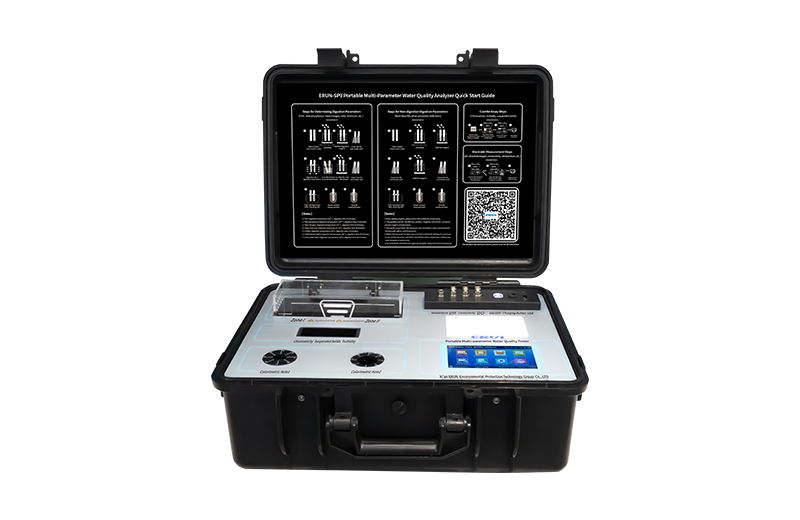
The ERUN-SP9-A5 Portable Dissolved Oxygen Meter is designed to meet the real-world needs of professionals who require accuracy, efficiency, and ease of use.
This instrument provides rapid measurement of dissolved oxygen levels in water, oxygen saturation (%), and water temperature. Its dedicated dissolved oxygen electrode ensures stable and precise readings across a wide range of applications, including wastewater treatment, aquaculture, environmental monitoring, and industrial water systems.
From a customer perspective, the ERUN-SP9-A5 solves several key pain points:
Enables fast, on-site DO testing without laboratory dependence
Supports one-handed operation for field and routine inspections
Reduces measurement errors caused by temperature and handling delays
Improves decision-making by delivering reliable, real-time oxygen data
By simplifying dissolved oxygen monitoring, users can respond more effectively to oxygen depletion risks and maintain stable water quality.
So, what affects dissolved oxygen levels in water? Temperature, biological activity, water movement, salinity, altitude, and pressure all play important roles. Together, these factors determine how much oxygen water can hold and how quickly it is consumed.
Understanding these influences is only half the solution. Accurate, timely measurement is what allows professionals to take control. With a portable and reliable dissolved oxygen meter like the ERUN-SP9-A5, users can monitor DO levels with confidence, protect water quality, and optimize operations across diverse environments.